
Trump’s DOJ picks another city-hall brawl, this time over masked federal agents
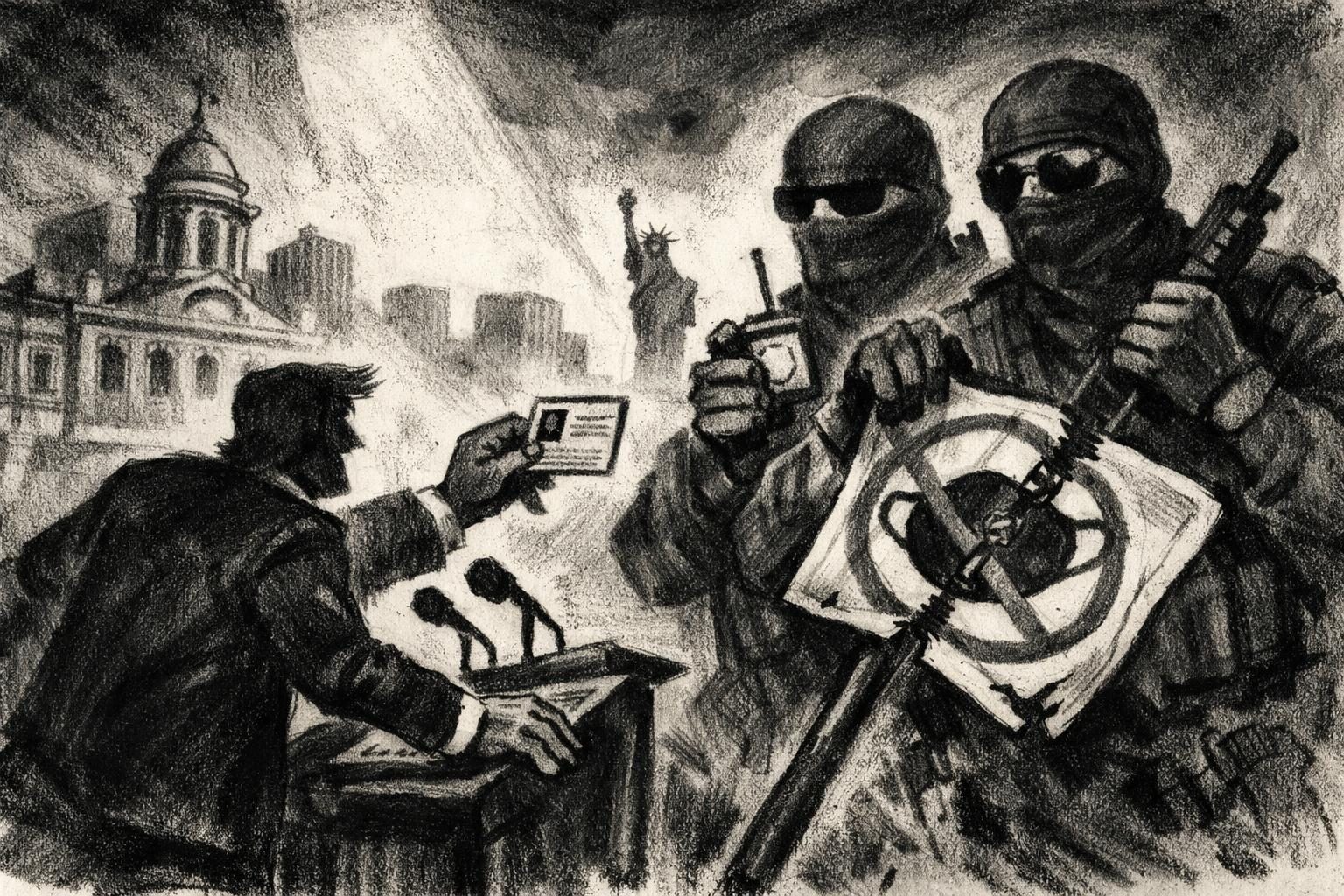
The Trump Justice Department has kicked off another high-stakes courtroom fight with a Democratic-led state, this time aiming at New York over a law that restricts masks and requires identifying information for certain federal officers. The complaint, filed June 23, names Gov. Kathy Hochul, Attorney General Letitia James, and state officials connected to federal cooperation programs, and it sets up a direct clash over who gets to decide how federal agents present themselves while doing their jobs. At the center of the case is a basic but politically volatile question: when federal officers are operating in public, should they be able to conceal their faces and limit how easily they can be identified? The Justice Department says New York has crossed a constitutional line by trying to regulate federal law enforcement conduct. New York says the opposite, arguing that officers who interact with the public in neighborhoods, streets, and other civilian settings should not be able to hide behind masks or vague markings while making arrests or carrying out enforcement actions.
On paper, the dispute is framed as a legal fight over preemption, federal supremacy, and the limits of state authority. In practice, it is also a fight over accountability, secrecy, and the public’s ability to know who is exercising coercive power on its behalf. New York’s rules were written with masks, identifiers, and cooperation arrangements in mind, which suggests lawmakers were responding to real-world concerns rather than just drafting a theoretical challenge to federal power. The state’s position is straightforward: if officers are operating in public, especially in fast-moving situations where people may be detained, questioned, or arrested, they should not be able to erase their identities from view. The Justice Department, by contrast, is arguing that those requirements interfere with federal operations in a way the Constitution does not allow. That means the administration has chosen to defend a legal posture that, fairly or not, sounds like a defense of anonymity for armed government officials acting in public. Supporters of the suit will say the issue is whether one state can dictate the terms of federal enforcement. Critics will say it is hard to separate that argument from the larger question of why visible identification should be controversial in the first place.
The political context makes the filing much more combustible than a routine statutory challenge. This is not a quiet administrative dispute being worked out through lawyers and agency memos; it is a public lawsuit against a blue-state governor and attorney general, filed in a way that almost guarantees a broader fight over power and priorities. The move fits a familiar Trump-era pattern of taking the most aggressive legal posture available and treating escalation as a form of proof that the administration is willing to fight. That style can be useful politically, especially with supporters who like to see Washington challenging Democratic state governments head-on. But it also carries obvious risks, because the optics of defending masked federal officers are difficult to detach from wider concerns about secrecy and unaccountable authority. The administration may view the case as a clean constitutional defense of federal operations, yet to many observers it looks like another example of choosing confrontation first and worrying about the public reaction later. That is especially true because the officers at issue are not being discussed in the context of some distant, highly controlled setting; they are people who may be interacting with civilians in ordinary public spaces where the consequences of a mistaken identity, a confusing badge, or a concealed face can be immediate and serious.
What happens next will likely be a long court battle with broader implications than either side may publicly admit. If the federal government wins, it could create a wider shield against state efforts to require visible identification or limit masks for federal officers, and it would reinforce the principle that the administration can resist state-level rules it sees as interfering with federal work. But victory would still come with political baggage, because the White House would have spent time and capital defending a practice that many voters are likely to find unsettling. If New York wins, the administration will have taken another public loss after escalating first, which would strengthen the argument that conflict is the point and compromise is an afterthought. Either way, the case is likely to deepen the impression that the Trump team prefers maximum friction when a narrower legal dispute might have been handled with less theater. It also leaves unresolved a real policy question that matters beyond the courtroom: how much anonymity should federal officers have when they are carrying out enforcement duties in public, and what level of identification is necessary to preserve public trust? For now, the Justice Department has answered by suing New York and daring the courts to decide whether the state can force federal officers to be visible while they do their work.
Comments
Threaded replies, voting, and reports are live. New users still go through screening on their first approved comments.
Log in to comment
No comments yet. Be the first reasonably on-topic person here.