
Trump’s new resilience strategy has a plan on paper. The test is execution.
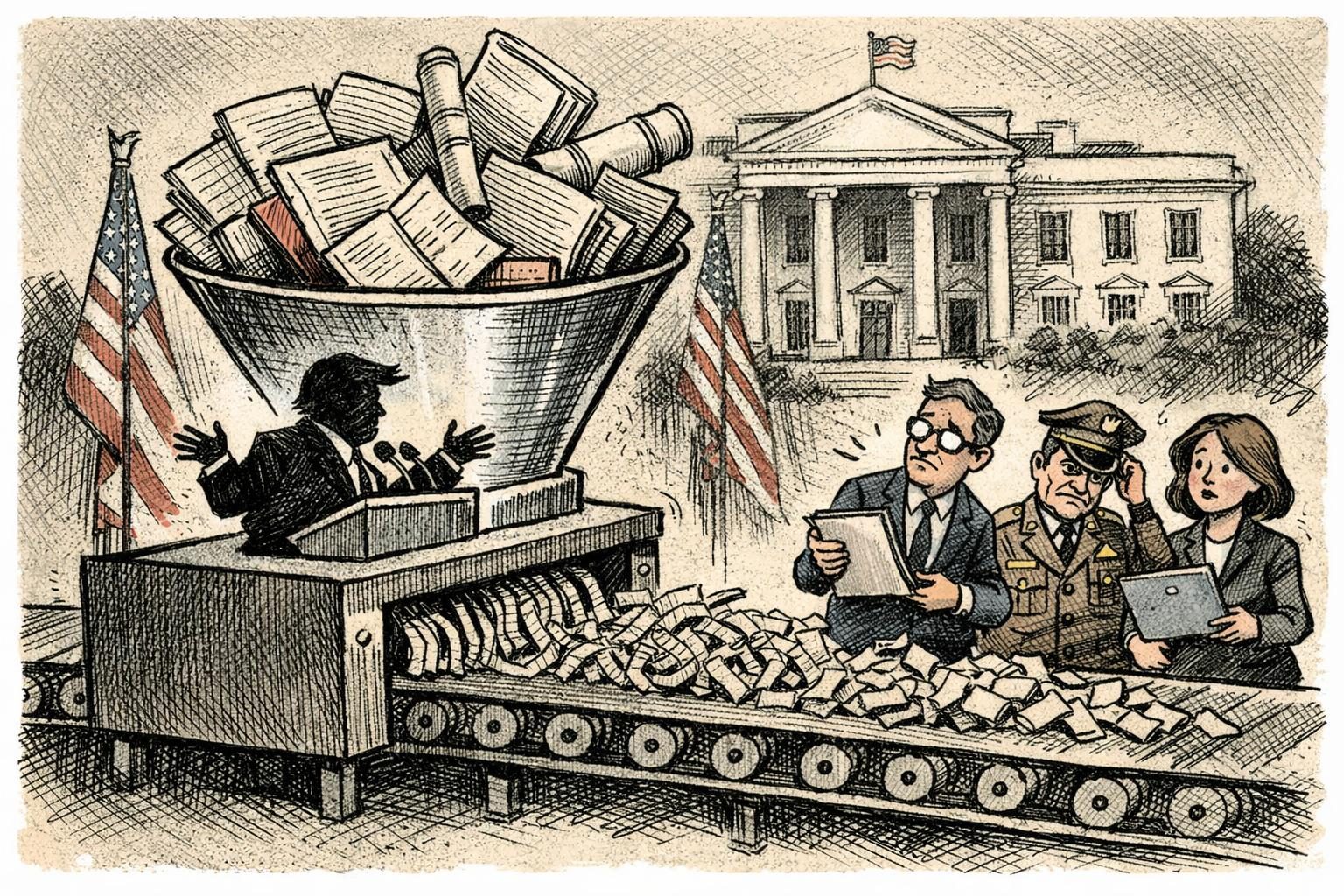
The White House released President Trump’s America First Resilience Strategy on June 23, 2026, pitching it as a broad framework for keeping the country safe, functional and economically strong when shocks hit. The document says resilience is meant to deny adversaries the ability to hold America at risk and to preserve freedom of action, prosperity and continuity across government and the private sector. That is a sweeping claim, but it is not just slogan material. The strategy also points to a National Risk Register, risk doctrine, performance metrics and changes to federal acquisition and grantmaking as part of the rollout.
That matters because the document is doing two things at once: selling a governing philosophy and outlining how agencies are supposed to work differently. The strategy says the government should use risk-informed decision making, identify investments with clear returns, and embed those metrics into federal processes. It also calls for modernization of infrastructure and supply chains, more secure cyber and physical systems, and wider use of trusted U.S. technology, including artificial intelligence. In other words, this is not merely a mood board for resilience. It is an attempt to translate an abstract promise into an operating model.
The harder question is whether that operating model will survive contact with the bureaucracy. The White House can announce a doctrine in a single afternoon. Agencies still have to turn it into budgets, guidance, procurement choices, reporting requirements and deadlines. The strategy itself acknowledges that resilience has to be implemented by citizens, industry, state and local governments, and federal agencies. That gives it reach, but it also makes accountability harder. When everyone is responsible, everyone can also end up waiting for someone else to move first.
The timing also shows the administration trying to build a broader national-security and technology narrative around the same week. On June 22, 2026, Trump signed executive orders on quantum innovation and on securing the nation against advanced cryptographic attacks. Those orders are separate from the resilience strategy, but they point in the same direction: a White House trying to show it has a plan for disruption, data, critical infrastructure and future threats all at once. The message is coherence. The proof will be in whether the promised coordination shows up outside the release page.
So the fair read is not that the resilience strategy contains no substance. It does. The fair read is that substance on paper is not the same thing as measurable change in the field. The administration says the strategy is designed to guide national risk reduction for years to come. That claim will only hold if agencies get usable instructions, if the new metrics are actually used, and if the promised reforms change how the government buys, funds and plans. Until then, the document is best understood as a serious opening bid: a doctrine with some machinery attached, and a long way to go before anyone can call it proof.
Comments
Threaded replies, voting, and reports are live. New users still go through screening on their first approved comments.
Log in to comment
No comments yet. Be the first reasonably on-topic person here.