
Judge permanently blocks Trump’s proof-of-citizenship voting push
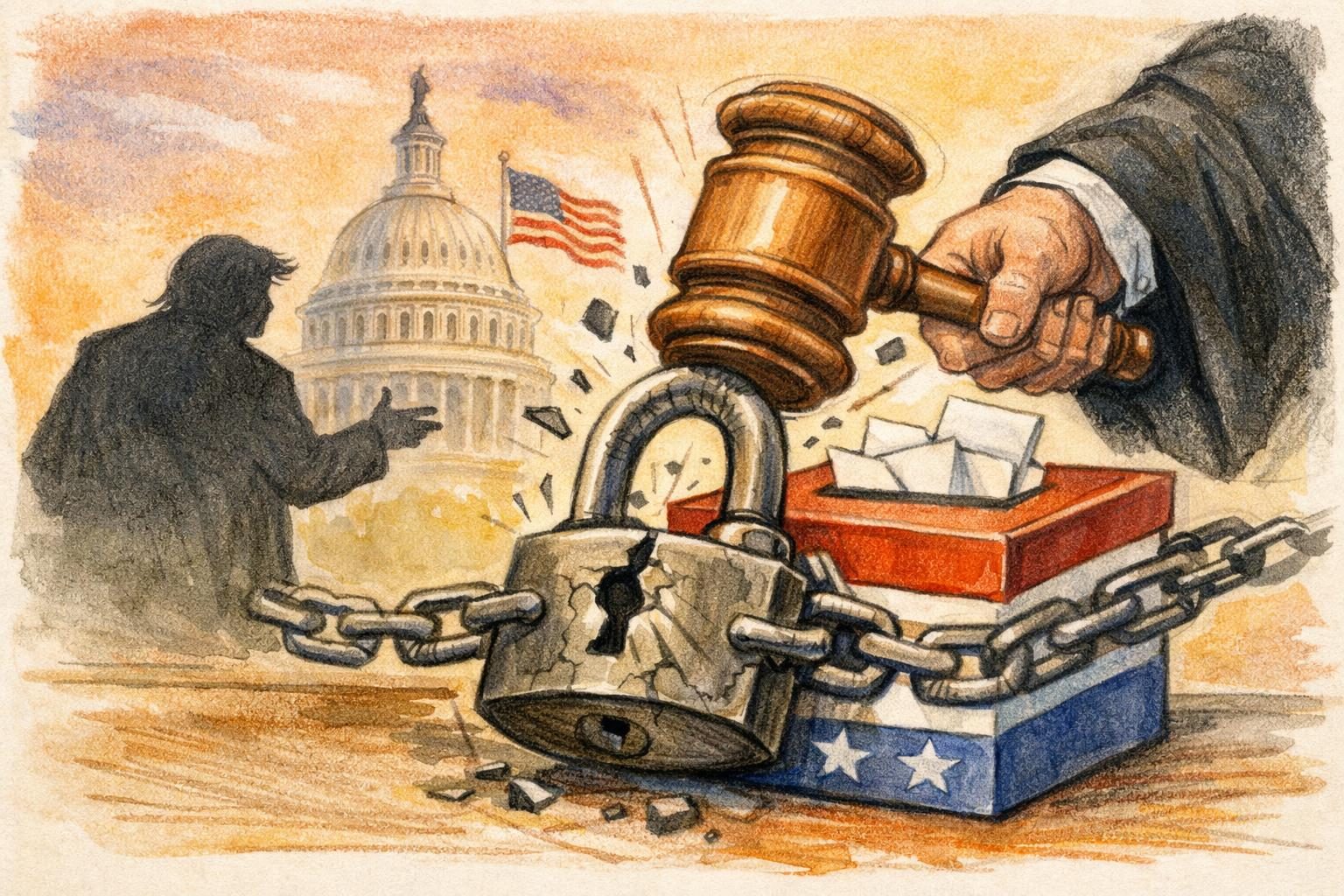
A federal judge in Boston on June 24 permanently barred most of President Donald Trump’s first executive order on elections, including the part that would have required documentary proof of citizenship for people registering to vote in federal elections. U.S. District Judge Denise Casper said the administration could not use the order to reshape election rules in a way that the Constitution does not assign to the president. The decision converts an earlier preliminary injunction into a permanent one, so the challenged provisions do not just pause while the case continues — they are blocked unless a higher court changes the ruling. ([apnews.com](https://apnews.com/article/358912bcb6c7223b3d2d36465156fde9?utm_source=openai))
Casper’s ruling is a concrete legal loss for the White House, not just another procedural delay. It leaves in place the court’s conclusion that the president cannot unilaterally impose a federal proof-of-citizenship requirement for voter registration or otherwise take over functions reserved to Congress and the states. The order also reaches beyond that one provision: it wipes out most of the administration’s first election executive order, which had sought to push the federal government deeper into election administration. ([apnews.com](https://apnews.com/article/358912bcb6c7223b3d2d36465156fde9?utm_source=openai))
The practical effect is simple. For now, election officials are not required to implement the proof-of-citizenship mandate that Trump wanted on federal registration paperwork. The ruling also undercuts a broader administration argument that the president can use executive power to force major changes in voting rules first and fight about legality later. Casper rejected that approach and treated the case as a separation-of-powers problem, not a temporary timing dispute. ([apnews.com](https://apnews.com/article/358912bcb6c7223b3d2d36465156fde9?utm_source=openai))
That matters because the administration had framed the order as an election-security overhaul. Critics said it would create new barriers for eligible voters without solving a documented problem. The court did not endorse the White House’s claim that the president can direct this kind of change on his own. Instead, the ruling leaves the administration with a narrower lane: persuade Congress, prevail on appeal, or rewrite the policy in a way that survives the law. ([apnews.com](https://apnews.com/article/358912bcb6c7223b3d2d36465156fde9?utm_source=openai))
Comments
Threaded replies, voting, and reports are live. New users still go through screening on their first approved comments.
Log in to comment
No comments yet. Be the first reasonably on-topic person here.