
Epstein redaction fight forces DOJ to explain the black box
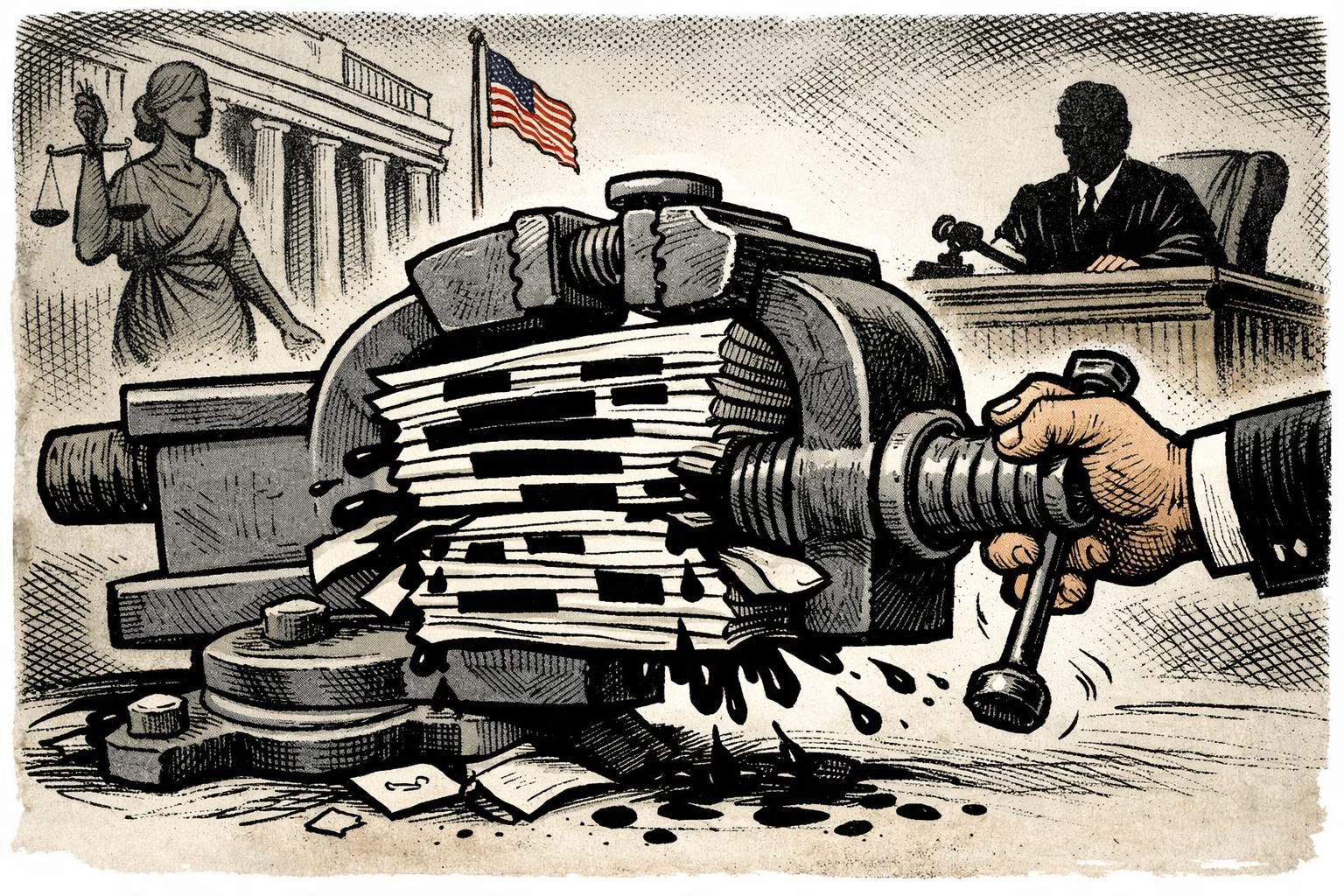
A federal judge in Washington has forced the Justice Department to stop treating its handling of Epstein-related records like an impenetrable vault. In an order issued in the lawsuit over those materials, the court gave the department until July 2, 2026, to either justify specific redactions or provide unredacted versions of the disputed records at issue. That does not mean the entire Epstein file is about to spill into public view, and it does not give plaintiffs everything they want. What it does is narrower and, for the government, more irritating: it requires a line-by-line accounting for the blacked-out material already kept in place. In a case built around secrecy, partial disclosure, and mistrust, the judge’s move puts the burden squarely on the administration to explain why each disputed redaction belongs there at all.
The practical effect is to strip away a layer of vagueness the Justice Department has leaned on while describing its Epstein disclosures as careful and lawful. That may be a defensible position in the abstract, but the court is asking for more than abstract assurances. If the department believes a redaction is protected by a legitimate exemption, it will have to show how and why that exemption applies to the exact language in question. If it cannot, the withheld material starts to look less like a narrow law-enforcement protection and more like selective concealment dressed up as procedure. That distinction is especially important in an Epstein-related fight, where every release is treated as incomplete by default and every unexplained omission invites another round of suspicion. The court’s deadline means the administration no longer gets to rely on the comforting assumption that broad claims about privacy, investigatory sensitivity, or institutional caution will be enough to carry the day.
That matters politically as much as legally because the Epstein files have become a durable outrage machine. Each partial disclosure tends to create more questions than it answers, especially when the public sees obvious blackouts with no clear explanation attached. The Justice Department’s public-facing materials say it is publishing releasable records and continuing to update them as additional documents are identified for release, which on paper sounds like a disciplined and orderly process. But the court order suggests that, whatever the department thinks it is doing internally, it has not yet convinced the judge that the redaction decisions can be taken at face value. That is a serious problem for any administration that wants to present itself as transparent while keeping tight control over what the public gets to see. In Washington, transparency is often promised in broad, soothing language, and then narrowed to the point where it barely survives contact with reality. Here, the judge appears to be asking whether the record reflects actual openness or merely the appearance of it.
The political damage is sharpened by the larger context surrounding Trump-world’s approach to disclosure. The pattern is familiar: make a big show of transparency, release selected material, and then act surprised when critics demand to know what was left out and why. In this case, the stakes are amplified by the Epstein name itself, which carries everything that makes a secrecy fight combustible — powerful people, unresolved suspicions, and the persistent belief that influence can buy a softer standard of accountability. That is why the redaction dispute is more than a technical records fight. It is a test of whether the department can survive scrutiny when it no longer controls the narrative by default. Supporters of the administration are likely to lean on familiar arguments about victim privacy, law-enforcement discretion, and the need to avoid compromising sensitive material. Those arguments may well have force in some instances, but the court’s order suggests they cannot simply be asserted in general terms. They have to be demonstrated with precision, and precision is often the first casualty when officials hope opacity will do the heavy lifting for them. If the department can substantiate every disputed blackout, it may preserve the secrecy it claims is justified. If it cannot, the episode will reinforce a broader public impression that the government is still keeping keep-away with records it says it wants to release. And once that impression takes hold, a redaction fight stops being a document dispute and becomes another referendum on whether anyone in power expects to be believed without producing the receipts.
Comments
Threaded replies, voting, and reports are live. New users still go through screening on their first approved comments.
Log in to comment
No comments yet. Be the first reasonably on-topic person here.