
Trump’s religious-liberty commission hands over a final draft, not a policy change
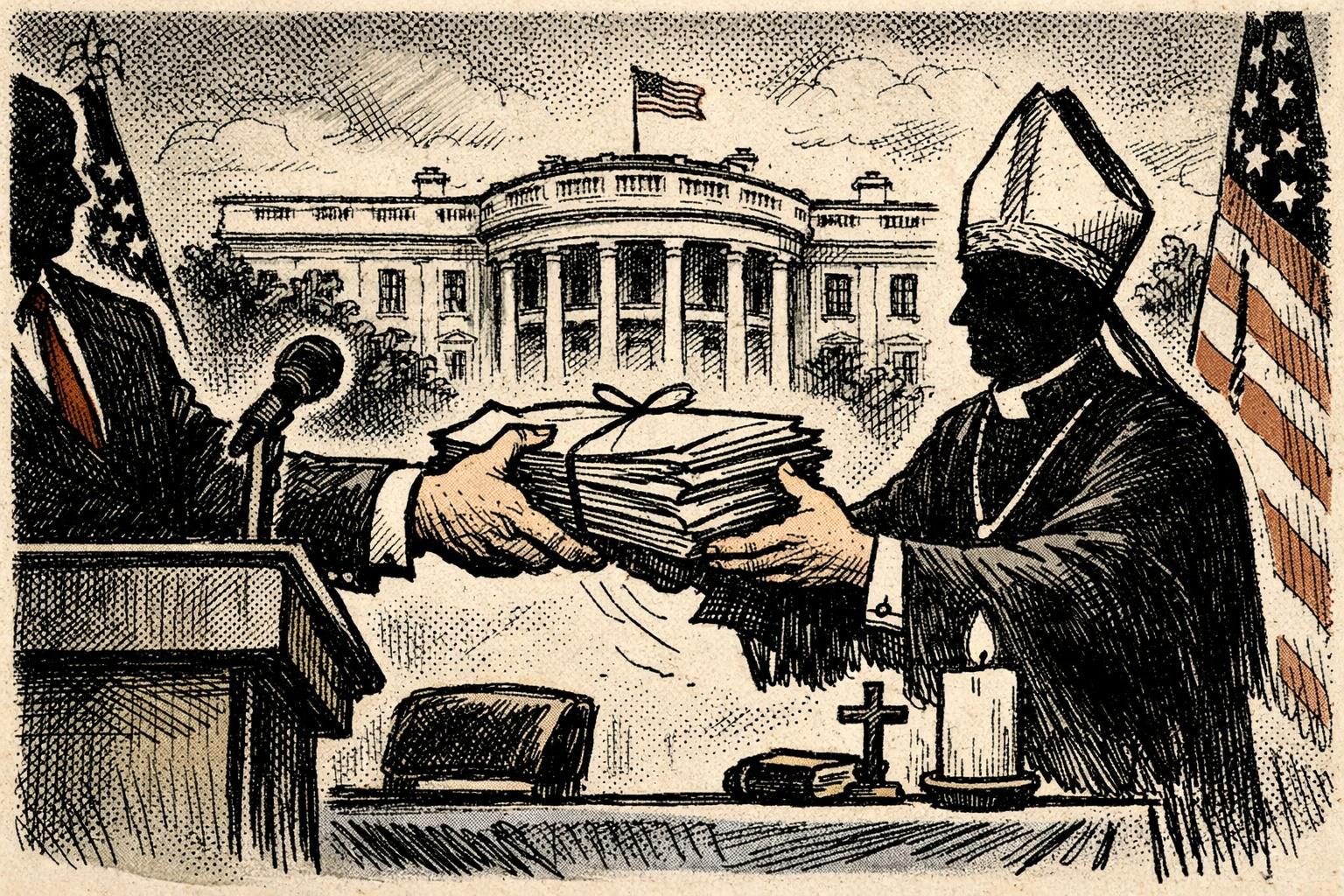
President Trump’s Religious Liberty Commission has turned in its final draft report, but the handoff does not itself amount to a policy change. The document was delivered in the Oval Office on June 26, 2026, after what the Justice Department says was a lengthy process that included seven hearings and testimony from more than 100 witnesses over more than a year. That kind of rollout is designed to signal seriousness and breadth, and in Washington, process often gets presented as proof that something important is happening. Yet the commission is advisory, which means it has no power to make laws, issue binding rules, or compel federal agencies to do anything on its own. What it offers instead is a set of recommendations that the White House can embrace, modify, ignore, or use as political cover while deciding what, if anything, to do next.
The draft is broad enough to touch many of the administration’s core religious-right priorities at once. According to the Justice Department’s summary, it recommends new guidance on the Establishment Clause, “Know Your Rights” posters, a reporting hotline or portal for alleged religious-liberty violations, and a Justice Department task force focused on religious liberty. It also pushes for stronger civil-rights enforcement against antisemitism and for a faster process when military personnel seek religious accommodations. One of the most politically charged recommendations is a renewed effort to repeal the Johnson Amendment, the tax code restriction that limits certain political activity by churches and other tax-exempt houses of worship. That combination is not accidental. It pairs broadly popular language about religious freedom and accommodation with items that are more likely to stir culture-war conflict, then presents the whole package as a common-sense defense of liberty. It is a clever framing device, but it is not the same thing as a governing program.
That gap between recommendation and implementation is the key detail here. Some parts of the draft could potentially be translated into agency guidance, internal memoranda, or other executive-branch actions without waiting for Congress, though even those would still have to survive legal scrutiny and bureaucratic resistance. Other items would be much harder to move, and some would plainly require legislation if the administration wanted them to have durable force. Anything touching the Johnson Amendment, for example, would run into legal and political obstacles that cannot be wished away with a report. The same is true for proposals that would change how the federal government handles church-state questions more broadly. The White House can praise the commission’s work and cite the report as evidence that it has listened to witnesses and studied the issue, but that does not mean the hard part is done. If anything, the report is a marker showing where the real fights are likely to begin.
That is why the document matters more as a policy handoff than as a final answer. Commissions like this are often built to generate momentum, create a record, and give a president a way to claim that he has pursued a serious review before acting. They can also help turn a set of ideological goals into something that looks administrative and measured, which is useful when the underlying agenda is politically divisive. But the downside is equally obvious: a report can make an administration appear active even when it has not yet accomplished much. If Trump chooses to move aggressively on the recommendations, he will likely face fresh litigation, renewed accusations of favoritism, and familiar constitutional arguments over church-state separation and executive power. If he moves cautiously, then the report risks becoming another glossy artifact for supporters to display and celebrate without changing much in practice. Either way, the document does not settle the debate. It merely shifts it to the next arena, where agency lawyers, congressional Republicans and Democrats, religious groups, civil-liberties advocates, and federal judges will decide which of these ideas can actually survive contact with the law.
Comments
Threaded replies, voting, and reports are live. New users still go through screening on their first approved comments.
Log in to comment
No comments yet. Be the first reasonably on-topic person here.