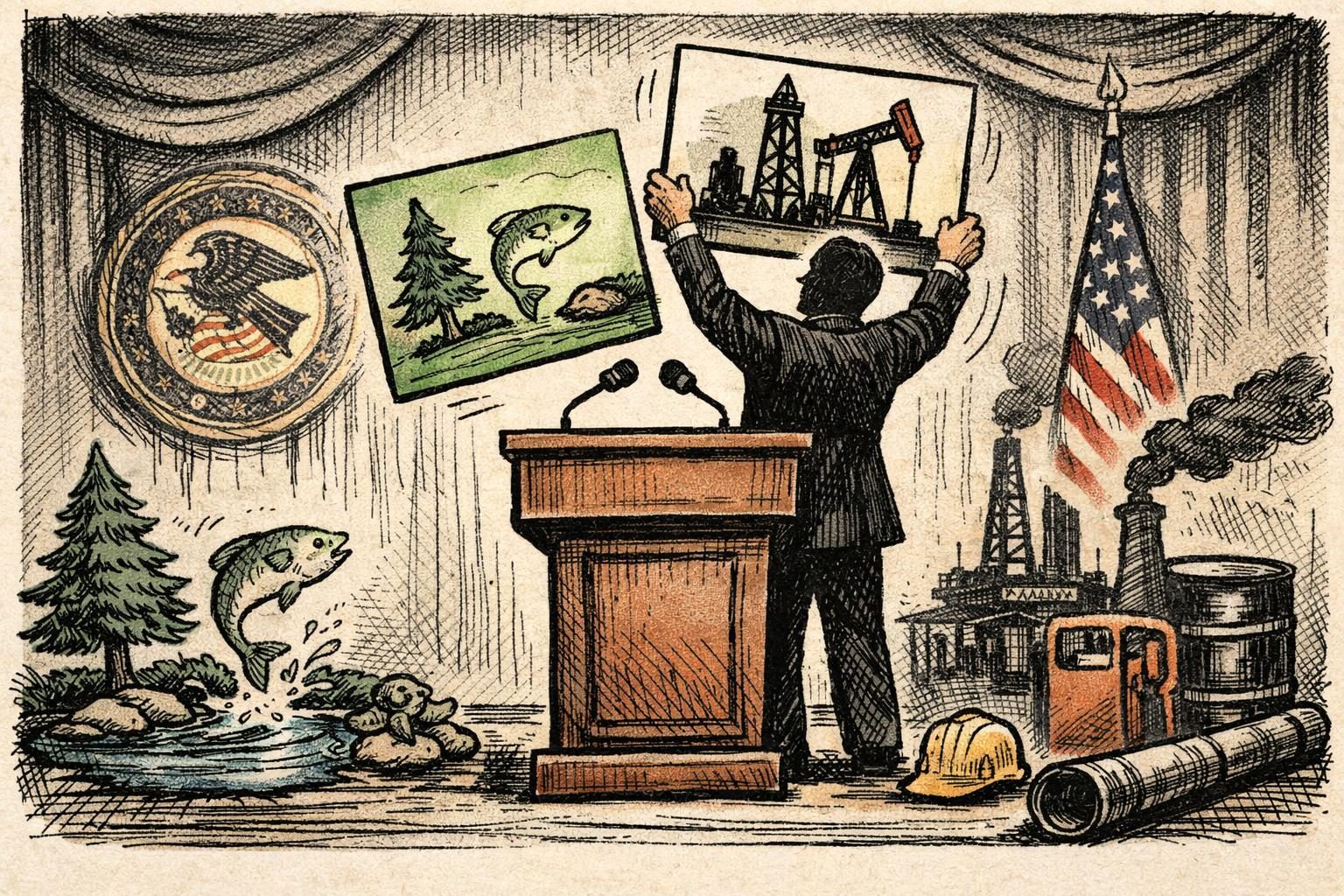
Justice Department renames environmental division as energy and natural resources unit
The Justice Department said Tuesday that it will rename its Environment and Natural Resources Division as the Energy and Natural Resources Division, a change that is bureaucratically modest but politically loaded. The announcement was posted on the department’s public news page after senior leadership signaled the move a day earlier, making clear that this was not a surprise internal memo but a deliberate piece of administration messaging. On paper, the department is not being reorganized into something wholly different, and the lawyers who work in the division are not suddenly shedding their existing responsibilities. They will still handle litigation and enforcement matters involving land use, pollution, wildlife, permitting, and federal energy projects, along with the other disputes that routinely land in one of the government’s most consequential legal shops. But the order of the words matters in Washington, especially when the White House is eager to project a certain kind of governing philosophy. Putting energy first is an unmistakable signal about what this administration wants the public and the bureaucracy to notice first.
The old name at least suggested a balancing act between environmental protection and the stewardship of natural resources, a pairing that implied overlap and restraint as much as extraction. The new version moves the emphasis toward production, development, and the political language of energy dominance. That does not automatically change how every case will be handled, and it does not erase statutory obligations that still govern the department’s work. Yet the rename does tell career lawyers, litigants, industry groups, and environmental advocates something important about the climate inside the department. It suggests that the administration wants the division to be seen less as a neutral guardian of environmental law and more as a legal instrument for facilitating energy development. In practical terms, that may not mean every environmental case suddenly tilts in one direction, but it does alter the visual and rhetorical frame under which those cases will be presented. Government branding rarely changes the law by itself, but it often signals where political pressure is headed before a formal policy shift arrives.
That matters because the Environment and Natural Resources Division sits at the intersection of some of the most contentious fights in federal government. Its attorneys are regularly involved in litigation touching public lands, mining, drilling, pipelines, water issues, endangered species, and the environmental review process for major projects. A name change will not rewrite the department’s docket, but it can influence how that docket is described, prioritized, and defended. The administration has already spent much of the year pushing policies that favor drilling, mining, and industrial expansion, so the rename fits neatly within a broader pattern. It is hard to treat the move as an isolated housekeeping measure when it so clearly complements the White House’s larger message about fossil fuels, permitting, and the pace of development. The point is not that a label on the door decides a case. The point is that political leadership often uses labels to announce which values should be elevated, which constituencies should feel comfortable, and which objections should be treated as secondary. In that sense, the rebrand is less a technical update than another small but revealing act of ideological choreography.
Critics are likely to see the rename as part of a broader habit of recasting institutions to fit the administration’s preferred narrative rather than the other way around. The Justice Department is supposed to enforce the law, not market a policy agenda, and environmental lawyers are not supposed to function as an extension of a fossil-fuel branding campaign. Changing the division’s name to put energy ahead of environment invites questions about whether the department is preparing for a more aggressive posture toward extraction and infrastructure projects, and a less ambitious one toward environmental enforcement. That conclusion would be premature if treated as a certainty, because the announcement itself does not spell out any new enforcement directives or case-specific changes. Still, Washington is full of moments when tone hardens into policy over time, and symbolism is often the first draft. A department that wants to sound like an enabler rather than a regulator is broadcasting its preference for facilitation, not friction. Even if the rename does not move a single courtroom filing tomorrow, it changes the way the institution presents itself and the way others are likely to read its decisions going forward. That is not nothing. It is a signal, and in this administration, signals are often the point.
The immediate fallout is mostly rhetorical, but rhetorical changes can still have real consequences inside government. A new name can affect internal morale, shape outside expectations, and alter the language used by attorneys, lobbyists, activists, and judges when they talk about the department’s work. It also fits a wider Trump-era style of governance that favors muscular executive branding, loyalty signaling, and the re-sorting of federal institutions around production and power. There is no obvious legal violation in the announcement itself, and nothing in the posting suggests the department has formally abandoned its environmental obligations. But the message is still plain enough: energy comes first, and environmental protection is being visually demoted whether or not that is how officials would characterize it. For supporters of the administration, that may look like common sense and a long-overdue correction in emphasis. For critics, it is another example of the government trying to launder a policy choice into something that sounds merely administrative. Either way, the rebrand is a reminder that in Washington, the names agencies choose for themselves are rarely just names. They are clues about who the government wants to serve, what it wants to celebrate, and which side of the argument it is quietly inviting people to favor.
Comments
Threaded replies, voting, and reports are live. New users still go through screening on their first approved comments.
Log in to comment
No comments yet. Be the first reasonably on-topic person here.