
Trump’s bid to purge the copyright office is still stuck
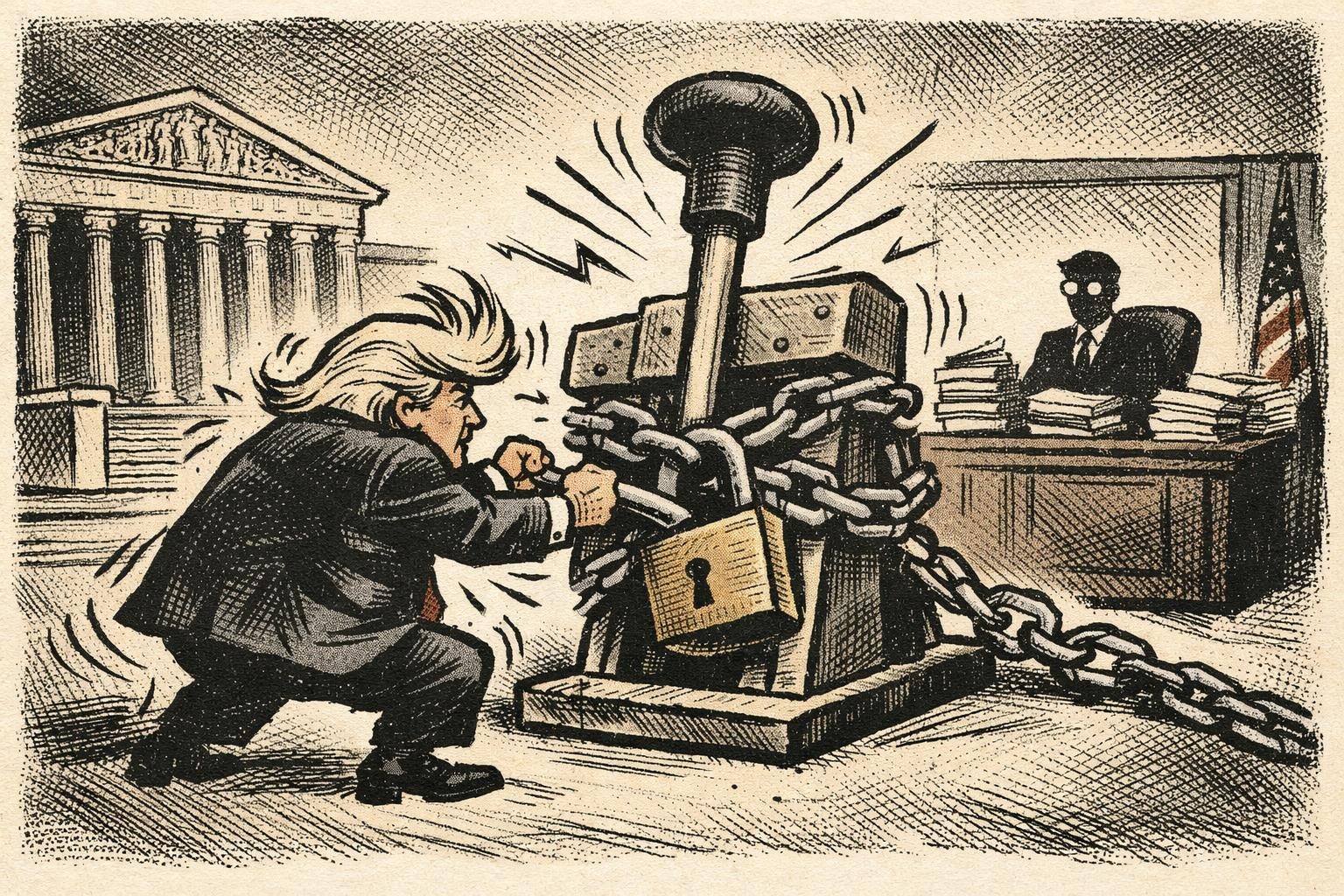
Donald Trump’s attempt to push out the federal government’s top copyright official has hit a procedural wall, and for the moment that wall is enough to keep the official in place. On June 30, the Supreme Court declined to let the administration immediately remove the Library of Congress’s copyright chief while the underlying legal fight continues. The decision does not settle whether the removal is lawful, and it does not answer the larger constitutional question of how much leeway a president has to dismiss officials who are supposed to be insulated from direct political pressure. It does, however, deny the White House the quick victory it appears to have wanted. In a second term already marked by repeated clashes over executive power, even a temporary loss like this carries political and institutional weight.
The immediate dispute is narrow, but the implications are not. At issue is whether the administration can act first and argue later, removing the official before courts have finished deciding whether that removal can stand. That timing question matters because it determines whether legal protections have any practical force or whether they can be sidestepped by a president willing to move quickly and force the courts to catch up. If removals can take effect before judicial review is complete, then statutory protections for certain posts begin to look fragile. If courts require the legal process to run its course first, then the White House must operate within a system of checks rather than simply asserting power by fiat. The copyright office itself is hardly the most obvious arena for a constitutional confrontation, which is exactly why the case is revealing. Personnel fights over a seemingly technical post can become a vehicle for testing how much resistance the law can still offer when the presidency pushes hard enough.
That makes this case part of a broader pattern in Trump’s second term. He has consistently shown an appetite for treating the federal bureaucracy less as a separate public institution than as an extension of presidential will. Officials who are career civil servants, or who occupy positions with some degree of statutory protection, have repeatedly found themselves under pressure when they do not appear fully aligned with the White House. Those disputes do not always begin as grand constitutional showdowns. Sometimes they start as ordinary personnel decisions, a firing, a reassignment, or a challenge to an appointment. But they often quickly expand into something larger: a test of whether the president can bend rules and institutions that were designed to restrain raw political influence. The current fight over the copyright office fits that pattern neatly. It is about one officeholder on paper, but it also touches the basic question of whether Congress can create posts that are not entirely at the mercy of the executive branch.
The stakes are bigger than the fate of one official because personnel power is one of the easiest ways to shape policy without passing new laws. A president who can freely remove officers who were meant to have some protection can effectively weaken the independence of those offices even when the statutes remain on the books. That is why the current pause matters. The Supreme Court’s refusal to greenlight an immediate removal does not end the case, and it may not be the last word on the issue, but it prevents the administration from turning the dispute into an instant fait accompli. For now, the copyright chief remains in position while the legal process continues, and Trump’s effort to clear the office has been slowed to the point that it no longer looks like an easy triumph. The administration may still seek to win the underlying fight, but it has been denied the rapid and symbolic result that often helps make a power move look inevitable. In a presidency that has repeatedly tried to test the limits of executive authority, being forced to wait is not a neutral outcome. It is a reminder that, at least for now, the courts are not handing over the keys just because the White House says it should have them.
Comments
Threaded replies, voting, and reports are live. New users still go through screening on their first approved comments.
Log in to comment
No comments yet. Be the first reasonably on-topic person here.