
DOJ keeps pulling law firms into Trump’s retaliation fight
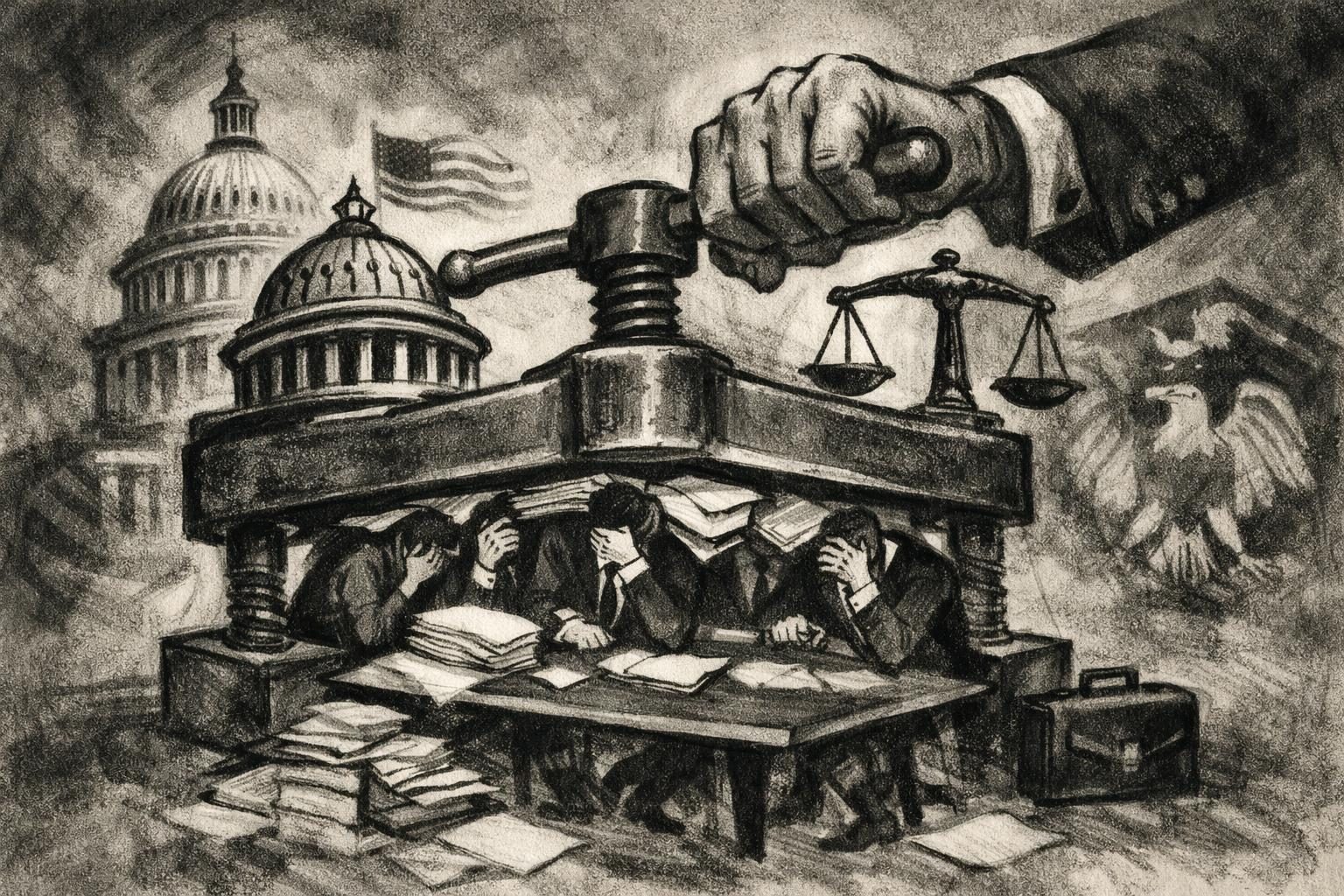
The Justice Department’s decision to disclose subpoenas sent to 14 law firms has given fresh life to a fight that was already politically loaded and legally messy. What might otherwise have looked like routine discovery has become another exhibit in a broader clash over whether the Trump administration used government power to pressure, punish, or isolate firms that fell out of favor with the president. According to the court filings, some of the subpoenas were issued on July 1 and later appeared in materials disclosed on July 17, a detail that matters because it shows this is not some isolated procedural flourish. It is part of an ongoing dispute with a documentary trail, a timeline, and a political context that makes every move look intentional. The American Bar Association’s lawsuit is built around the claim that the administration targeted law firms because of their clients, political positions, and internal policies, and the new subpoenas do nothing to ease that suspicion. If anything, they deepen it by putting the government in the position of probing the same firms it is accused of intimidating.
That is what makes the latest development so awkward for the administration. In a narrower case, subpoenas are just subpoenas: the government asks for records, seeks testimony, and tries to build a factual record. But here, the very premise of the ABA’s suit is that the executive branch crossed the line from ordinary governance into retaliation, using official authority to chill legal representation and force firms into compliance. Against that backdrop, even a potentially defensible discovery request can look like part of the same pressure system the lawsuit is challenging. The government says it wants information about the executive orders, the firms’ agreements with the White House, and in some instances materials involving Boris Epshteyn, a name that has already become part of the larger controversy. That does not automatically make the subpoenas improper, but it does mean the administration cannot expect them to be viewed as neutral in any ordinary sense. When the fight is over whether the state itself is punishing legal institutions, the state’s own investigative machinery becomes part of the story, not just part of the procedure.
The optics are especially bad because the administration has never fully escaped the appearance that it is using law as leverage. The ABA has argued that the orders at issue retaliated against protected speech and association, and that legal theory gets stronger when the government later reaches for broad subpoenas aimed at the same firms. The White House can insist that discovery is normal and that litigation sometimes requires invasive requests. That is true as far as it goes, but it does not answer the deeper concern: it is unusual to have a federal government accused of pressuring the profession and then demanding internal records from the targets of that pressure while the same dispute is still unfolding. That sequence invites suspicion, because it makes the legal process look less like an effort to resolve a case and more like a continuation of the original conflict by other means. Even if the administration ultimately prevails on some or all procedural issues, it is still building a record that reinforces the idea that crossing the president can bring on a long, expensive fight with the state behind it. That is the kind of impression that lingers far beyond any single case, especially for firms that depend on clients, reputation, and the expectation that their work will not trigger official retaliation.
The broader danger for Trump is that this episode widens the political meaning of the dispute. It is no longer just about executive orders, or about whether one president was willing to pick fights with prominent law firms, or about a set of court arguments over constitutional boundaries. It is now also about the Justice Department itself and whether the machinery of law enforcement is being pulled into the same orbit of punishment and intimidation. That matters because it turns an abstract separation-of-powers argument into something more concrete for judges, bar associations, corporate counsel, and public-interest lawyers who are paying attention to the stakes. If the administration wanted the case to look like ordinary litigation, it badly undercut that message by escalating the pressure while the underlying accusations are still unresolved. If it wanted to look unafraid of criticism, it may have succeeded, but only in the sense that it seems unafraid of being seen as vindictive. The result is a classic Trump-style self-own: more records, more noise, and more reason for skeptics to assume that the government is operating with a grudge rather than a neutral legal theory. The subpoenas do not prove the ABA’s entire case by themselves, but they do make the administration’s denial harder to sell, and that may be the real problem Trump’s team has created for itself.
Comments
Threaded replies, voting, and reports are live. New users still go through screening on their first approved comments.
Log in to comment
No comments yet. Be the first reasonably on-topic person here.