
White House keeps turning government rollouts into Trump-brand events
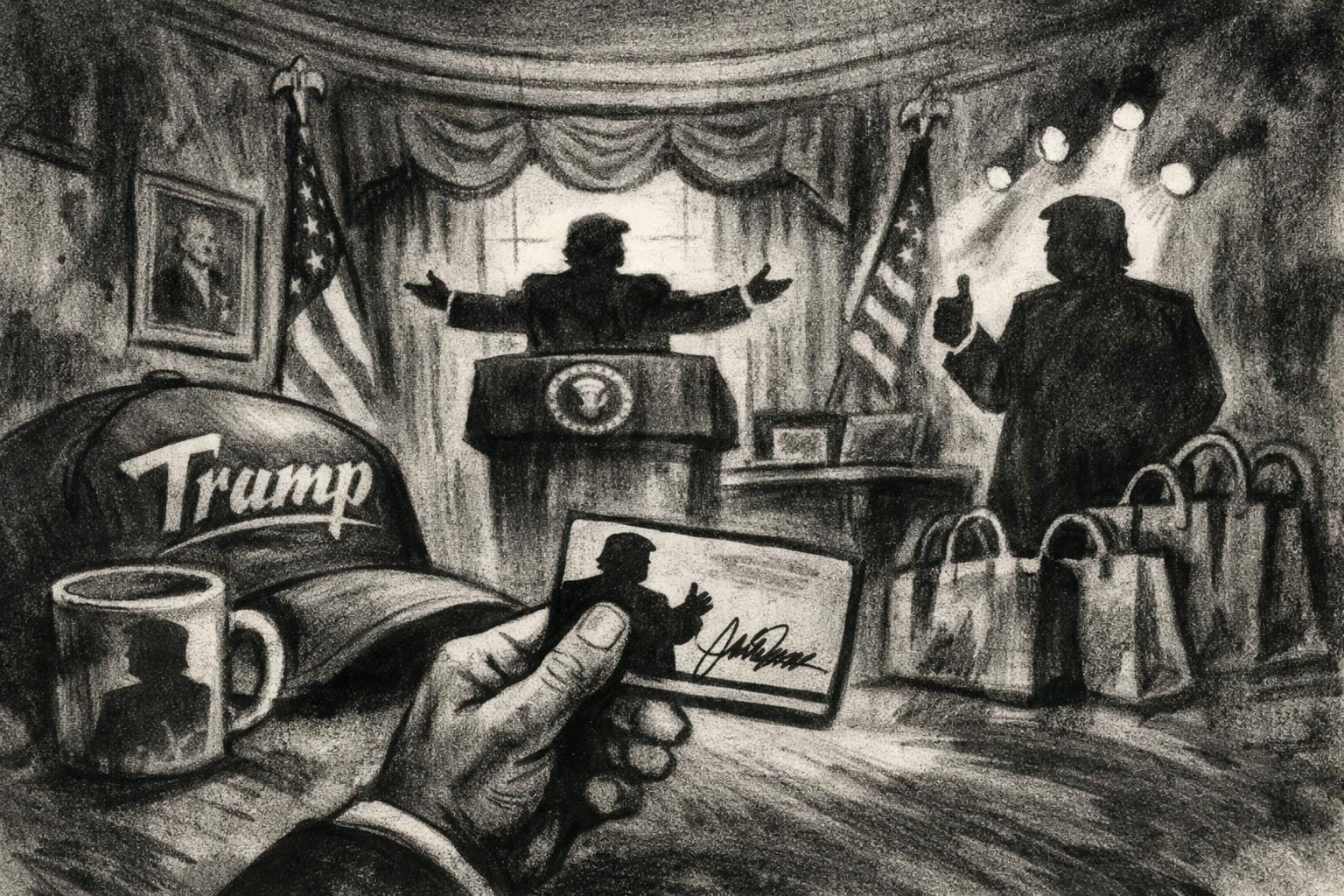
The White House has made a habit of dressing official business in the Trump name and turning routine presidential acts into stage-managed events. That was on display on July 6, when President Donald J. Trump used the Oval Office to ring the opening bells for the New York Stock Exchange and Nasdaq as part of the launch of Trump Accounts, a new tax-advantaged savings program for children. The White House release itself describes the event as a “historic first” and repeatedly places Trump’s name in the center of the announcement. It is a policy rollout, but it is also unmistakably a branding exercise. ([whitehouse.gov](https://www.whitehouse.gov/releases/2026/07/president-trump-rings-in-trump-accounts-with-historic-opening-bell-ceremony-from-the-oval-office/))
The same style showed up three days earlier in a presidential proclamation dated July 3, 2026, that declared July 4, 2026, the 250th anniversary of the adoption of the Declaration of Independence. The proclamation is written in the familiar grand register of White House messaging: sweeping, patriotic, and tightly wrapped around the president’s own signature and authority. It is an official act, and there is nothing unusual about a president issuing a proclamation for a national milestone. But here, too, the presentation reinforces a larger pattern: public work is being packaged as a Trump-branded moment, not just a government action. ([whitehouse.gov](https://www.whitehouse.gov/presidential-actions/2026/07/250th-anniversary-of-the-adoption-of-the-declaration-of-independence/))
That is not the same thing as proving misconduct. The ethics rules are clear that public service is a trust, that employees should place loyalty to the Constitution and ethical principles above private gain, and that they should not use public office for private gain or to endorse a product, service, or enterprise. Those rules matter. They also stop short of saying that every heavily branded presidential event is illegal. What they do support is a narrower point: government officials are supposed to avoid using public office for personal benefit or the appearance of endorsement. ([justice.gov](https://www.justice.gov/jmd/ethics/principles-ethical-conduct))
So the sharper read is not that these July releases prove a legal violation. It is that the White House is increasingly comfortable presenting official actions as Trump-centered spectacles, with the president’s name and image doing as much work as the policy itself. That may be effective politics. It is also a reminder that a government can act in plain sight while still trying to look like a brand launch.
Comments
Threaded replies, voting, and reports are live. New users still go through screening on their first approved comments.
Log in to comment
No comments yet. Be the first reasonably on-topic person here.