
Trump turned a children’s savings rollout into Oval Office theater
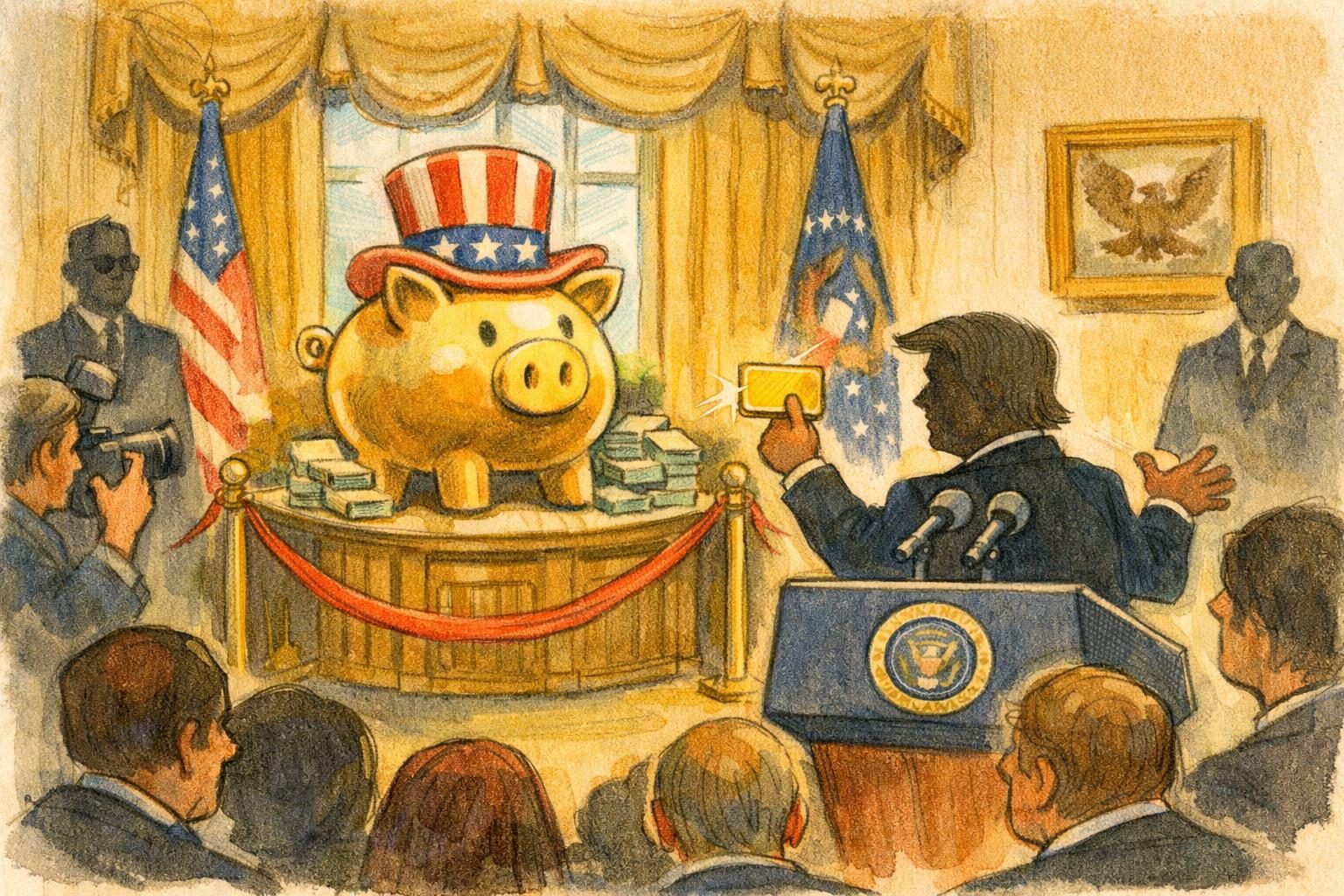
The White House tried to sell a children’s savings program like a campaign launch, and that was the point. Treasury says Trump Accounts went live on July 4, 2026, with a federal app and account infrastructure designed to help parents open tax-advantaged savings accounts for eligible children. That is a real policy development, and it may well prove useful if it is administered clearly and consistently. But the administration did not treat it like a routine rollout. Two days later, the president staged an Oval Office event built around a symbolic opening-bell moment for the New York Stock Exchange and Nasdaq, turning a government announcement into a piece of political theater. The practical details of the program were present, but they had to compete with the larger production surrounding them. In Trump world, that is often the whole design: make the policy visible only after it has been filtered through the president’s image.
The underlying mechanics are simple enough on paper. Treasury describes Trump Accounts as tax-advantaged savings accounts for children, free to open, with a federal seed deposit for eligible kids born between January 1, 2025, and December 31, 2028. The official site says parents can use an app to manage and track the account, which matters because a savings tool is only as useful as the steps required to actually use it. Treasury has said the full scope of the program is live, meaning the rollout is not hypothetical or pending some future phase. That makes the launch more consequential than a typical splashy announcement, because now the burden shifts from symbolism to administration. Families need to know how to enroll, how additional contributions work, how the account grows over time, and what role the government will play after the initial seed deposit. Those are the questions that determine whether the program becomes an ordinary but meaningful piece of child savings policy or just another branded promise with a polished introductory reel.
Yet the White House’s chosen presentation style suggested that the administration was far more interested in framing the program as a Trump-branded event than as a policy instrument. The Oval Office ceremony placed the president at the center of the story, not as a signer of legislation or even simply as an explainer-in-chief, but as the visual anchor of the launch itself. The opening-bell symbolism carried a particular kind of message: this was not merely a savings account rollout, it was a market-style victory lap presented as presidential momentum. That may generate attention, and attention can be useful when a new program needs public awareness. Still, the design of the event made it clear that the branding was doing a lot of heavy lifting. The government was not just informing the public; it was packaging the public benefit inside a familiar Trump presentation, where the leader’s persona becomes the product. That can obscure more than it clarifies, especially when the subject is a policy aimed at children and families rather than a vanity project or a rally.
That gap between policy and performance is what makes the rollout worth watching. If Trump Accounts are implemented well, the White House will probably be able to claim that it helped build something tangible for families. If the system is clunky, confusing, or hard to access, the big launch will age badly, because the initial spectacle will have created expectations the policy itself may not meet. Supporters are likely to argue that the administration is simply giving a new program the attention it needs to reach people. Critics will say the government is using official machinery to market the president, and that criticism is hard to dismiss when the visual language of the rollout is so clearly built around him. Both readings can be true at once. The program may be legitimate, and the presentation may still be excessive. The White House may believe it is helping a useful initiative break through the noise, but it is doing so in a way that reinforces an old Trump-era habit: treat governance as branding, and treat branding as if it were governance. The result is a launch that tells the public less about the mechanics of saving for children than about the administration’s instinct to turn every civic act into a presidential logo moment.
Comments
Threaded replies, voting, and reports are live. New users still go through screening on their first approved comments.
Log in to comment
No comments yet. Be the first reasonably on-topic person here.