
DOJ files threat cases involving Donald Trump Jr. and President Trump
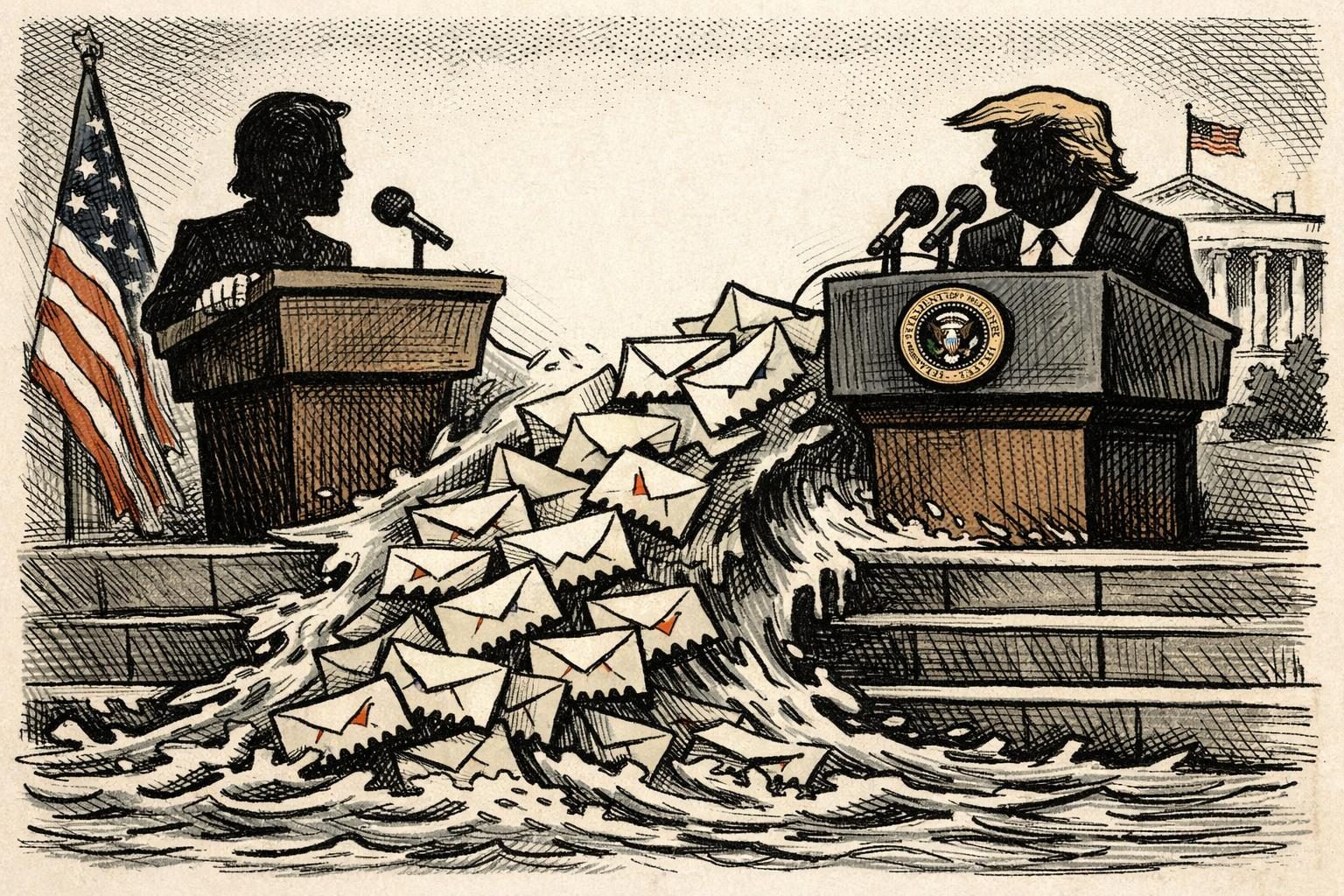
Federal prosecutors filed two separate threat cases in July involving Donald Trump Jr. and President Trump, each centered on a criminal complaint rather than a conviction. In western New York, the Justice Department says James Gerald Eckert Jr., 39, of Rochester was arrested on July 13 after threats allegedly made in the online chat for Trump Jr.’s podcast and in a livestream tied to the same account. Prosecutors say the account also posted earlier threats on June 7 and June 11 aimed at Rochester Mayor Malik Evans and state Sen. Samra Brouk. The complaint says a Secret Service member on duty at Trump Jr.’s residence was alerted after the June 18 posts in the podcast chat. Authorities say Eckert faces a maximum penalty of five years if convicted.
The New York complaint lays out a specific sequence: first the posts aimed at Evans and Brouk, then the alleged threats involving Trump Jr. on June 18. The filing says the username tied to those posts matched Eckert’s name, and it describes a separate stream in which the same account repeated similar threats. The complaint does not establish guilt, but it does show federal prosecutors treating the episode as a felony threat case with a protected target attached.
A separate case in Florida followed three days later. On July 16, the Justice Department said William L. Upham, 35, of Jacksonville, a former Marine and state prosecutor, was arrested and charged by criminal complaint with threatening to kill the president. According to that filing, Secret Service agents reviewed videos Upham posted on social media and a message he sent to a third party saying he made the videos to declare war against President Trump and would kill him at the time God chose. The Florida complaint says Upham was ordered detained and also carries a maximum five-year prison term if he is convicted.
Taken together, the two complaints show the same federal machinery getting used for two different defendants, in two different states, over threats aimed at two members of the same political family. The filings do not connect the cases to each other, and they do not prove any broader pattern beyond what prosecutors chose to charge. But they do underline how quickly online threats can turn into federal cases once they involve a president or a member of the president’s immediate family. In both matters, the government is treating the language as a possible criminal threat, not political bluster.
Comments
Threaded replies, voting, and reports are live. New users still go through screening on their first approved comments.
Log in to comment
No comments yet. Be the first reasonably on-topic person here.