
Trump trade actions hit Brazil, Canada and 60 economies in separate moves
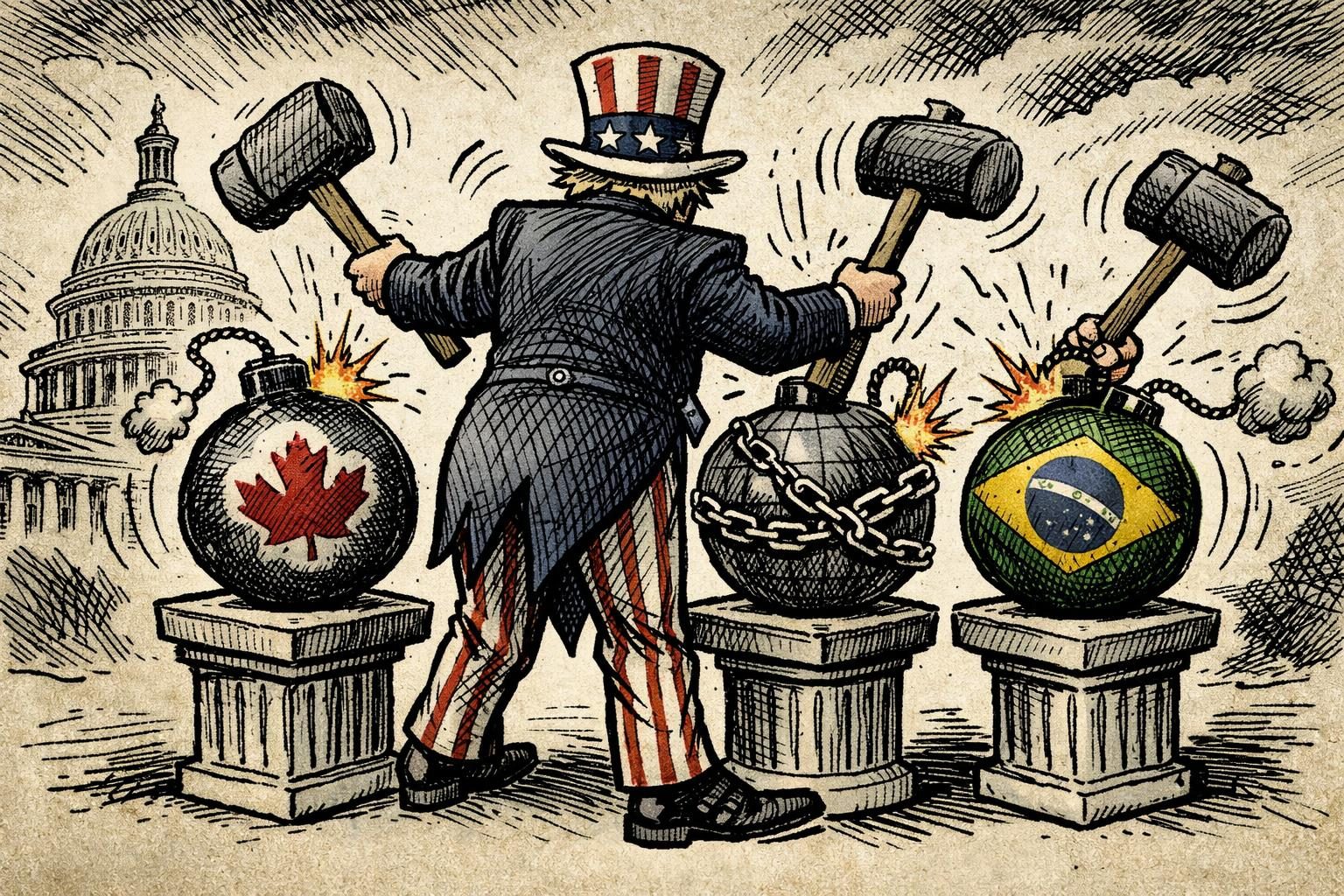
The month’s trade offensive arrived in pieces, not as one all-purpose tariff package. Brazil was first, Canada came next through a pair of separate proclamations, and then the administration finished the month with a broader Section 301 move covering imports tied to forced labor across 60 economies. Different laws. Different records. Different compliance problems.
On Brazil, the U.S. Trade Representative said it was taking final action under Section 301 and imposing a 25% tariff on certain Brazilian goods after a process that began with a petition in 2025, followed by consultations and a public hearing this spring. USTR said its review covered digital trade, electronic payment services, tariffs, anti-corruption enforcement, intellectual property, ethanol market access and illegal deforestation. The agency concluded those practices were unreasonable and burdened U.S. commerce.
Canada was handled under a different authority. The White House issued separate July 20 proclamations under Section 338 of the Tariff Act of 1930, one covering alcoholic beverages and another covering dairy. Those orders imposed additional duties on selected Canadian imports, with a stated effective date of August 19. It was not a single catch-all notice, and it was not the same legal track as the Brazil case.
Two days later, USTR announced final action in Section 301 investigations that had been opened on March 12, 2026, involving the failure of 60 economies to impose and enforce labor and human rights safeguards against forced labor in supply chains. That July 23 action was not the launch of a new case; it was the endpoint of an existing investigation. Brazil was among the economies named in that broader proceeding, but the move was distinct from the Brazil-specific tariff action announced earlier in the month.
Put together, the July actions show a White House and trade office using separate legal tools to apply pressure on different targets at different times. For importers, the practical effect is the same: more monitoring, more classification work and more risk that one shipment lands under the wrong rule set. For foreign governments, the message is that the administration is willing to escalate trade fights through multiple channels at once, even when the legal path changes from one notice to the next.
Comments
Threaded replies, voting, and reports are live. New users still go through screening on their first approved comments.
Log in to comment
No comments yet. Be the first reasonably on-topic person here.