
Trump extends his election-intelligence rollout with more loyalty-test messaging
President Donald Trump’s latest election-intelligence rollout is being presented less like a disclosure than like a conclusion, and that framing is doing a remarkable amount of work. On July 22, 2026, the White House was still using its own news and releases pages to push the same declassification message Trump introduced in a July 16 primetime address and reinforced with follow-up material the next day. The administration says the newly public material exposes a deep-state suppression of election intelligence and proves that officials hid crucial information from the president. Those are sweeping claims, and they are the sort that can reshape a political conversation before anyone has fully checked what the files actually show. The problem is not that the release is meaningless. The problem is that the White House is asking the public to accept the largest possible interpretation of the documents before the documents themselves have plainly earned that interpretation.
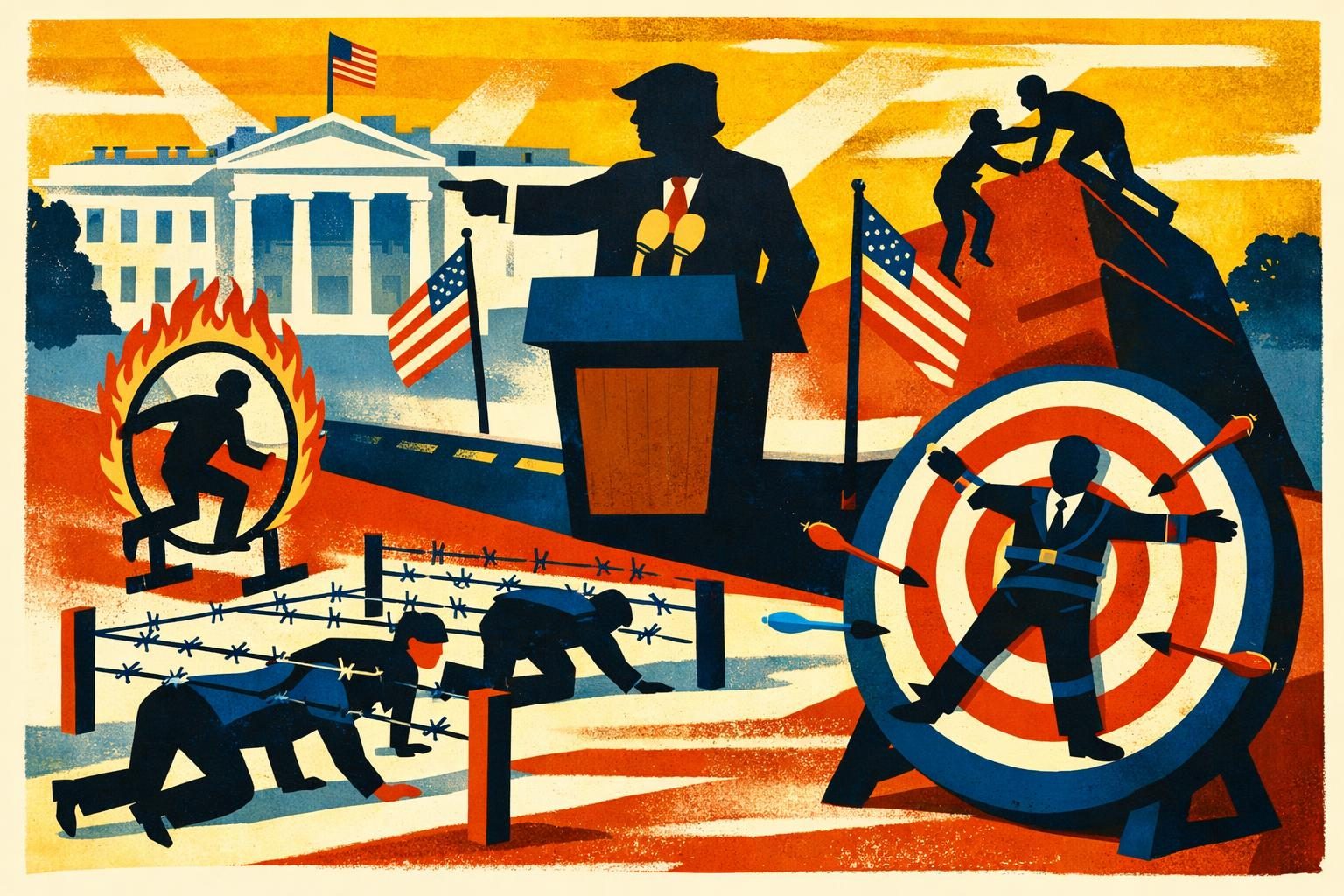
That distinction matters because the rollout is being packaged as much as a loyalty exercise as a disclosure. The administration’s message implies that there is only one proper response to the declassification: believe the president, trust the interpretation, and treat any hesitation as a sign of bad faith. That posture is politically useful if the goal is to rally supporters and keep attention fixed on a narrative of betrayal. It is much less useful if the goal is to produce a durable public understanding of what the intelligence community knew, when it knew it, and how information was handled inside government. The public release may well support narrower conclusions about foreign election interference, bureaucratic confusion, or limits on intelligence sharing. It may also reveal uncomfortable details about how agencies managed information during a tense period. But none of that automatically proves the broader accusation the White House keeps repeating: that there was a coordinated coverup designed to protect one side and undercut another.
The administration’s own language keeps stretching beyond the documentary record into something closer to political theater. The White House description of the release leans on triumphal wording that signals victory before the evidence has been publicly digested. One release declares that Trump is setting the record straight, while another touts what it calls bombshell evidence of foreign election interference and deep-state suppression. The effect is to treat the declassification as self-validating, as if the mere act of making files public settles the dispute over what they mean. That is not how evidence works, especially when the facts are buried in intelligence material that may be partial, context-dependent, or open to competing interpretations. A serious disclosure should help separate confirmed facts from speculation, not collapse the two into a single applause line. The more the White House turns the rollout into a sustained victory lap, the more it invites the public to read the exercise as political reinforcement rather than sober transparency.
That has consequences beyond the immediate news cycle. Once an administration tells its supporters that declassification equals vindication, every ambiguous detail becomes a potential conspiracy and every disagreement becomes a test of allegiance. That can be an effective way to deepen loyalty and keep a base energized, but it is a poor way to build confidence in intelligence oversight or in the institutions that are supposed to manage sensitive information responsibly. If the release is strong, it should be able to stand on its own merits without a rolling campaign of self-congratulation. If it requires repeated White House amplification, social proof, and victory-lap messaging to feel persuasive, then the administration is signaling more confidence than the underlying evidence may justify. The rollout may still matter, and it may yet surface material that deserves serious scrutiny. But the White House has made itself the loudest advocate for the story, which means the messaging is now doing much of the argumentative heavy lifting. In a case this politically charged, that is a useful tactic for mobilization and a risky one for credibility.
Comments
Threaded replies, voting, and reports are live. New users still go through screening on their first approved comments.
Log in to comment
No comments yet. Be the first reasonably on-topic person here.