
Justice Department’s Denaturalization Drive Raises the Same Heavy-Handed Questions Again
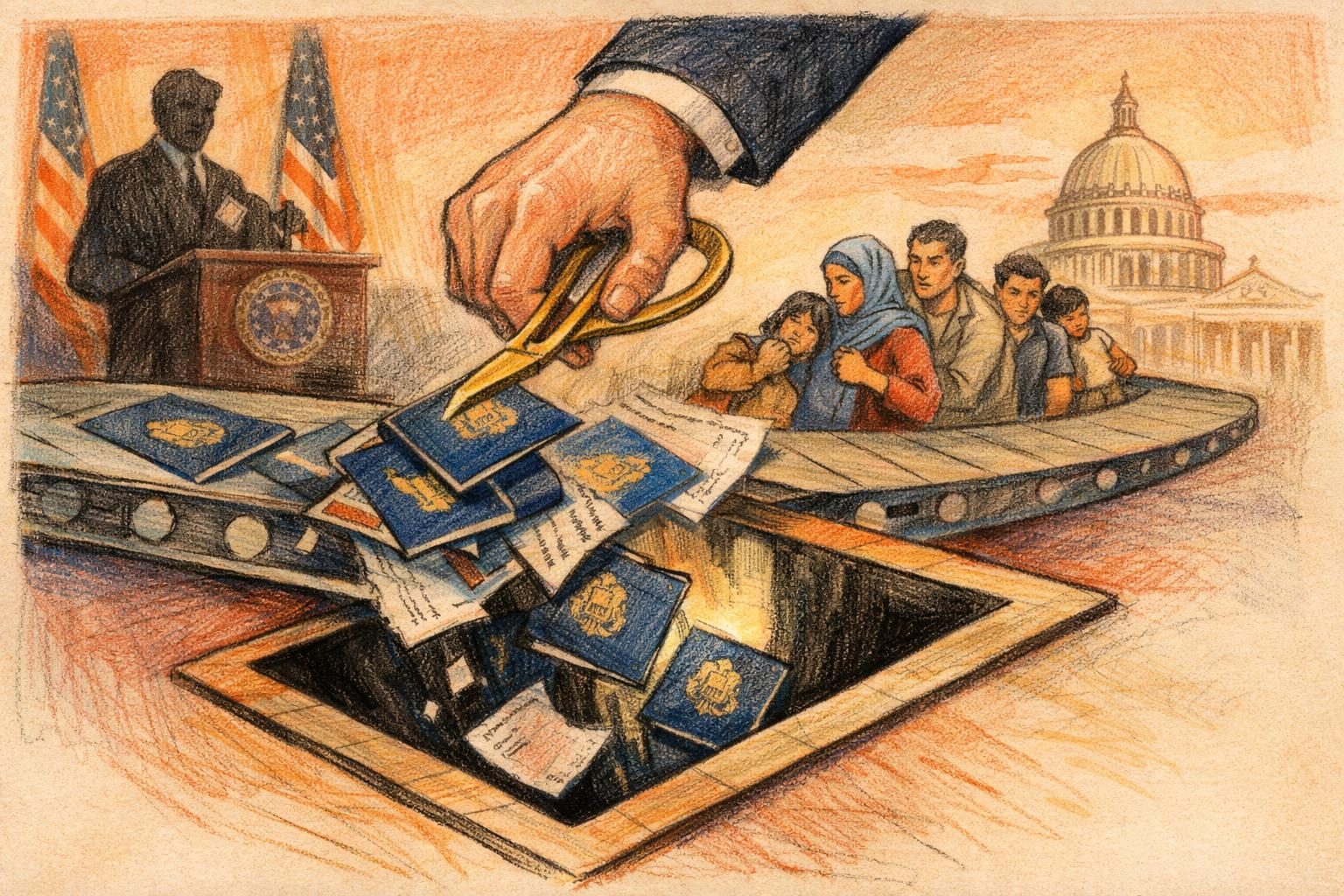
On July 20, 2026, the Justice Department announced denaturalization actions against 10 naturalized U.S. citizens accused of serious crimes, including sexual abuse of a child, health care and wire fraud, immigration fraud, and a cocaine-trafficking conspiracy. The department said the complaints were filed over the previous 30 days. It also said the new cases were part of what it called the administration’s largest denaturalization effort ever, a line that is doing a lot more political work than legal work. The government does have the power to seek revocation of citizenship when naturalization was illegally procured or obtained through concealment or willful misrepresentation. But the way the campaign is being packaged matters, because the public message is no longer just about case-by-case enforcement. It is about turning citizenship itself into something visibly conditional, revocable, and subject to a running political tally.
This was not a one-off announcement. The July 20 action followed a June 8 Justice Department release that said officials had filed denaturalization actions against 17 other naturalized people accused of offenses including sexual abuse of a minor, wire and bank fraud, and drug distribution. The department has now presented two large batches in quick succession, which makes the campaign look less like a narrow correction of isolated fraud and more like an ongoing enforcement push. That may be exactly what the administration wants: a durable political message that criminal conduct and immigration fraud can be linked to the loss of the most consequential status the government grants. Supporters will say that people who lied to gain citizenship should face consequences, and that is not a frivolous argument. Citizenship obtained illegally is not supposed to be beyond review.
Still, the scale and the branding matter. When the Justice Department highlights a superlative and ties it to a broader “largest” campaign, it is not just describing litigation. It is making a public claim about who belongs and what the government wants the country to fear. Denaturalization is among the harshest civil actions the state can take against someone who has already been admitted as a citizen. It does not simply punish a crime; it argues that the original grant of citizenship should be erased. That is a serious remedy, and it should be supported by serious evidence and handled with discipline. Announcing it as part of a sweeping drive invites the opposite reading: that the administration wants the punishment itself to do the messaging.
That is the political risk. The more the government frames these cases as a sweeping purge of criminals who “lied their way” into citizenship, the more it encourages the belief that naturalized Americans exist under a lesser, more fragile version of belonging. Even if the actual defendants are all alleged to have committed serious offenses, the rhetoric does not stay confined to them. It reaches every naturalized citizen who is expected to read the news and wonder whether the state is treating citizenship as a stable legal status or a temporary privilege that can be spotlighted, revoked, and used to signal toughness. The law may permit denaturalization in limited circumstances. The administration’s public posture is what turns a legitimate tool into a broader test of tone, restraint, and due process.
There is also a straightforward institutional problem with campaigns like this: once the government brands them as a major offensive, it raises the cost of any weak filing or overreach. If the cases hold up, the administration still normalizes the idea that citizenship can be rolled back as a form of performance. If a case falters, critics will point to the public theatrics and say the legal work was never the point. Either way, the government gets pulled toward the same conclusion — that it wants the punishment to be seen before the case is proven. That is not a fatal flaw in the law. It is a flaw in the politics wrapped around it.
Comments
Threaded replies, voting, and reports are live. New users still go through screening on their first approved comments.
Log in to comment
No comments yet. Be the first reasonably on-topic person here.