
Trump keeps turning tariffs into theater
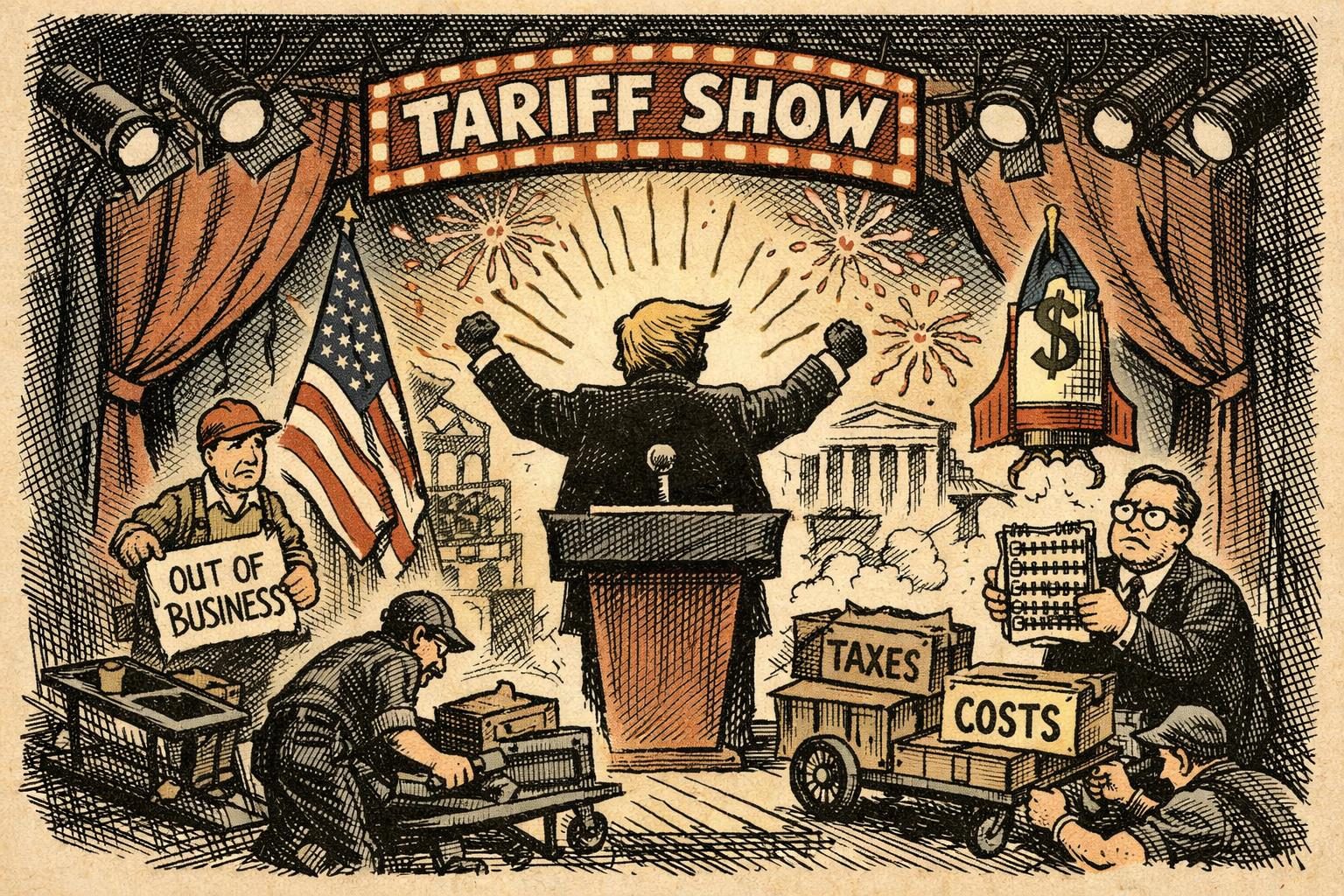
The White House has a knack for turning economic pain into a stage show. In the space of two days, on July 20 and July 21, 2026, it rolled out new tariff actions and a defense-supply-chain order in language built less for explanation than for applause. The message was unmistakable: the president is not just adjusting trade policy, he is performing toughness. That performance matters because it frames every new duty, sourcing rule, or procurement directive as proof of strength before anyone outside the government has had time to read the fine print. Yet the fine print is where the costs live. Businesses have to sort out what takes effect, when it takes effect, and what exactly gets hit, while the administration gets to declare victory in the meantime. The gap between those two realities is the whole story.
The clearest example is the set of Canada proclamations, which impose additional duties on motor vehicles, alcoholic beverages, and dairy products under Section 338, with implementation set for August 19, 2026. That is not a symbolic date. It gives importers only a short window to decide whether to renegotiate contracts, reroute shipments, stockpile goods, or simply absorb the hit and pass it on. Any of those choices has consequences, and none of them are clean. A tariff announced in late July lands immediately in planning meetings, pricing sheets, and supply orders, even if the formal customs changes do not hit until mid-August. For companies with cross-border exposure, the practical question is not whether the president sounds forceful. It is whether they can rework operations fast enough to survive the new costs. The administration’s messaging glosses over that problem by treating the announcement itself as the achievement. But for importers, distributors, and downstream buyers, the announcement is only the start of the headache.
The separate defense-supply-chain order fits the same pattern. It is presented as a decisive national-security move, one that sounds broad, muscular, and politically satisfying. The language is designed to suggest that Washington is taking direct control of critical inputs and steering them toward domestic acquisition. That may sound tidy in a statement, but the real world is messier. Supply chains are built through contracts, existing inventories, regulatory timelines, and relationships that cannot be rewritten overnight simply because a White House fact sheet says the country should source differently. There may be legitimate policy reasons to rethink dependence on foreign suppliers for critical materials, and there may be areas where the administration’s approach produces concrete changes. Still, the public posture of these actions is doing a lot of work. The order is framed as proof that the president is protecting national security and industry at the same time, but it is too early to know how much of that promise survives implementation. As with the tariff proclamations, the announcement is being treated as if it were the outcome.
That style of governing has a cost beyond the balance sheets. It trains everyone — businesses, investors, foreign governments, and voters — to watch the performance first and the policy second. Each new proclamation becomes a test of political durability, a way to show who is in charge rather than a sober effort to create predictability. That may be useful if the goal is to dominate the news cycle and keep the public focused on confrontation. It is less useful if the goal is stable commerce. Companies affected by these measures do not get the luxury of treating them as branding exercises. They have to price goods, schedule shipments, and decide whether to spend money on compliance today or wait for a legal challenge, a technical adjustment, or another reversal tomorrow. Trump’s tariff habit has become a governing aesthetic: issue the order, announce the win, and dare everyone else to catch up. The White House can call that strength if it wants. But strength in trade policy is usually measured by how much certainty it creates, not how loudly it can celebrate uncertainty. Right now the administration seems more interested in theater than in that quieter, less photogenic kind of competence.
Comments
Threaded replies, voting, and reports are live. New users still go through screening on their first approved comments.
Log in to comment
No comments yet. Be the first reasonably on-topic person here.