
Trump’s Canada Tariff Blitz Spreads Across Vehicles, Alcohol, Dairy and Aluminum
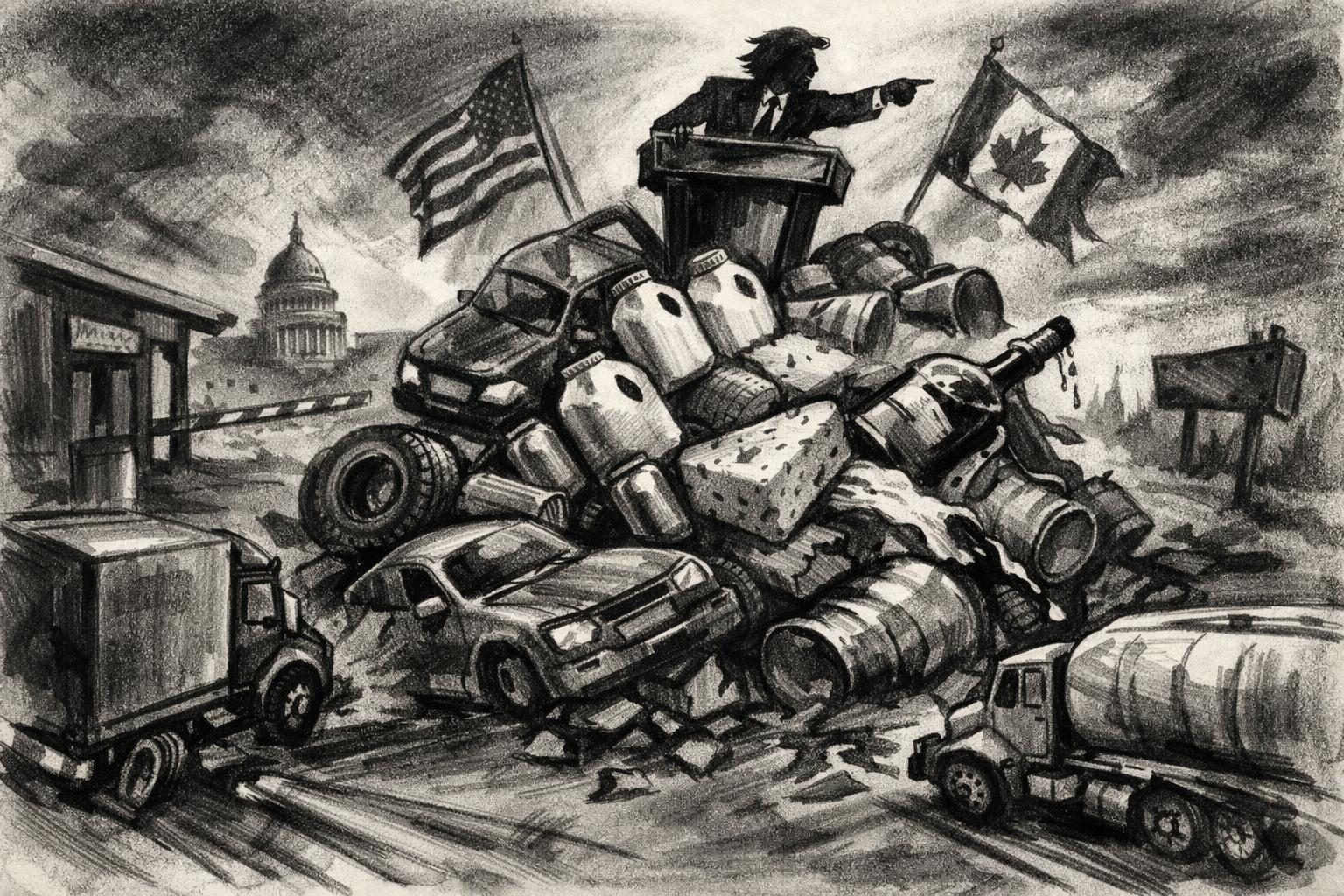
The White House’s July 20 tariff burst aimed at Canada did not come in the form of one neat, easily digestible order. It arrived as a cluster of separate presidential actions and related fact sheets, each aimed at a different slice of the cross-border economy. One action covers motor vehicles, another alcoholic beverages, another dairy, and a separate move deals with aluminum. Taken together, the paperwork points to a broader escalation than a single headline about tariffs on Canada would suggest. It also suggests the administration is not just targeting one pressure point, but spreading the squeeze across industries that reach deep into manufacturing, agriculture, retail, and distribution.
That scattered structure matters because it changes how businesses have to respond. Importers cannot simply read one proclamation, file it away, and adjust later. They have to sort through multiple legal instruments, determine which products are affected, and decide how to handle pricing, shipping, and inventory before the changes hit. The vehicle action is especially significant because it imposes an additional 50% ad valorem duty on certain Canadian products and sets an effective date of August 19. The White House says it is relying on Section 338 of the Tariff Act of 1930 and Section 604 of the Trade Act of 1974, a legal combination that appears designed to give the administration a broad enough footing to act while still sounding narrow enough to survive immediate criticism. In its accompanying explanation, the administration said the president signed three Section 338 proclamations imposing additional 50% tariffs on certain goods of Canada. That kind of compartmentalized rollout may help the White House argue each step is tailored, but the cumulative effect is plainly more sweeping than the individual labels imply.
The result is a trade offensive that feels less like a single strategic design and more like a layered response to a long list of grievances. That is not just a rhetorical problem; it is an operational one. Each new tariff layer raises compliance costs, forces customs and logistics decisions, and complicates contracts that were written under a very different set of assumptions. Businesses that rely on Canadian inputs or sell into Canadian markets now have to consider whether to absorb the cost, pass it along, or change sourcing altogether. Those choices can ripple quickly through supply chains, especially when the affected goods include vehicles, beverages, dairy products, and aluminum, all of which feed into other products and industries beyond their immediate markets. The White House wants to frame this as toughness and reciprocity, but the practical message to companies is uncertainty. It is hard to plan for growth when the rules can be rewritten by a stack of announcements landing on the same day.
There is also a legal and political subtext to the way this was done. The administration appears to be using separate proclamations partly to make each measure look more bounded and partly to make it harder to knock down the whole program at once. That is a useful tactic if the White House expects legal challenges, or at least expects that some piece of the tariff program could be slowed, narrowed, or invalidated. But it also signals that the policy is being built to withstand friction rather than to create clarity. Canada is not a remote or peripheral trading partner that can be isolated without consequences. It is one of the United States’ closest and most integrated commercial counterparts, which means this kind of action is likely to trigger not just diplomatic pushback but day-to-day disruption in businesses that have spent years optimizing around a relatively open border. The administration may see leverage in the new duties, but leverage only works if the other side has no alternatives. In this case, both governments and the private sector have plenty of reasons to prepare for retaliation, substitution, and delay.
The broader pattern is what makes the episode feel more chaotic than disciplined. Instead of one clearly framed action with one clearly stated purpose, the White House appears to be moving on several fronts at once and asking the public to see the sum as a coherent strategy. That may be politically useful in the short term, especially with an audience that rewards tariff threats as a show of force. But the cost of that approach falls on importers, manufacturers, farmers, beverage distributors, and consumers who have to live with the aftereffects. Every added duty can create new pricing pressure and new contract disputes, and every new proclamation forces another round of legal interpretation. Whether the White House intends it or not, the effect is to turn trade policy into a recurring stress test for the economy. The administration can call that resolve. Businesses are more likely to call it volatility, and not the kind they can easily price into their balance sheets.
Comments
Threaded replies, voting, and reports are live. New users still go through screening on their first approved comments.
Log in to comment
No comments yet. Be the first reasonably on-topic person here.