
Trump’s Iran and Gaza messaging is starting to look like policy by assertion
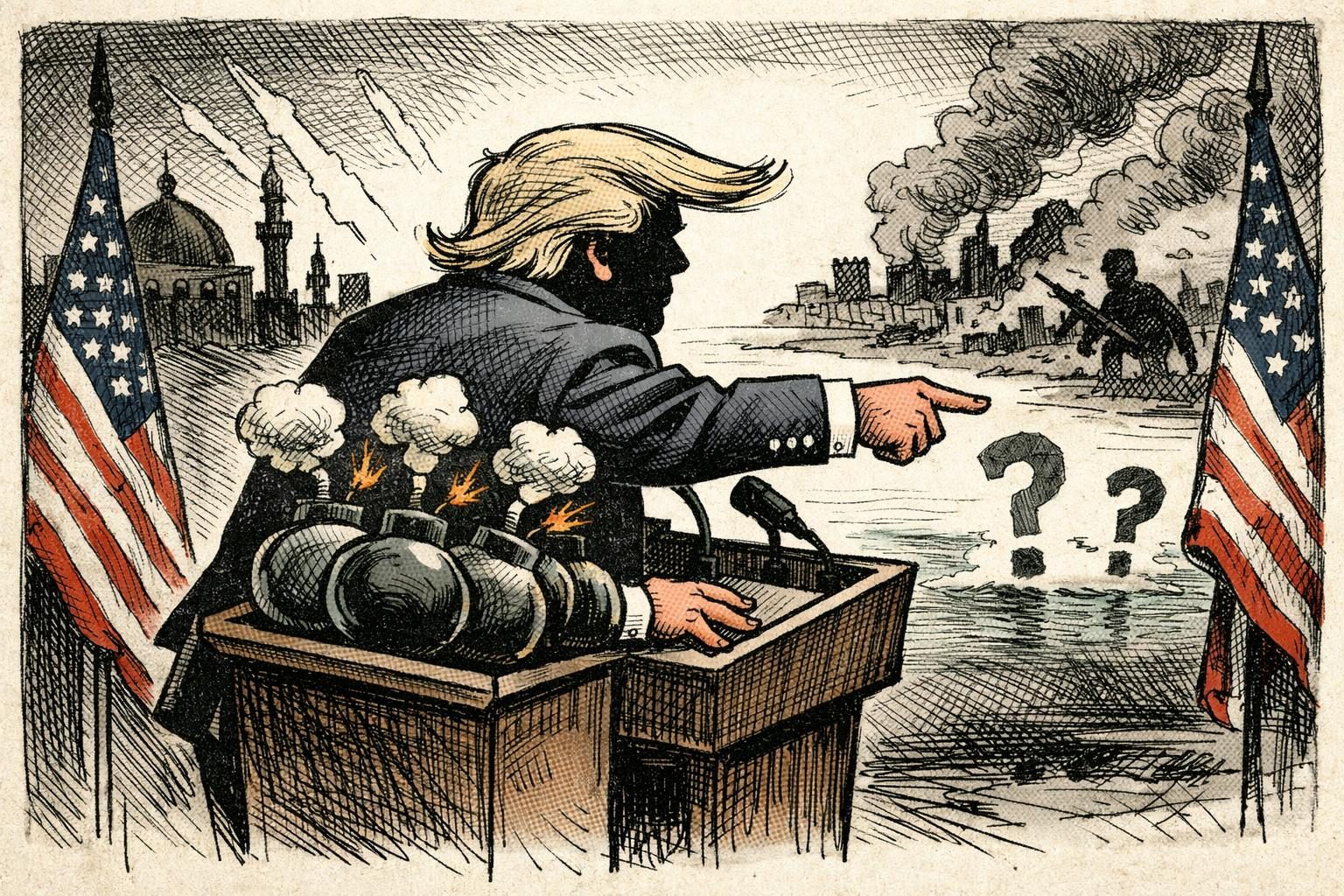
President Donald Trump spent much of July 20 talking about Iran in a way that sounded less like a briefing on an unfolding security problem and more like a verdict handed down in advance. His language was forceful, absolute, and designed to project control: the United States would respond, Iran would pay, and the situation would be framed on the White House’s terms. That approach may be politically useful in the short term, especially for an administration that likes to present itself as decisive and unafraid of escalation. But it also blurs a crucial distinction between what has actually been established and what the president wants the public to believe has been established. In a fast-moving regional conflict, that gap matters. When the administration talks as though the end state is already known, it risks substituting confidence for evidence.
That is the core problem with Trump’s Iran messaging: it treats public assertion as a substitute for policy clarity. The White House can speak in strong, certain language, but strength of tone does not resolve the underlying military and diplomatic uncertainties. Shipping lanes remain vulnerable, proxy attacks can flare without much warning, and retaliation between the United States, Iran, and aligned forces is still something that can evolve rapidly. Yet the administration’s public posture has leaned toward the opposite of caution, pressing the idea that events are already under control and that the outcome is already legible. That kind of message may help create an image of command, but it can also create a false sense of finality. It leaves lawmakers, allies, and the public trying to decipher a changing situation through a layer of rhetoric that is doing more work than the facts themselves.
There is also a political cost to this style that accumulates over time. Each time Trump presents a developing crisis as though it already has winners and losers, he reduces the room for correction if the facts move in an inconvenient direction. If conditions calm down, he can present that as proof that his instincts were right all along. If conditions worsen, he can dismiss criticism as weakness or hindsight. That is a durable political tactic, but it is not the same thing as responsible governance. It lowers the standard for proof and encourages everyone around the president to accept more certainty than the evidence can support. In a national security environment, that is a bad habit to normalize. It is one thing to project confidence. It is another to ask the country to confuse confidence with a settled policy outcome.
The White House seems especially inclined to use this approach when the goal is not to explain a complicated chain of events but to drive a mood. The tone becomes the message. The message becomes the policy. And the policy, at least in public, becomes whatever the president says it is at that moment. That is why the rhetoric can sound so familiar from one crisis to the next. It relies on volume, repetition, and insistence until the assertion begins to crowd out the uncertainty that should remain visible. But those tools are better suited to a rally or a cable-news monologue than to a regional security problem involving military moves, retaliatory risk, and diplomacy that may still be happening behind the scenes. The administration can try to win the day by speaking forcefully, but it cannot actually talk its way around the need for clarity. If the government wants people to believe it has a handle on events, it has to explain what is known, what is being assumed, and what remains unresolved. So far, that distinction has not been made cleanly enough.
That is why this episode reads as a self-inflicted political problem even if it is not as immediately severe as some of the administration’s other fights. The consequences may not be as broad or as instantly felt as a major economic move, but the governing pattern is the same: Trump frames a fluid situation in the most absolute terms available, then acts as though the public should simply accept the framing because it was delivered with enough force. That can be an effective way to dominate the news cycle for a few hours. It is a much weaker way to manage a complex international confrontation. If the administration wants the benefit of being seen as strong, it also has to accept the burden of being precise. And precision means acknowledging uncertainty when it exists, not papering it over with certainty that has not yet been earned. On Iran, as on Gaza and other foreign policy flashpoints, the bigger problem is not just that Trump is projecting confidence. It is that he is beginning to govern as if the projection itself were the proof.
Comments
Threaded replies, voting, and reports are live. New users still go through screening on their first approved comments.
Log in to comment
No comments yet. Be the first reasonably on-topic person here.