
Trump’s tariff fever keeps rattling Canada — and U.S. businesses are still stuck with the mess
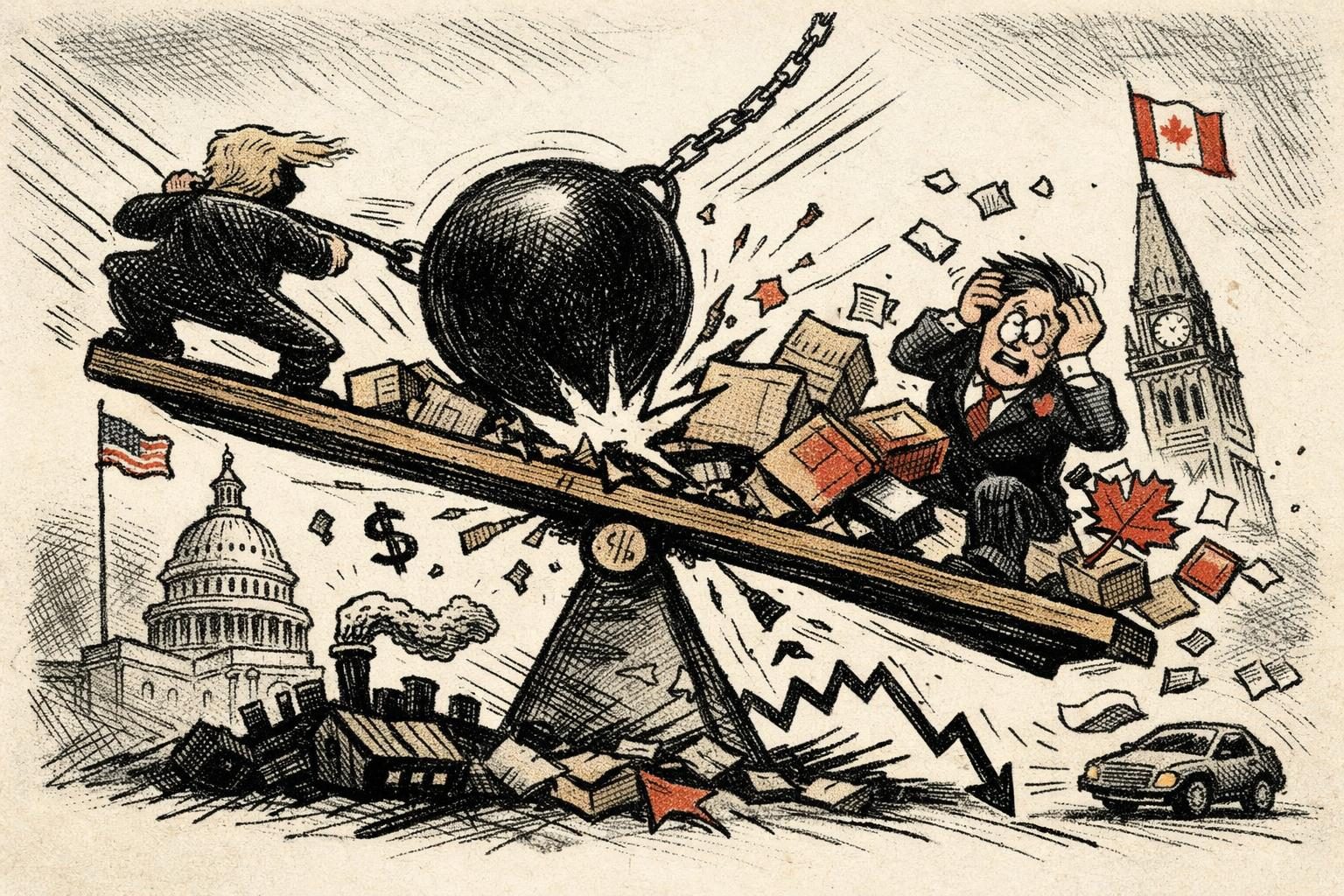
President Trump’s tariff campaign against Canada was still ricocheting through Washington and the business world on August 4, even though the underlying policy had been announced earlier in the month. The administration continued to defend and operationalize the new duties instead of softening them, keeping importers, manufacturers, and trade officials in a holding pattern as they tried to figure out what the final costs would be. Under the White House proclamation, certain Canadian imports are set to face an additional 50 percent duty beginning August 19, a step the administration has framed as a response to what it calls Canadian discrimination against U.S. commerce. That may sound like a distant trade fight in political language, but in practice it means companies have to reroute shipments, rewrite contracts, and decide whether to absorb the hit or push prices higher. The policy is already altering behavior before the first extra dollar of duty is actually collected, which is exactly why it has become such a headache. Trade moves like this do not stay abstract for long; they become line items, deadlines, and disrupted planning almost immediately.
The White House’s posture also shows how Trump’s tariff strategy keeps turning trade policy into a blunt-force pressure campaign rather than a stable framework. The administration is presenting the Canada move as a punishment for alleged unfair treatment, and that message is meant to project toughness. But the same message also signals to businesses that there is no obvious endpoint, no clear rule set, and no guarantee that the next announcement will not be even harsher or just differently targeted. That uncertainty is part of the damage. Companies that depend on cross-border supply chains do not operate well in a climate where policy can swing from one month to the next, especially when the swings are driven by retaliation language rather than a transparent economic plan. The result is a familiar Trump-world contradiction: the president claims to be protecting American industry, yet the people actually trying to produce, import, distribute, and sell goods are left managing the fallout. For many of them, the immediate problem is not the politics of tariffs but the practical impossibility of making long-term decisions while the administration keeps the ground moving under their feet.
The diplomatic side of the episode is no cleaner. Canada is not some faraway adversary; it is one of the United States’ closest economic partners, which makes the escalation easier to announce and harder to normalize. By moving ahead with new duties and doubling down on the rationale behind them, the administration is treating a major ally more like a recurring target in an ongoing penalty box than like a partner in a shared trading system. That matters because once a fight of this kind hardens, it does not just affect goods crossing the border. It spills into negotiations, trust, and the basic expectation that existing commercial ties will not be rewritten on a whim. The more Trump leans on tariff threats as a general-purpose tool, the more every disagreement starts to look like an excuse for another round of punishment. That may play well with supporters who like the idea of a president muscling other countries into submission, but it leaves businesses and foreign officials with the far less satisfying task of trying to predict how much of the market they can still count on next week. In that sense, the tariff drive is not only a trade policy; it is a stress test for how much uncertainty the economy can absorb before the costs become impossible to ignore.
The deeper problem is that this is not merely a one-off flare-up, but part of a broader pattern in which tariff escalation keeps creating the very instability it claims to solve. The administration’s trade shop has leaned into reciprocal-tariff rhetoric and retaliation language that is useful for political theater but far less useful for planning, compliance, or investment. Businesses need predictable rules, not a rotating cast of penalties and temporary explanations. They need to know whether they should absorb higher costs, pass them on, or change suppliers entirely, and they need enough confidence in policy to make those choices without fear that the next announcement will wipe out the calculation. So far, Trump’s latest tariff push has offered the opposite: more noise, more uncertainty, and more pressure on the same companies that are supposed to be the winners of his trade agenda. That is why the blowback is so persistent. Even if the duties are eventually narrowed, delayed, or partially unwound, the damage from the threat itself will have already done its work. And if the administration keeps presenting disruption as strength, it will keep discovering that markets and businesses tend to treat it as exactly what it is: a mess that someone else has to clean up.
Comments
Threaded replies, voting, and reports are live. New users still go through screening on their first approved comments.
Log in to comment
No comments yet. Be the first reasonably on-topic person here.