
DOJ keeps putting its shoes under the voting booth
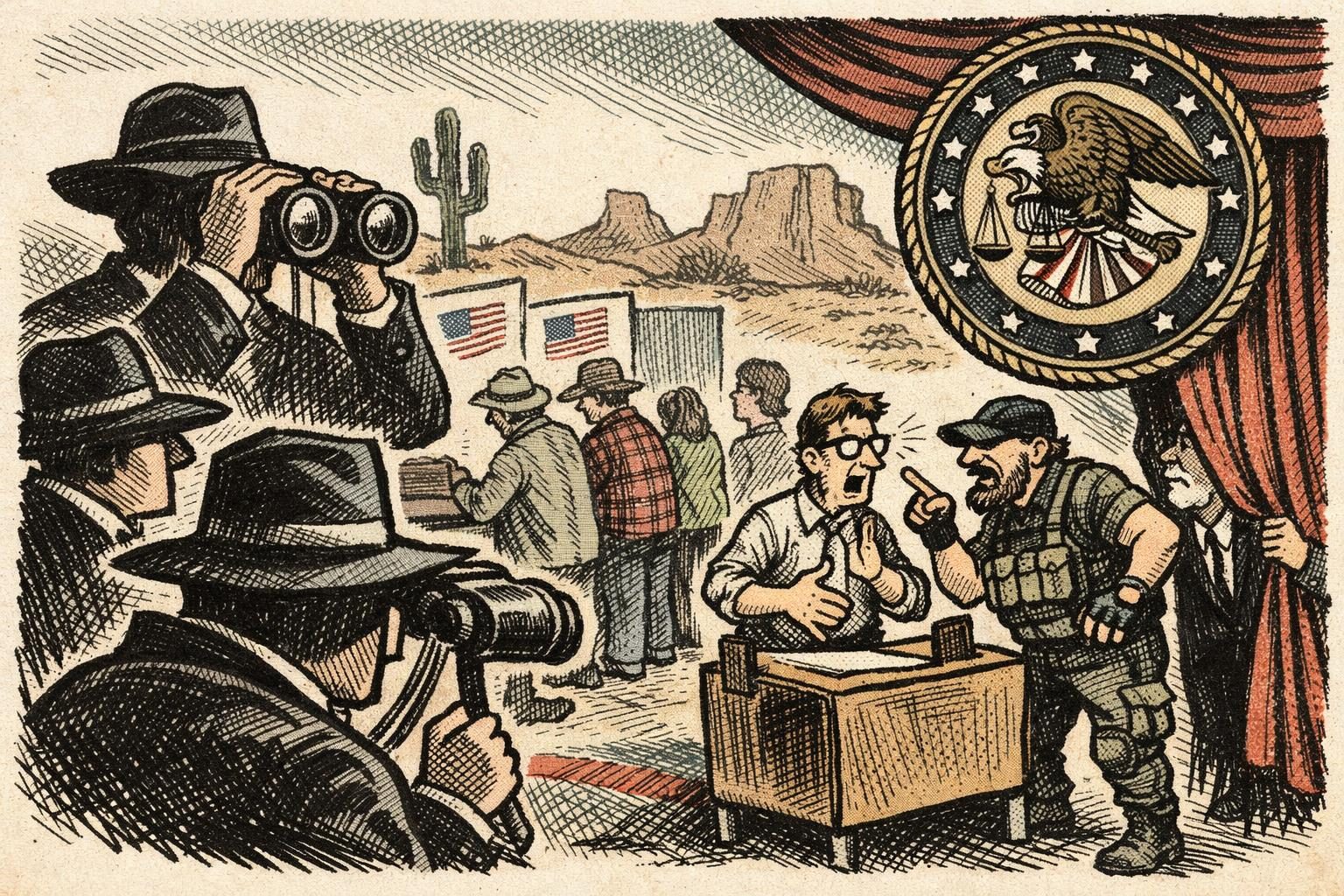
The Justice Department said on July 22 that it had monitored polling sites in three Arizona counties during the state’s July 21 primary, describing the effort as a routine enforcement step meant to support transparency, ballot security, and compliance with federal law. According to the department, staff from the Civil Rights Division and U.S. Attorney’s Office were involved in the operation. The counties named were Maricopa, Apache, and Pima, and local election officials in those places reportedly issued letters authorizing federal personnel to observe selected polling locations. On its face, that is a limited and familiar kind of election oversight, the sort of thing federal officials have long said they can do when local authorities invite them in. But in the current political climate, even a narrow monitoring action can land with the force of a statement, especially when it arrives in a state where elections are already treated like a permanent national referendum. The department’s explanation may be ordinary, but the setting makes the move feel larger than the paperwork behind it.
That tension is exactly why the announcement has the flavor of election theater. The Justice Department says it regularly sends personnel to monitor compliance around the country, and nothing in the public record here suggests that Arizona was unusual on the legal side. Local authorization appears to have been part of the process, which matters because it anchors the activity in standard election administration rather than in some sudden federal takeover. Still, the timing and visibility of the announcement matter too. A federal statement about polling-place monitoring released after a high-profile primary, in a state that has become a political focal point, is hard to separate from the broader spectacle around election integrity. In the Trump era, the federal government does not get the benefit of the doubt when it appears near a ballot box. Every action is filtered through years of claims, counterclaims, and grievance politics that have made even mundane enforcement look choreographed.
That is part of the reason the department’s role is so easy to misread, or to weaponize. On one side, supporters of the monitoring argue that federal presence can reinforce access and compliance, especially where there are concerns about whether polling sites are following the rules. On the other side, critics see the possibility of pressure, selective scrutiny, or at least the appearance of partisan signaling, particularly when the administration has spent so much time framing election administration as a battlefield. The documents and public statements do not show that anything improper happened in Arizona. They do show how quickly routine oversight gets pulled into the country’s larger argument about fraud, intimidation, and legitimacy. Once that happens, the issue stops being whether observers were present with permission and starts being what their presence is supposed to mean. In the current political environment, that meaning is never neutral for very long.
The broader problem is that trust in elections is now so damaged that even legal, narrow monitoring can feel like provocation. The Justice Department says its presence was about ensuring that federal voting-rights protections were respected, which is the kind of language one would expect from a law-enforcement agency performing an administrative function. But the administration around it has made a habit of treating elections as a performance space, where visible intervention is often treated as proof of seriousness and caution is treated as weakness. That creates a strange loop: the more the government wants to show it is watching, the more it risks looking like it is trying to stage a message. Arizona’s primary may have proceeded with only ordinary federal observers at a few selected sites, and that may be all there is to it. Yet in a country where the president has spent years inviting voters to see election administration as suspect unless it serves him, even a familiar monitoring announcement can feel like another turn in a long-running political production. The law may be doing its usual work. The optics, as usual, are doing something else entirely.
Comments
Threaded replies, voting, and reports are live. New users still go through screening on their first approved comments.
Log in to comment
No comments yet. Be the first reasonably on-topic person here.