
Trump’s Lebanon meeting is building an unnecessary diplomatic trap
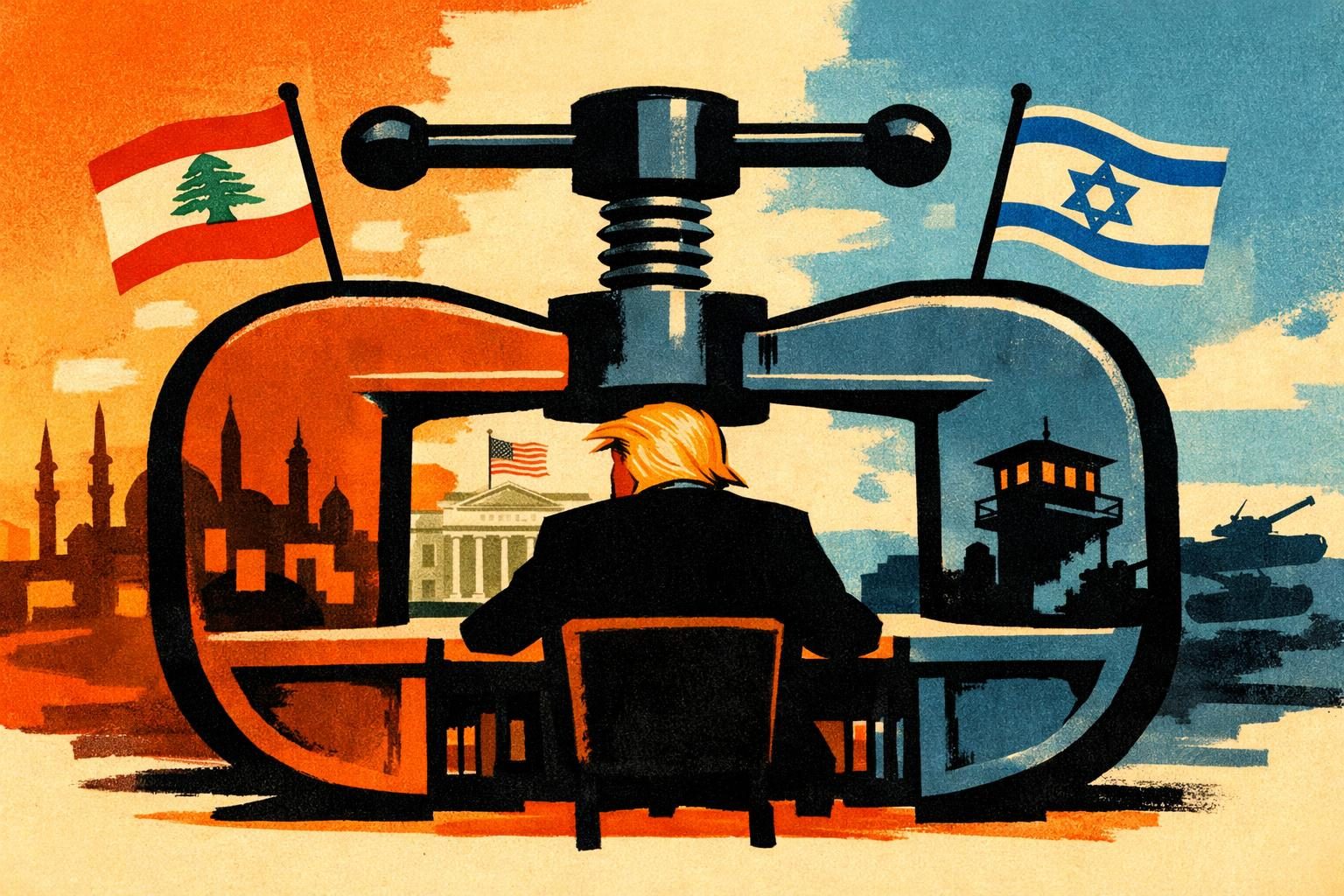
The White House is preparing to host Lebanese President Joseph Aoun at a moment when Washington is being asked to do something unusually difficult: turn a high-stakes regional standoff into a usable diplomatic win without pretending the underlying problems have disappeared. Beirut wants help pressing for an Israeli withdrawal from Lebanese territory, and it is also trying to move forward on a plan to disarm Hezbollah, a demand that goes to the heart of Lebanon’s internal political balance. That combination alone would make the meeting delicate. But it becomes far more complicated because President Donald Trump has already spoken in public as if Israeli forces should pull back or redeploy from parts of Lebanon and southern Syria, giving the encounter a built-in expectation problem before the two leaders even sit down. Once the White House starts signaling that kind of outcome in advance, it becomes harder to later explain delay, partial movement, or disagreement as anything other than failure. In other words, the meeting is not just about what Trump can extract from the region; it is also about whether he can avoid being trapped by the promises that came before the cameras were turned on. ([whitehouse.gov](https://www.whitehouse.gov/presidential-actions/?utm_source=openai))
Lebanon is not presenting Washington with a simple, tidy bargain. The country is trying to navigate among U.S. pressure, Israeli security concerns, Hezbollah’s continued military power, and a domestic political system that has very little margin for error. Aoun arrives in Washington carrying a written proposal and a fragile mandate, which is a diplomatic way of saying he has something to offer but not enough strength to guarantee that anyone will love it. The Lebanese government wants help creating conditions for a withdrawal, but it also faces the reality that Hezbollah does not operate on a timetable set in Washington or Jerusalem. Disarmament is the sort of issue that can sound straightforward in theory and still be nearly impossible in practice, especially in a country where armed force is tied to sectarian politics, regional alliances, and the memory of past wars. That means any American role is going to be judged not only by whether it nudges Israel, but by whether it can produce movement on the Lebanese side without detonating a wider crisis. Trump has cast himself as both a peacemaker and a hard-edged enforcer, but those two personas do not always fit together cleanly when the issue is a border, a militia, and a national government that is already under strain. ([whitehouse.gov](https://www.whitehouse.gov/presidential-actions/?utm_source=openai))
That is why the risk here cuts in more than one direction. If Trump leans hard on Israel, he may anger allies and critics who prefer a more protective stance toward Israeli military freedom of action, especially while the broader region remains unsettled. If he leans too gently, or if the meeting ends in vague statements about continued talks, then the White House will have handed fresh ammunition to anyone who says his Middle East rhetoric is easier than his Middle East results. The Lebanese side is clearly hoping that a presidential audience in Washington will generate pressure that Beirut itself cannot create on its own. But that hope runs into a hard political limit: once the American president has publicly indicated where he wants the story to go, every party involved has an incentive to test whether he will actually spend political capital to get there. The result is a negotiating environment in which everyone can see the stakes, and everyone can also see the possible gap between a headline announcement and a durable agreement. That gap matters because the broader situation still includes military tension, displacement, and a Hezbollah leadership that has no obvious reason to surrender leverage simply because a U.S. president would like a cleaner map. ([whitehouse.gov](https://www.whitehouse.gov/presidential-actions/?utm_source=openai))
The larger pattern is familiar enough to be a problem by itself. Trump has often treated foreign policy as a stage where toughness can be performed for domestic advantage, with the assumption that forceful language will translate into leverage later. Sometimes that works for a while, at least in the sense that it creates momentum or headlines. But it also creates obligations, and obligations are where the trouble starts. When a president openly telegraphs a preferred outcome before the meeting, allies learn how to box him in, adversaries learn how to wait him out, and intermediaries learn how to price the gap between the rhetoric and the reality. The Lebanon file is not yet a full-scale disaster, and that is exactly why it is useful as a measure of how Trump’s style can complicate his own diplomacy. The severity is lower than a catastrophic policy breakdown because there is still room for maneuver, and because the talks themselves may produce some limited movement or at least a framework for more. Even so, this is a live example of Trump’s favorite foreign-policy trap: wanting the credit for a deal before the necessary groundwork has made one actually possible. If the meeting goes poorly, he inherits the disappointment. If it goes well, he inherits the next round of expectations, which in the Middle East is often the harder part to manage. ([whitehouse.gov](https://www.whitehouse.gov/presidential-actions/?utm_source=openai))
Comments
Threaded replies, voting, and reports are live. New users still go through screening on their first approved comments.
Log in to comment
No comments yet. Be the first reasonably on-topic person here.