
DOJ sues Milwaukee over a mask ban that federal agents say crosses the line
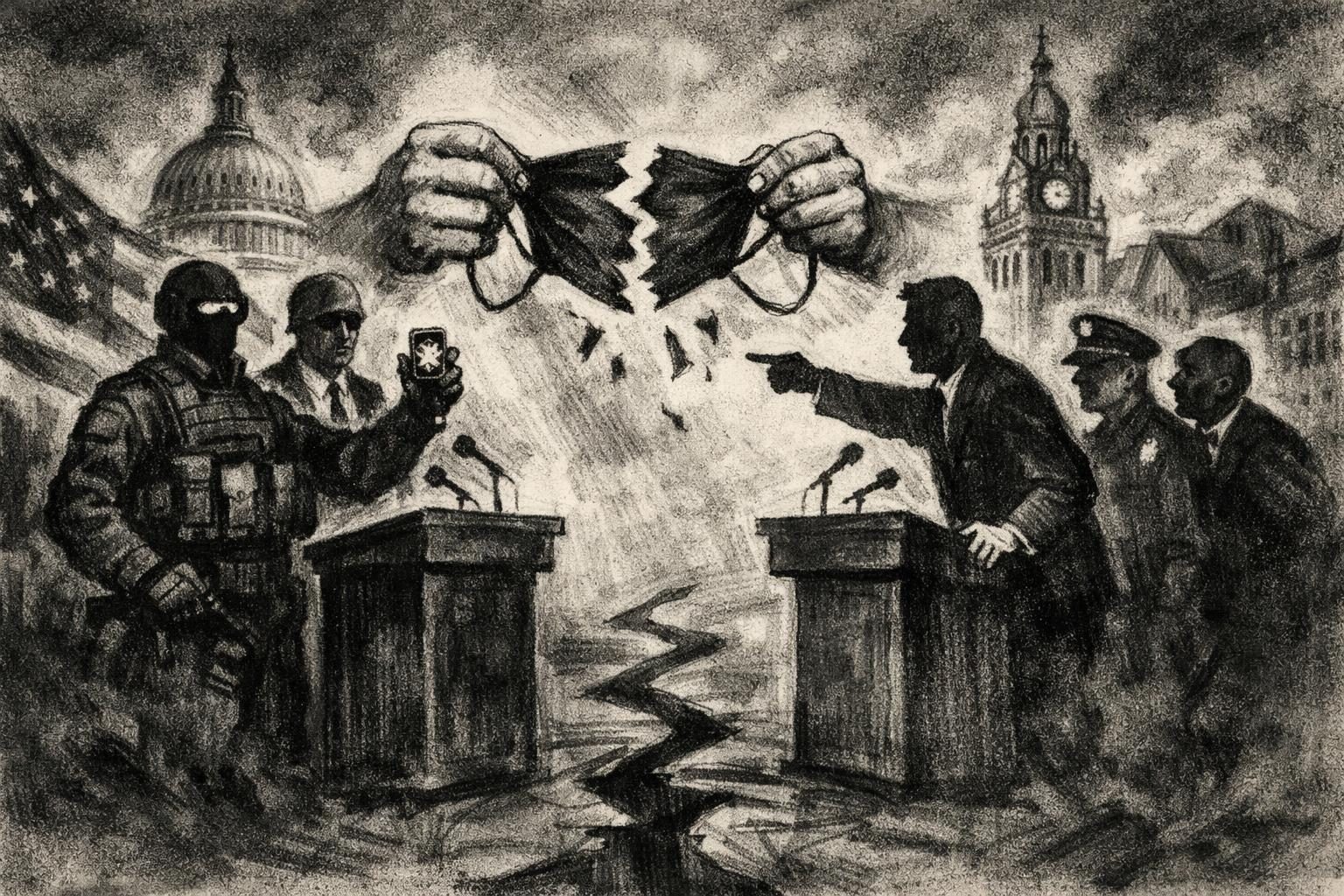
The Justice Department said on July 23 that it has filed suit against the City of Milwaukee and several top city officials over a local ordinance aimed at federal law enforcement officers operating inside the city. The complaint names Mayor Cavalier Johnson, City Attorney Evan Goyke, and Police Chief Jeffrey Norman, and it centers on a city rule that would bar federal officers from wearing masks and would require them to display individual identifiers while doing their jobs. In the department’s telling, Milwaukee is not simply setting a policy preference for its own streets. It is trying to impose local requirements on federal personnel, which the Justice Department says is unconstitutional. That makes the case more than a small dispute over public identification. It becomes a test of how far a city can go when it believes federal officers are acting in ways that undermine transparency, trust, or basic public accountability.
The immediate legal issue is straightforward enough even if the stakes are not. Can Milwaukee force federal officers to unmask and identify themselves when they are carrying out federal duties in the city? The city’s supporters argue that the answer should be yes, at least as a matter of policy, because masks can make it harder for the public to know who is conducting an arrest, search, or other enforcement action. They say identification requirements can reduce fear, improve accountability, and make it easier for residents to report misconduct or challenge an encounter later. Federal officials, by contrast, argue that masks and identifiers may be necessary in some settings for safety, operational security, and the protection of officers and their families. That is a real tension, not a fake one, and it is not hard to see why both sides think they have a legitimate case. But the Justice Department is not treating this as a shared policy dilemma. It is framing the ordinance as a direct legal overreach by a city that has no authority to regulate the conduct of federal officers in that way.
That framing is what turns a local ordinance into a larger political fight. In Washington, the lawsuit can be presented as a defense of federal supremacy and a warning to cities that want to place their own conditions on national law enforcement activity. In Milwaukee, the same case is likely to be viewed through a much different lens, one shaped by public anxiety over masked agents, anonymous authority, and the difficulty of holding anyone accountable when officers are hard to identify. Those two narratives are not identical, but both are plausible, and both are strong enough to sustain a long legal battle. The city’s position appears to be that if federal officers are going to exercise force or make arrests in Milwaukee, they should not be able to do so in a way that leaves residents unable to tell who they are. The federal government’s position is that local governments cannot dictate the conditions under which federal officers perform federal work. Once the dispute is described in those terms, every argument about masks and identifiers becomes a proxy for a wider debate over who gets to control the street-level exercise of power.
That is why the lawsuit feels like part legal challenge and part political message. The administration appears willing to make Milwaukee a test case for whether local resistance to federal law enforcement can be treated as a constitutional problem rather than a policy disagreement. If the Justice Department wins, it can point to a clean legal victory and say the Constitution forbids local officials from setting the terms for federal officers. If it loses, or even if the litigation puts a spotlight on public unease about masked law enforcement, the government may find itself having to defend not just its legal theory but the optics of its approach to policing and enforcement. Either way, the suit underscores how quickly a fight over public identification can turn into a broader argument about sovereignty, accountability, and the public role of federal agents. It also shows how litigation can sharpen conflict without resolving the underlying issue. A court ruling may settle the question of whether Milwaukee can enforce its ordinance against federal officers, but it will not answer the larger concern that prompted the ordinance in the first place.
That unresolved concern is likely to keep the case politically alive even if the law ultimately favors the federal government. Cities have long tried to shape policing through local oversight, public pressure, and rules designed to make officers easier to identify and harder to hide behind anonymity. Federal officers answer that the demands of their work sometimes require a level of discretion that local governments do not get to second-guess. The Justice Department is betting that the constitutional line is clear enough to stop Milwaukee from imposing its rule. But the deeper conflict is harder to solve, because it sits at the intersection of safety, visibility, and trust. A city that insists on identifiers is saying the public has a right to know who is acting with state power. A federal agency that rejects that demand is saying its officers need room to operate without local interference. The lawsuit, then, is not just about one ordinance in one city. It is about how a government that wants public confidence balances that goal against the instinct to keep its agents shielded, and whether the answer to local resistance is legal force or a better explanation of why anonymity is necessary at all.
Comments
Threaded replies, voting, and reports are live. New users still go through screening on their first approved comments.
Log in to comment
No comments yet. Be the first reasonably on-topic person here.