
DOJ pushes back on local control by suing over Milwaukee mask rules for federal officers
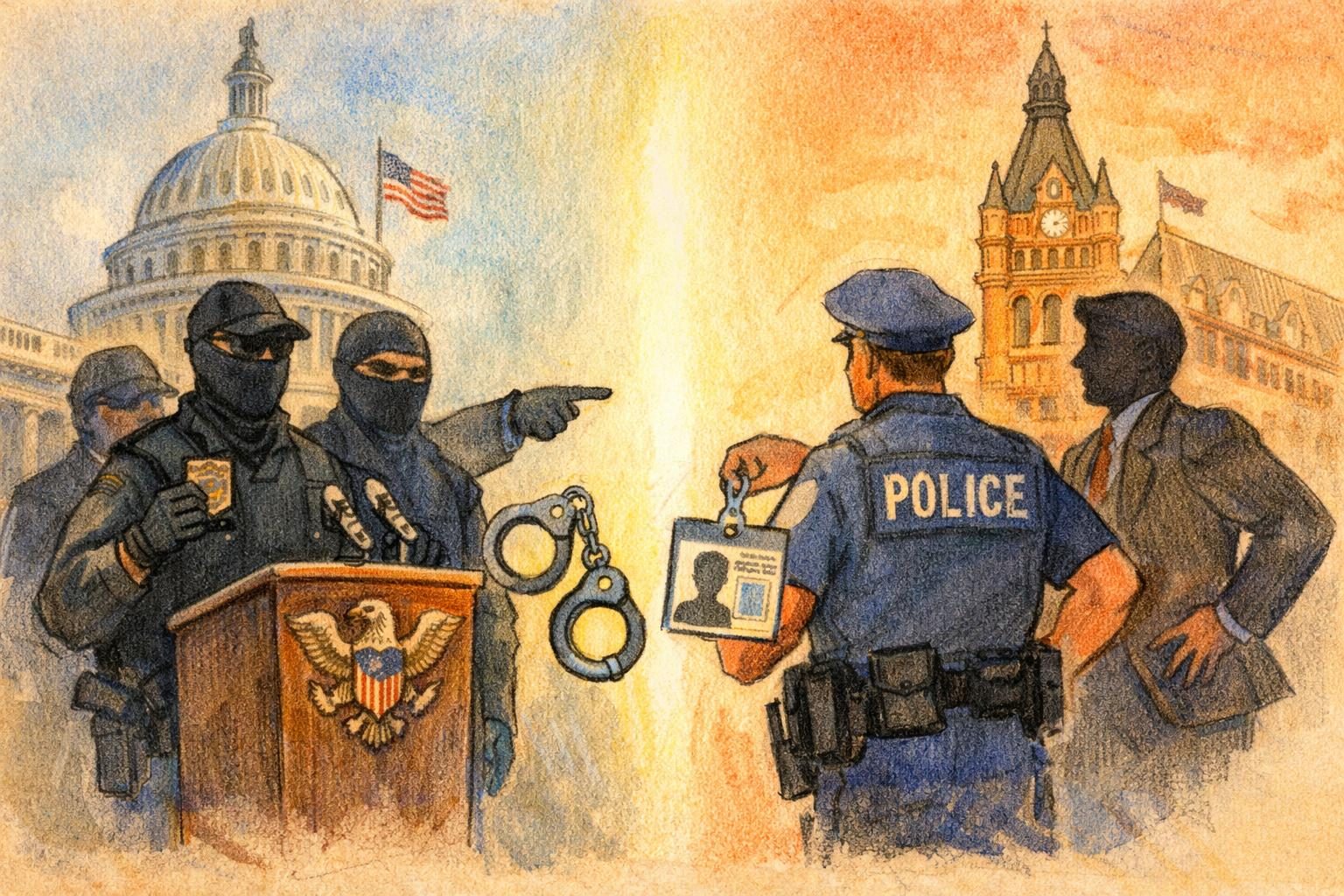
The Justice Department has turned Milwaukee’s new mask and identification ordinance into a federal court fight, filing a complaint on July 23 that frames the city’s rules as an illegal attempt to regulate how federal officers do their jobs. The ordinance bars law enforcement officers from wearing face coverings while interacting with the public and requires them to display identifying information or provide it on request. On paper, the city says the measure is about transparency and accountability. In practice, the federal government says Milwaukee has gone too far by trying to apply local rules to federal officers carrying out federal duties. That is the core of the case, and it is a bigger deal than a single municipal dispute over uniforms and badges. It is a test of whether local governments can set visibility standards for federal agents operating inside city limits. The answer will help define the balance between public accountability and federal autonomy well beyond Wisconsin.
The legal fight sits on top of a simple political problem: people do not like not knowing who is exercising power over them. Milwaukee’s ordinance reflects a view that encounters with law enforcement should not happen behind a layer of anonymity, especially when officers are masked and the public is expected to comply in real time. Supporters of the rule can argue, with some force, that visible identification is a basic safeguard when police or other armed officers are conducting stops, searches, or arrests. That concern has become more salient in an era when masked encounters can feel threatening even when they are lawful. Federal officials, for their part, are not making up a hypothetical risk either. They argue that masks can serve real safety needs, protect officers from retaliation, and preserve operational security in sensitive investigations or enforcement actions. Those two positions are both rooted in legitimate worries, which is why the dispute is so hard to dismiss. One side says the public has a right to know who is acting in its streets. The other says officers sometimes need to minimize exposure to do their work safely.
What makes the case legally and politically explosive is that Milwaukee’s ordinance appears to anticipate this conflict while still inviting it. The city adopted the measure earlier this year and included language saying it was not intended to interfere with proper state or federal law enforcement. That caveat matters because it suggests the city understood it was walking close to the line. The Justice Department, however, says the line was crossed anyway. From the federal government’s perspective, the ordinance is not a neutral transparency rule that happens to apply broadly. It is an attempt to regulate the conduct and presentation of federal officers as they perform federal work, which the government says local authorities simply do not have power to do. That is why the lawsuit invokes the broader principle of federal supremacy rather than treating the issue as an ordinary municipal code dispute. If a city can dictate whether federal officers cover their faces, then the city can shape how those officers interact with the public in ways the federal government says it has exclusive authority to control. If Milwaukee cannot, then local governments may have very little room to impose accountability rules on federal law enforcement even when public concern is intense. Either way, the court will be deciding more than a mask policy. It will be deciding who gets to set the terms of visibility when the federal government is on the ground inside a city.
The political implications are awkward for the administration because this is not just a legal defense of federal power. It is also a sign that the federal government is willing to litigate a trust problem instead of finding a political answer to it. Milwaukee’s ordinance did not appear out of nowhere. It reflects a broader unease among local officials and residents about masked officers, anonymous encounters, and the difficulty of holding armed authorities accountable when people cannot easily identify them. That unease is not confined to one city, and it is not likely to disappear because a lawsuit says the ordinance is invalid. The administration may ultimately prevail on constitutional grounds, and the law may well favor the federal government’s position. But a courtroom win would not by itself answer the public’s underlying complaint, which is that increasingly opaque law enforcement can erode confidence even when it is lawful. In that sense, the case is a political screwup as much as a legal maneuver. It invites a high-profile battle over a question that many residents experience as practical and immediate: when officers are acting with coercive power, how visible should they be? If the federal government wins, it will reinforce the principle that cities cannot impose their own identification standards on federal agents. If Milwaukee wins, other local governments may be emboldened to try similar rules. Either result will carry consequences far beyond this ordinance, because the real issue is not just who wears a mask. It is whether local accountability measures can shape federal power once that power enters city streets.
Comments
Threaded replies, voting, and reports are live. New users still go through screening on their first approved comments.
Log in to comment
No comments yet. Be the first reasonably on-topic person here.