
Trump Adds Israel Normalization شرط to Saudi Nuclear Deal After July 22 Rollout
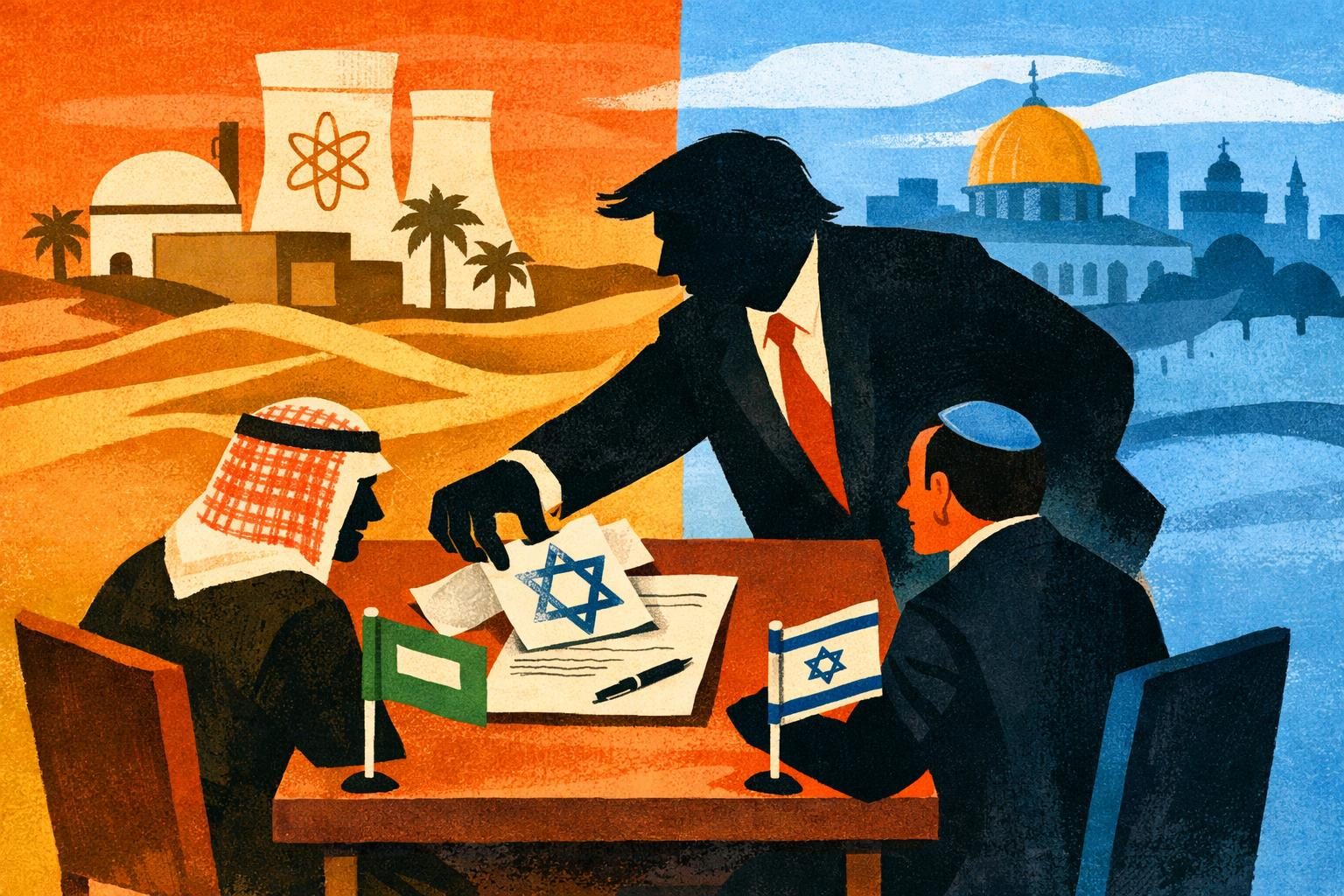
The U.S. and Saudi Arabia signed a civilian nuclear cooperation agreement on July 22, 2026, and the Energy Department said the pact would be transmitted to Congress for review. A day later, President Donald Trump attached a new political condition: he said Saudi Arabia should normalize relations with Israel through the Abraham Accords before the deal moves forward. ([energy.gov](https://www.energy.gov/articles/united-states-and-saudi-arabia-reach-historic-nuclear-cooperation-agreement?utm_source=openai))
That sequencing matters. The July 22 announcement described a peaceful nuclear cooperation agreement, along with an accompanying safeguards deal, and framed it as the legal basis for a long-term partnership. It did not mention Israel. Trump’s July 23 remarks added that topic to the file after the public rollout had already happened. ([energy.gov](https://www.energy.gov/articles/united-states-and-saudi-arabia-reach-historic-nuclear-cooperation-agreement?utm_source=openai))
The agreement is not the same thing as final congressional approval. Under the DOE’s description, the deal now goes to Congress, where lawmakers can review it under the process for civilian nuclear cooperation agreements. That leaves the administration with a signed framework on one hand and a still-open legislative path on the other. ([energy.gov](https://www.energy.gov/articles/united-states-and-saudi-arabia-reach-historic-nuclear-cooperation-agreement?utm_source=openai))
Saudi officials separately said the two governments signed the agreement on July 23 and said it reflects cooperation on peaceful nuclear energy, safety, security and nonproliferation. The White House, meanwhile, did not say Saudi Arabia had accepted Trump’s normalization condition. ([spa.gov.sa](https://www.spa.gov.sa/en/N2639735?utm_source=openai))
The result is a deal with two public faces: a nuclear accord announced as a bilateral energy agreement, and then a day-later demand that links it to a broader regional bargain. Whether those tracks stay fused will now depend on Congress, the Saudi response and how hard the administration pushes the Israel piece. ([energy.gov](https://www.energy.gov/articles/united-states-and-saudi-arabia-reach-historic-nuclear-cooperation-agreement?utm_source=openai))
Comments
Threaded replies, voting, and reports are live. New users still go through screening on their first approved comments.
Log in to comment
No comments yet. Be the first reasonably on-topic person here.