
Trump expands ratepayer pledge as data-center costs stay technical
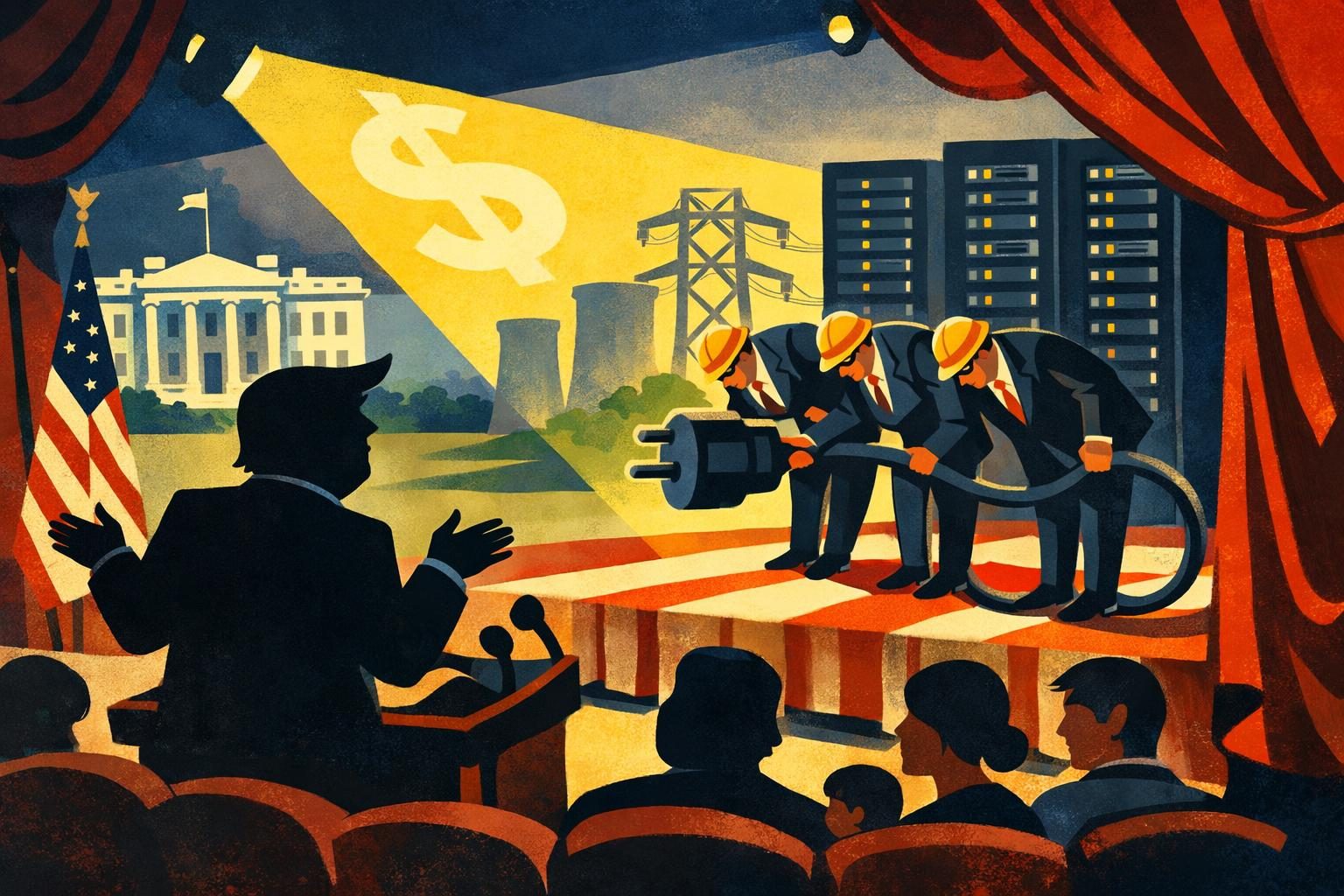
President Trump is trying to turn a very technical electricity question into a very simple political promise: if the artificial intelligence boom needs more power, the companies driving it should be the ones paying for the wires, substations, generation and other infrastructure that make that power possible. On July 23, the White House expanded its voluntary Ratepayer Protection Pledge, a move that builds on the administration’s earlier rollout in March and keeps the same basic message in circulation. The pitch is designed to reassure household customers that they will not be left subsidizing the energy demands of hyperscale data centers. It also fits neatly into Trump’s broader habit of translating complicated policy fights into a language of winners, losers and bill payers. But while the politics are simple, the electricity system is not, and that gap is where this pledge lives. The federal government can promote the framework, celebrate sign-ons and make the case loudly, but it cannot unilaterally rewrite the rules that govern how power is procured, priced and delivered.
The White House’s own language makes clear that this is more than a campaign-style slogan about cheaper bills. In the March materials that launched the pledge, the administration said participating companies would build, bring online or buy new generation resources, cover the costs of power-delivery upgrades for the data centers they are planning, and work out separate rate structures with utilities and state governments. The pledge also says companies should pay for the power and related infrastructure brought online to serve those facilities, even if the electricity is not fully used right away or the demand profile shifts over time. That is the heart of the administration’s argument: the grid should expand for AI, but ordinary ratepayers should not be the ones forced to absorb the risk of that expansion. At the same time, the language is aspirational in a very specific way, because it assumes a lot of cooperation from companies, utilities and regulators that do not answer to the White House. The pledge can set expectations, but it does not itself create a tariff, approve a transmission upgrade or force a utility commission to adopt a particular rate design.
That distinction matters because the mechanics of electricity pricing remain mostly state- and utility-driven, not federal. Even when a large data center wants to build quickly, it still has to navigate utility interconnection queues, grid-planning constraints, state public utility commissions, local permitting and the often slow process of deciding who pays for which piece of infrastructure. The pledge attempts to align those moving parts around one principle: the major commercial beneficiaries of the AI build-out should shoulder the associated cost burden rather than spreading it across all customers. But a principle is not a billing system, and that is where the practical uncertainty starts. Different states may treat the same project differently, utilities may negotiate different arrangements, and regulators may take different views on what counts as a cost that should be socialized versus one that should be assigned to the new load. The White House can encourage separate agreements and frame them as consumer protection, yet the final terms will still be shaped by a patchwork of local decisions. In that sense, the July 23 expansion looks less like a new federal energy program and more like an effort to widen the number of companies and states willing to sign onto a politically useful template.
That is why the politics around the pledge are more straightforward than the policy itself. Trump and his advisers are clearly betting that voters understand the underlying instinct even if they do not understand the rate cases: AI firms are making money, so they should not be allowed to push the costs of their power appetite onto homeowners and small businesses. That is a strong populist frame, and it gives the administration a way to talk about affordability without actually proposing a direct federal rate-setting overhaul. It also allows the White House to present itself as both pro-technology and consumer-minded at the same time, which is helpful at a moment when AI expansion is being sold as economically necessary but increasingly visible in its energy demands. Still, this is where the familiar Trump-era gap between branding and execution shows up. The pledge is real, and the companies that sign it are making meaningful commitments. But the government is also relying on voluntary participation, negotiated arrangements and state-level implementation to carry the whole thing over the finish line. That means the consumer-protection promise can travel much farther than the administrative authority behind it, which is exactly why the rollout is politically potent and technically fragile at the same time.
Comments
Threaded replies, voting, and reports are live. New users still go through screening on their first approved comments.
Log in to comment
No comments yet. Be the first reasonably on-topic person here.