
Trump’s disaster-money squeeze triggers a multistate revolt
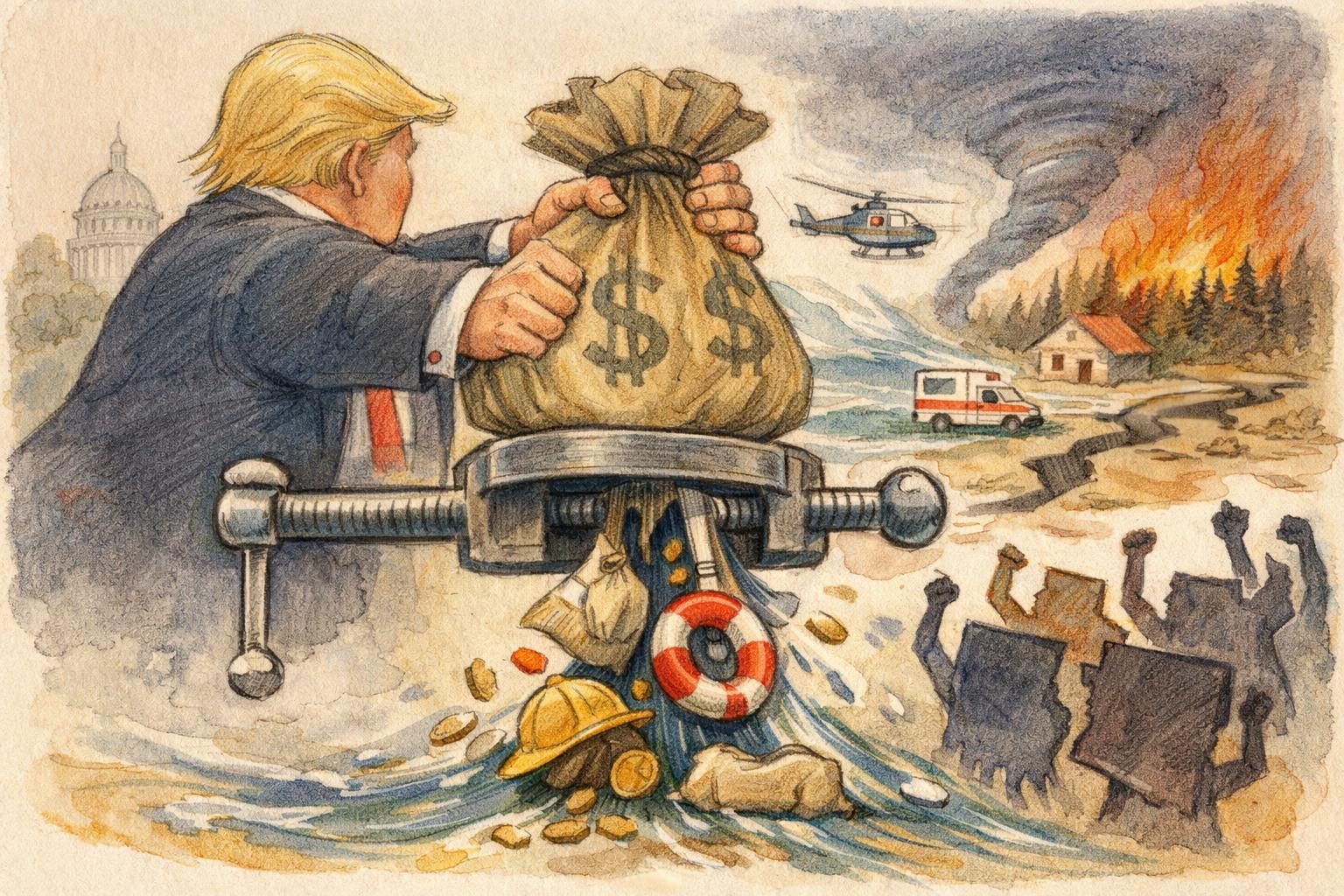
More than two dozen states have sued the Trump administration over a new set of conditions attached to federal disaster and homeland security funding, and the fight has the unmistakable smell of a political stunt dressed up as policy. The states filed Thursday in Rhode Island, arguing that the administration unlawfully tied money they say they are already entitled to receive to unrelated demands on elections and immigration. At the center of the dispute are grants that help states prepare for disasters, cyberattacks, terrorism, and other emergencies that can overwhelm local budgets in a hurry. The administration has warned that states refusing to comply could lose at least 20 percent of their Homeland Security Grant Program funding, a threat that turns routine grant administration into a leverage exercise. The lawsuit says the conditions violate the Administrative Procedure Act and the Constitution’s spending clause, and it is hard to see how the government avoids the obvious coercion problem. If the federal government can hold back emergency money to force a state to alter election rules or assist immigration enforcement, then the line between funding and extortion starts to look awfully thin.
The contested requirements go well beyond ordinary paperwork and into the kind of policy directives that states usually fight to keep under their own control. According to the complaint, the administration wants states to change election systems, move to paper ballots, conduct manual audits, reconcile voter rolls, and verify the citizenship of every registered voter in state databases. Those are not modest compliance tweaks, and they are not obviously related to disaster readiness either. They would require states to spend time, money, and administrative attention on federal priorities that reach deep into how elections are run and how voter eligibility is checked. The states say they are being told to accept those conditions if they want to keep homeland security and disaster-related money that should not depend on surrendering policy control in unrelated areas. That is why the case is being framed as an unconstitutional use of the spending power rather than a mere fight over grant language. Federal grants can come with conditions, but conditions that amount to a thumb on the scale for separate political battles raise a different and far more serious constitutional question.
The practical stakes are what make the lawsuit more than just another legal skirmish. Homeland Security Grant Program dollars are used for cyber defense, counterterrorism planning, emergency coordination, and other preparedness work that states are often hard-pressed to finance on their own. Disaster aid likewise matters in a world where floods, hurricanes, fires, and infrastructure failures do not wait for Congress to settle its moods. The complaint says the new conditions could force states to scale back or cancel ongoing projects, which would leave local agencies scrambling to fill gaps they cannot easily cover. It also says the immigration-related pressure could damage trust between local law enforcement and immigrant communities, making public safety work harder in places where cooperation is already fragile. That consequence is not theoretical. When emergency dollars get rerouted into political compliance fights, the people who feel the damage first are the ones trying to prepare for the next storm, the next cyber intrusion, or the next mass-casualty threat. The administration’s position may be that it is simply demanding better security practices, but the states are describing something much broader: a federal government using critical preparedness funding as a bargaining chip.
The administration, for its part, has tried to frame the lawsuit as partisan pushback against common-sense election security. That defense is predictably tidy and just as predictably strained. Trump has spent years insisting that mail voting is rife with fraud and pushing the federal government deeper into election administration, even though repeated audits and court rulings have rejected the core fraud narrative he keeps trying to revive. The current dispute fits that pattern neatly: an aggressive political claim gets translated into a funding condition, the states object, and the matter lands in court where constitutional limits are less flexible than campaign rhetoric. The White House and the Justice Department may argue that the conditions are lawful, but the broader record makes the coercive intent hard to ignore. If this was meant to look like a serious security initiative, it instead looks like another attempt to strong-arm the states into adopting the administration’s preferred election and immigration posture. The political damage is not subtle. The legal theory is shaky, the practical risk falls on emergency preparedness and public safety, and the message is that federal aid can be turned into a hostage note whenever the administration wants a policy win without earning one the normal way. That is not how a healthy federal system is supposed to work, and it is exactly the kind of move that invites both courtroom defeat and political backlash.
Comments
Threaded replies, voting, and reports are live. New users still go through screening on their first approved comments.
Log in to comment
No comments yet. Be the first reasonably on-topic person here.