
Trump’s tariff wave is turning the trade fight into a tax hike
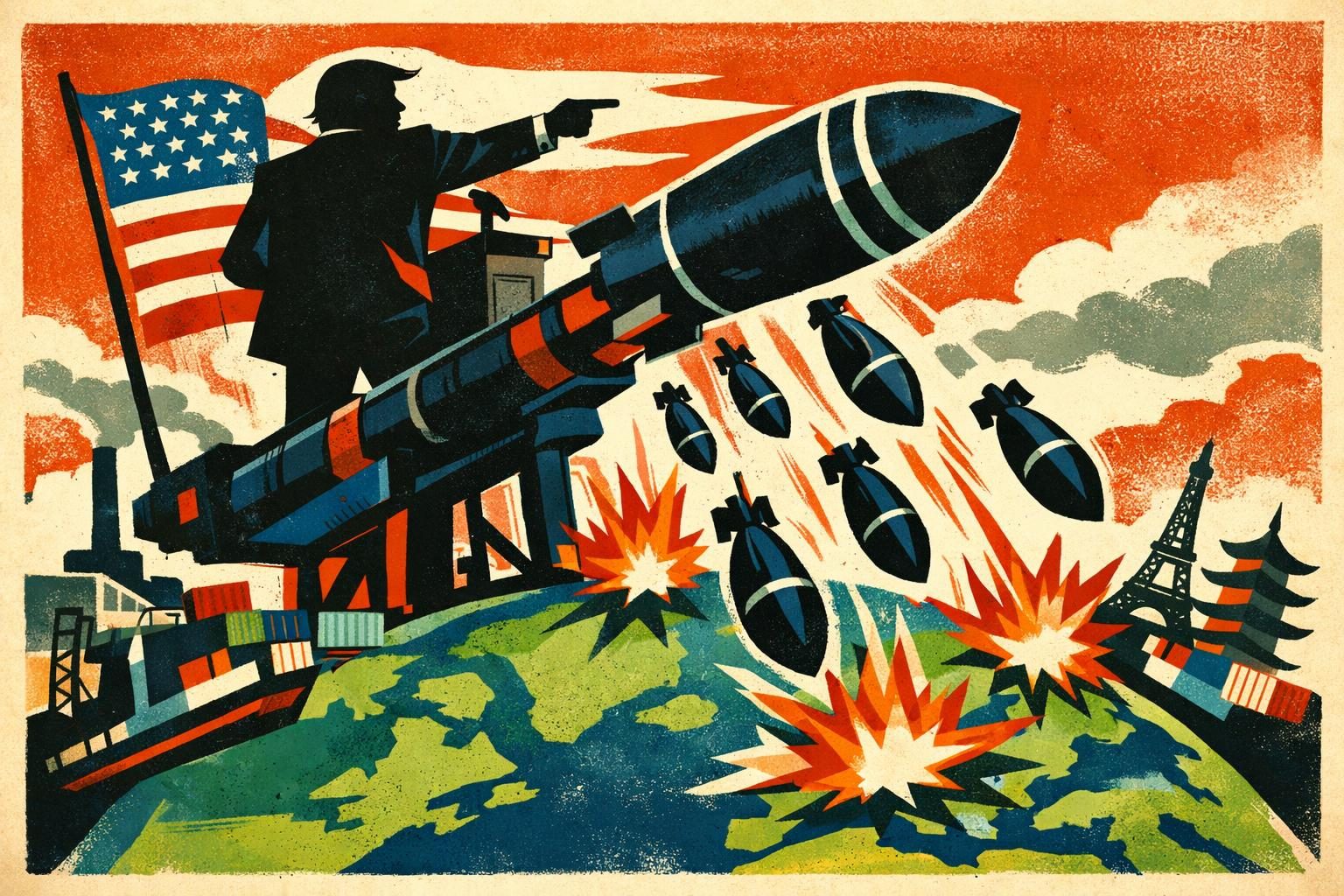
Donald Trump’s latest tariff push is being sold as leverage, fairness, and proof that the White House is finally making foreign governments pay attention. But the July record is messier than the slogan. On July 23, the administration issued a Section 301 action covering 60 economies tied to failures to prohibit and enforce bans on imports made with forced labor. The same month, it also moved separately against Brazil under Section 301 and against Canada under Section 338. Those are not one unified tariff order, and they do not all carry the same rates or legal basis. ([whitehouse.gov](https://www.whitehouse.gov/presidential-actions/2026/07/actions-by-the-united-states-in-the-investigations-under-section-301-of-the-trade-act-of-1974-of-the-acts-policies-and-practices-of-60-economies-related-to-the-failure-of-each-economy-to-impose-and/))
The July 23 action is the broadest of the bunch. The White House said the Section 301 package applies to 60 economies and would use ad valorem tariffs of 10 percent for some economies and 12.5 percent for others, with certain product exemptions and a textile mechanism. The stated theory is enforcement: these governments, the administration says, have failed to block goods made wholly or in part with forced labor from entering the U.S. market. That is a real policy aim. It is also a reminder that tariffs are not just pressure on foreign capitals. They change the price structure inside the United States, because importers, manufacturers, retailers, and consumers all sit downstream from the duty. ([whitehouse.gov](https://www.whitehouse.gov/presidential-actions/2026/07/actions-by-the-united-states-in-the-investigations-under-section-301-of-the-trade-act-of-1974-of-the-acts-policies-and-practices-of-60-economies-related-to-the-failure-of-each-economy-to-impose-and/))
The Brazil move is a separate case. USTR said on July 15 that it was imposing a 25 percent tariff on certain goods from Brazil after a Section 301 investigation into Brazilian practices involving digital trade and electronic payment services, preferential tariffs, anti-corruption enforcement, intellectual property, ethanol access, and illegal deforestation. That action followed a yearlong investigation, public hearings, and hundreds of comments. It was not part of the 60-economy forced-labor package, even though Brazil appears in that larger investigation list as well. ([ustr.gov](https://ustr.gov/about/policy-offices/press-office/press-releases/2026/july/ustr-section-301-action-brazils-unreasonable-acts-policies-and-practices))
Canada is another separate file. On July 20, the White House said Trump signed three proclamations under Section 338 of the Tariff Act of 1930 to impose additional 50 percent tariffs on certain Canadian goods, with the administration framing the move as a response to discriminatory treatment of U.S. products. The fact sheet says the duties apply to specific covered goods and exclude some categories, including energy, potash, certain Section 232 products, fish, and critical minerals. Again, the politics are clear: the White House is using tariffs as a show of force. The economics are less tidy, because each duty raises costs somewhere in the supply chain. ([whitehouse.gov](https://www.whitehouse.gov/fact-sheets/2026/07/fact-sheet-president-donald-j-trump-imposes-additional-tariffs-on-canada/))
That is the central problem with tariff politics. The argument for them is usually presented as strength: protect workers, punish unfairness, and force concessions. The bill arrives later. Businesses that rely on imported inputs have to decide whether to absorb the hit, raise prices, cut margins, or scramble for new suppliers. Some may relocate production. Some may delay investment. Some will pass costs on. None of those outcomes is free, and the burden does not stop at the border just because the president says it should. ([whitehouse.gov](https://www.whitehouse.gov/presidential-actions/2026/07/actions-by-the-united-states-in-the-investigations-under-section-301-of-the-trade-act-of-1974-of-the-acts-policies-and-practices-of-60-economies-related-to-the-failure-of-each-economy-to-impose-and/))
The White House can point to exemptions, negotiation leverage, and any future factory announcements it wants. It can also argue that tariffs are part of a broader strategy to force reciprocity. But the July actions show how quickly that strategy fragments into separate legal lanes, separate targets, and separate price effects. A broad tariff package on 60 economies, a Brazil-specific Section 301 action, and a Canada-specific Section 338 move are not one clean campaign. They are a stack of trade measures, each with its own logic and its own fallout. That is why the president can sell the fight as toughness while the domestic economy absorbs the disruption as a tax-like cost on goods, contracts, and planning.
Comments
Threaded replies, voting, and reports are live. New users still go through screening on their first approved comments.
Log in to comment
No comments yet. Be the first reasonably on-topic person here.