
Trump’s tariff push looks like a tax hike with better copy
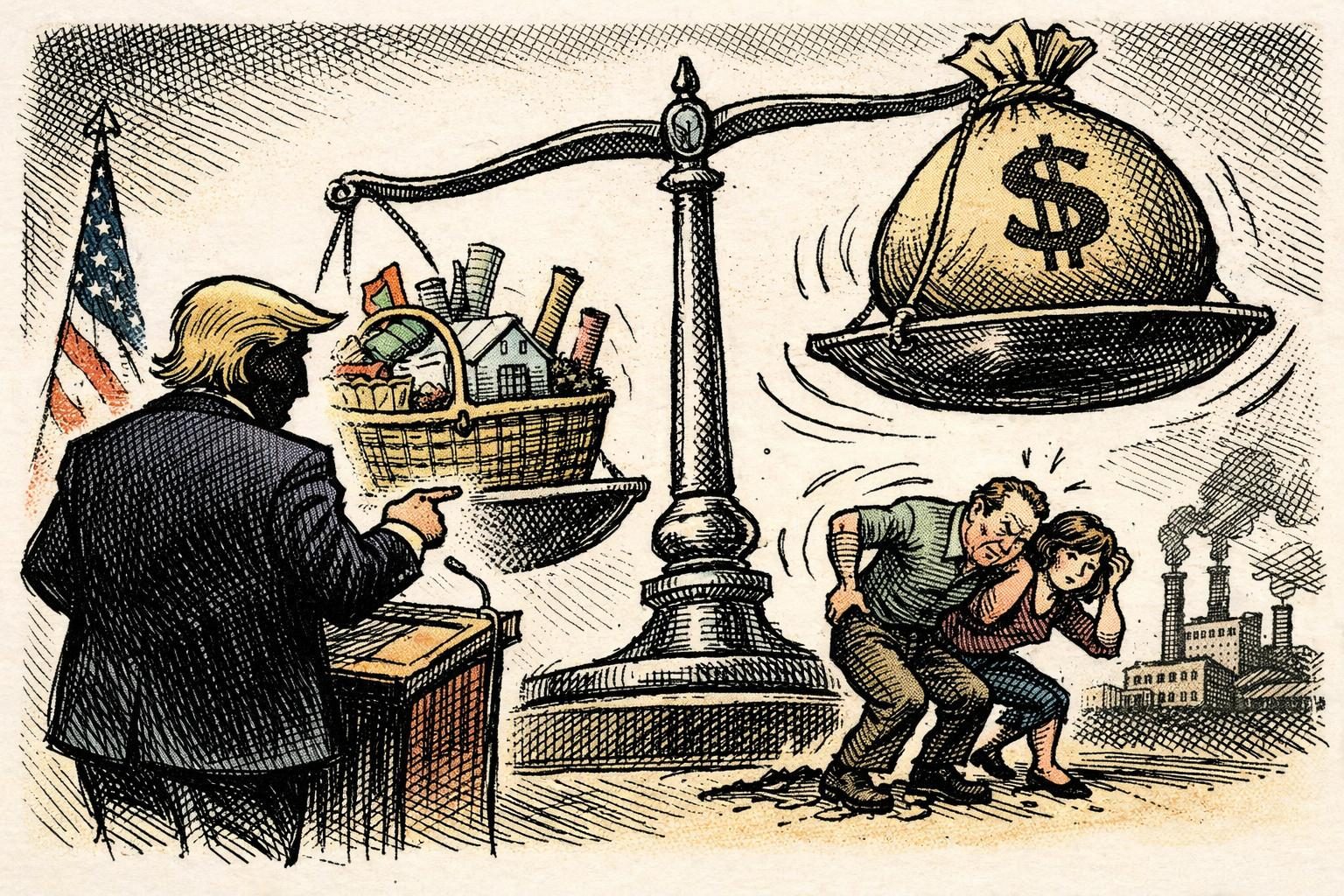
Donald Trump’s latest tariff drive comes wrapped in the language of leverage, reciprocity, and enforcement. On July 20, 2026, he issued three proclamations adding duties on Canadian motor vehicles, dairy, and alcoholic beverages under Section 338. Three days later, the administration announced a separate Section 301 action covering goods from 60 economies after investigations into failures to impose and effectively enforce prohibitions on imports of goods produced wholly or in part with forced labor. The legal hooks are different. The political message is the same: tariffs are being sold as a way to correct other countries’ behavior and protect U.S. interests.
The mechanics do not change because the rhetoric does. A tariff is still a cost imposed at the border, and that cost usually has to be absorbed somewhere in the chain. Importers pay first, then the burden can move through wholesalers, manufacturers, retailers, or consumers. Sometimes foreign suppliers cut prices to keep market share. Sometimes domestic firms eat part of the hit. Sometimes the increase shows up quickly in shelf prices, dealer invoices, or input costs. However it is split, the money does not vanish. It moves.
The Canada actions make that especially visible because they hit sectors people can recognize immediately. Vehicles sit in tightly integrated North American supply chains, where even modest duty changes can affect inventories, production schedules, and dealer pricing. Dairy and alcoholic beverages are less abstract still: they are consumer goods with obvious price tags, and they are politically sensitive in both countries. The White House says the measures are meant to offset Canadian discrimination against U.S. commerce. That may be the official theory. But the practical effect is more friction, more uncertainty, and more planning risk for companies that have to make decisions before the next tariff notice arrives.
The July 23 Section 301 action extends the same pattern rather than interrupting it. It does not rest on the claim that every target country actively allows forced-labor imports in the same way. It rests on the administration’s finding, through Section 301 investigations, that certain economies failed to impose and effectively enforce prohibitions on imports of goods made with forced labor. That is a narrower and more precise legal claim than a blanket accusation, but it still uses the same tool: new duties imposed through trade law. Put differently, the government is turning tariff policy into a recurring enforcement mechanism instead of treating it as an exceptional measure.
That is the larger story here. Tariffs are politically useful because they are easy to describe as toughness and easier still to attach to a moral frame. The costs are spread out and often delayed. They show up in supply contracts, freight bills, retail prices, margins, and investment plans. That makes them hard to trace in real time and easy to describe in the abstract. Trump can say the foreign side is paying. The paperwork says otherwise: someone in the chain is paying, and usually more than one someone. The applause is immediate. The invoice is not.
Comments
Threaded replies, voting, and reports are live. New users still go through screening on their first approved comments.
Log in to comment
No comments yet. Be the first reasonably on-topic person here.