
The White House keeps selling volatility as a win
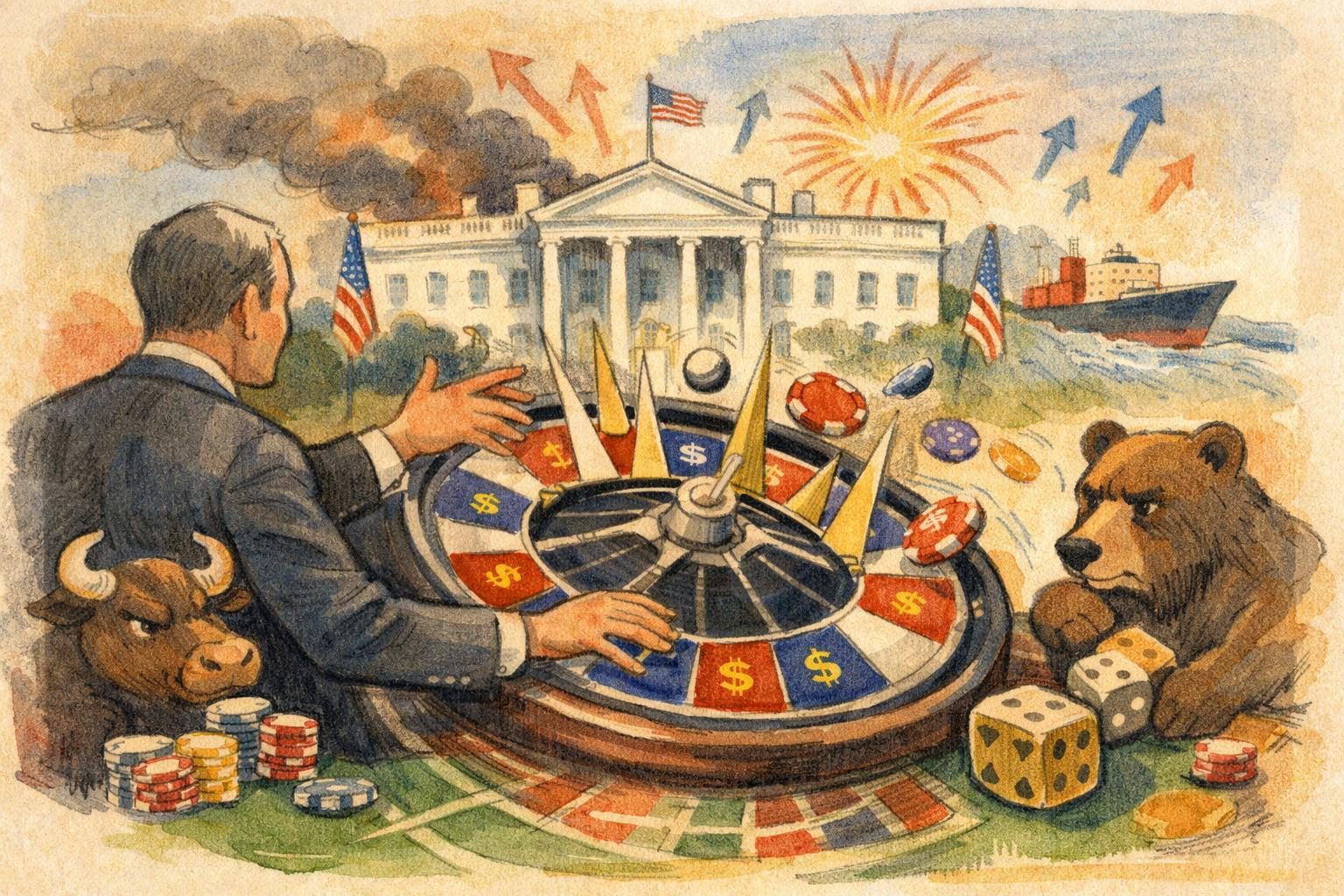
The White House spent the back half of July doing what it has increasingly made into a governing style: taking a jumble of tariff moves, enforcement actions, and selective exemptions and presenting the whole thing as proof of discipline. The administration’s message is simple enough to fit on a bumper sticker. Tariffs are strong, strength is patriotic, and any disruption they cause is just the price of getting serious about trade. That is a useful line for rally crowds and short social posts, but it becomes much harder to defend when the underlying policy keeps shifting. The latest round of trade statements was meant to show command of the field. Instead, it looked a lot like the same familiar pattern of improvisation, followed by a press release written to make the improvisation sound intentional.
The evidence of that pattern is right in the government’s own materials. One set of announcements framed the administration’s actions as part of a Section 301 case involving Brazil, with officials describing “unreasonable” acts, policies, and practices and signaling a more forceful response. Another round followed with further action and supporting materials, suggesting the machinery of trade enforcement was still in motion and still being used aggressively. At the same time, the White House and its allies were pushing out supportive statements from farmers, loggers, and industry leaders, all meant to reinforce the idea that tariffs are producing leverage and wins. That is the political pitch: pressure foreign governments, protect domestic producers, and call it a victory when somebody on the home front says they like the heat. But the more the administration has to explain each step as a triumph, the more it invites the obvious question of whether these moves are part of a coherent strategy or just a series of tactical jolts.
That question matters because trade policy is not a place where volatility is free. Businesses have to make decisions months or years before they see a payoff, and they cannot do that if the rules change every time the administration wants to demonstrate resolve. Importers have to track duty rates that may vary by country, product, timing, and exemption status. Lawyers have to sort through the legal consequences of a system that treats trade tools as moving targets rather than durable rules. Manufacturers have to choose whether to absorb higher input costs, pass those costs along, delay investments, or redesign supply chains in anticipation of the next announcement. Even when a tariff threat eventually produces a concession or a carveout, the broader environment can still become more expensive and less predictable. That uncertainty is not a side effect of the policy anymore; it is part of the policy’s operating logic. The administration may describe that as leverage. The people financing new machinery, inventory, and hiring decisions are more likely to call it risk.
The political problem is that the White House is asking the public to see the consequences of churn as evidence of control. Officials want voters to notice toughness, not confusion. They want industries that benefit from protection to speak up while everyone else absorbs the cost. But tariffs do not only hit foreign competitors. They also reach domestic firms that rely on imported components, retailers that have to price goods for consumers, and exporters that can become collateral damage in retaliation or slower global demand. Some groups may welcome a harder line, at least until they are the ones paying more for inputs or losing access to markets. That tension is why trade fights often sound cleaner in announcements than they do in balance sheets. It is also why the administration’s attempt to sell volatility as a sign of strength can backfire. If every new measure needs a victory lap, the public eventually starts to notice how much of the policy is built around managing the fallout from the last move while preparing the next one. A system that depends on constant announcement energy may still be active, but activity is not the same thing as stability.
That leaves the White House with a credibility problem as much as an economic one. Abroad, trading partners have to decide whether a U.S. threat is final or merely the opening bid in a negotiation that may change shape again next week. At home, businesses have to decide whether to adjust now or wait for the next revision, the next exemption, the next deadline extension, or the next side deal. The administration’s materials are designed to project confidence, but they also reveal how much of the trade program depends on motion and messaging. That may be enough to keep the story moving for a news cycle. It is a lot less convincing as a long-term framework for investment, hiring, and supply-chain planning. The uncomfortable truth is that predictability is not a nicety in trade; it is the point. A policy that announces itself as leverage while generating endless uncertainty may win the argument in the moment, but it can still leave the country with higher costs, more hesitation, and fewer reasons to believe the rules will hold. If that is the intended show of strength, it is a strange one: all noise, no steadiness, and a growing need to insist that disruption itself counts as success.
Comments
Threaded replies, voting, and reports are live. New users still go through screening on their first approved comments.
Log in to comment
No comments yet. Be the first reasonably on-topic person here.