
Senate committee votes to hold Fauci in contempt after Fifth Amendment fight
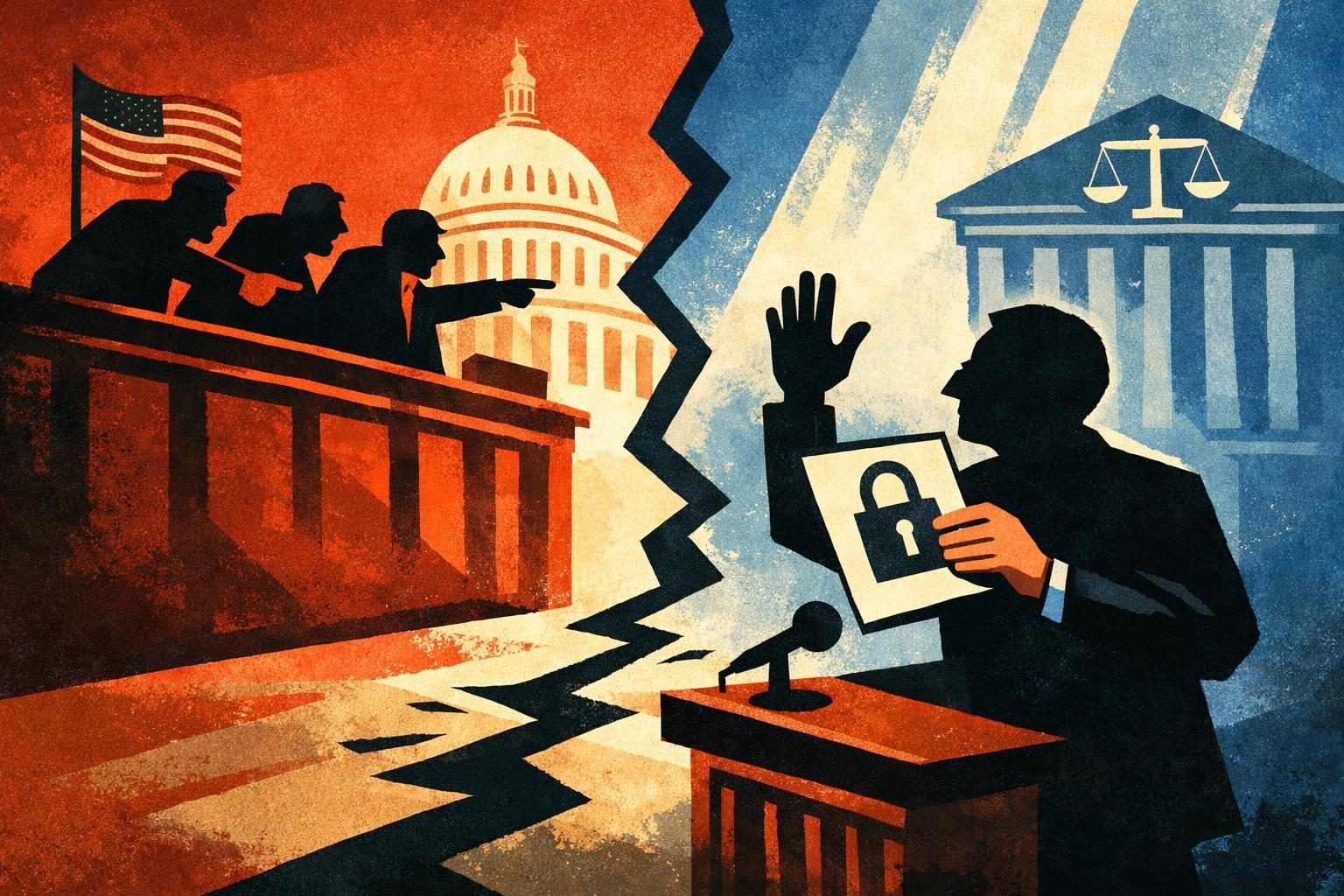
A Senate committee on Thursday voted along party lines to hold Anthony Fauci in contempt after he declined to answer questions at a recent hearing and invoked the Fifth Amendment more than 100 times. The vote was the latest and most direct escalation in a fight that has been building around pandemic-era grievances, congressional oversight, and the limits of legal exposure for a witness who once sat at the center of the federal COVID response. Committee Republicans argued that Fauci’s refusal to answer questions warranted a punitive response, while Democrats and Fauci’s defenders described the move as a political spectacle dressed up as accountability. However it is labeled, the result is the same: a congressional panel has now formally signaled that it believes the dispute should move beyond the hearing room and into a legal process.
The committee’s chair said Fauci’s prior pardon should not protect him from scrutiny, a point that goes to the heart of the confrontation. Fauci’s allies, by contrast, have cast his repeated invocation of the Fifth Amendment as a straightforward constitutional choice, not an admission of wrongdoing. That distinction matters because contempt findings are not merely symbolic in the way that hostile questioning or partisan criticism often is; they are one of the few tools Congress has when it wants to turn an investigation into a legal test of will. Still, the move does not settle the underlying question of whether the committee has a practical case or simply a political appetite for further escalation. The hearing itself, marked by repeated refusals to answer, made plain that neither side had much interest in backing down.
The likely next step is a referral to the Justice Department, which would then be asked to decide whether to pursue a high-profile witness over questions he says he had every constitutional right to withhold. That is an awkward position for any administration or law enforcement apparatus, especially when the subject is a former public health official whose tenure became a lightning rod during the pandemic. Prosecutors would have to weigh not only the legal merits of the referral but also the public meaning of turning a congressional contempt vote into a criminal proceeding. Even if the department declines to act, the referral itself keeps the dispute alive and gives both parties fresh material for a broader political fight. If it does proceed, the case could become a noisy test of how far Congress can go when it believes a witness is stonewalling.
The broader context is hard to ignore. Republicans have spent years trying to convert pandemic-era anger into a durable investigative project, and Fauci has repeatedly been one of the most visible targets of that effort. Critics of the committee see the contempt vote as part of a larger pattern: an institutional process being used to stage a punishment after the underlying public health crisis has already faded from daily life. Supporters of the inquiry, though, say the committee is simply pressing for answers on decisions that shaped federal policy at a moment of national emergency. The problem is that those competing narratives do not meet in the middle very often, which leaves the proceedings looking less like a search for clarity than a referendum on who gets blamed. That makes the politics easy to understand, even if it makes the governance harder to defend.
For now, the fallout is mostly procedural but unmistakably sharp. The committee has issued a formal contempt finding, the Justice Department will likely be pressed to review the matter, and Washington gets another reminder that oversight can morph quickly into revenge theater once the temperature rises high enough. It is a serious institutional step, even if the public argument around it already feels familiar to the point of exhaustion. The deeper significance may be less about Fauci alone than about the way Congress handles witnesses who refuse to participate on its terms, especially when the hearing is built around old grievances rather than immediate policy. In that sense, the vote says as much about the state of political incentives as it does about any single witness. Congress may be insisting it wants accountability, but the spectacle suggests it is often reaching for punishment after persuasion has already failed.
Comments
Threaded replies, voting, and reports are live. New users still go through screening on their first approved comments.
Log in to comment
No comments yet. Be the first reasonably on-topic person here.