
EPA’s rollback fight keeps the climate-and-industry collision alive
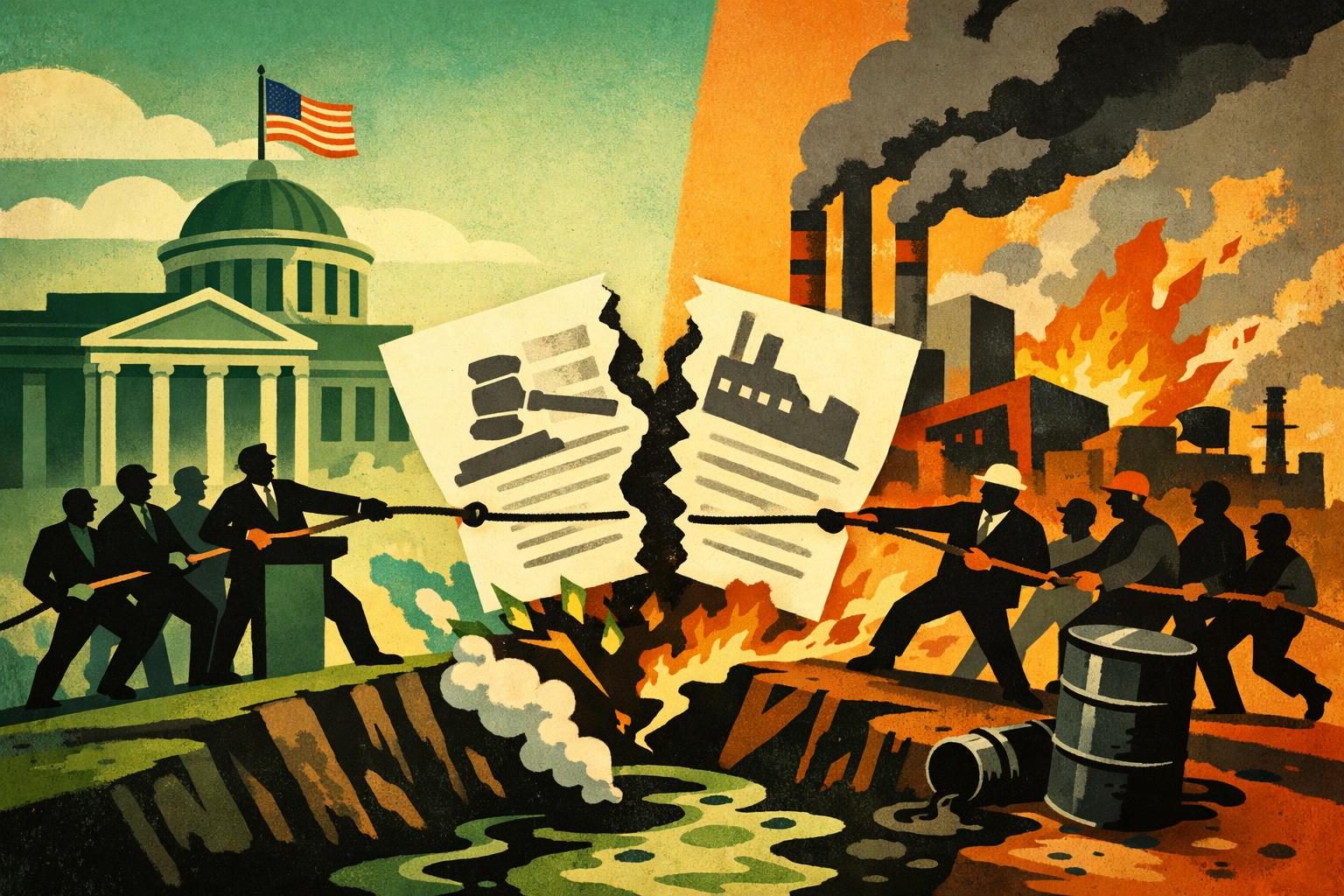
The Environmental Protection Agency’s decision to withdraw a Biden-era affirmative-defense rule has kept a long-running fight over industrial pollution, accident risk, and federal enforcement very much alive. At its core, the dispute is about who should bear the cost when a facility exceeds emissions limits during a malfunction, emergency, or other operational breakdown. The agency’s rollback does not just tweak a technical regulation; it reopens a broader argument about whether pollution rules should be enforced strictly when things go wrong, or whether companies should have a built-in shield when they say an incident was unavoidable. For the Trump EPA, the move fits a familiar pattern of revisiting and undoing pieces of the previous administration’s climate and air-pollution agenda. For critics, it looks like another step toward relaxing accountability just as the stakes for nearby communities remain high.
The affirmative-defense rule had offered a limited legal backstop for some facilities facing enforcement over emissions spikes tied to malfunctions or similar events. By pulling that protection back, the EPA is signaling that it wants to redraw the line around liability and compliance in favor of a more industry-friendly approach. Supporters of the rollback argue that the earlier rule could punish operators for events outside their control, turning unforeseen breakdowns into automatic enforcement problems. They say that facilities should not be treated the same whether a violation stems from negligence, preventable maintenance failures, or a genuine emergency that even a well-run plant could not avoid. Critics respond that this framing can become a loophole, especially in industries where pollution controls are already difficult to monitor and where accident-related emissions can still expose workers and neighbors to serious harm. That disagreement is not new, but the agency’s latest action gives it fresh urgency.
The political significance is tied to more than one regulation because the rollback also reflects how the administration is approaching climate enforcement more broadly. The EPA is making clear that it is willing to unwind parts of the prior administration’s enforcement architecture even when that means reducing pressure on facilities that miss emissions limits during breakdowns, fires, storms, or other disruptions. Environmental advocates see that as part of a larger effort to weaken public-health protections under the language of flexibility and common sense. Industry groups, by contrast, have long argued that rigid enforcement can be unfair and can encourage costly litigation over events that do not reflect routine operations. Communities living near industrial plants and refineries, however, tend to experience the consequences in a more direct way: when compliance rules are loosened, the burden of pollution and accident risk often lands closest to the fence line. That is why a rule that may sound abstract in Washington can still carry real consequences on the ground.
What happens next will likely depend on a mix of litigation, enforcement decisions, and state-level reactions. If the rollback survives legal challenge and the EPA continues moving in this direction, companies may find it easier to argue for leniency after accidental releases or malfunction-related emissions. Environmental lawyers are likely to use the change as a new target, arguing that the agency is making it harder to hold polluters accountable when communities are most vulnerable. At the same time, state regulators and attorneys general in more aggressive environmental jurisdictions may look for ways to preserve tougher standards or to step in where federal enforcement appears softer. The result could be a fragmented regulatory landscape, with the level of protection depending increasingly on where a facility is located and which government is willing to push the hardest. For now, the rollback remains a live policy and legal flashpoint because it touches one of the most contested questions in environmental law: whether unavoidable incidents should reduce liability, or whether emissions still deserve consequences because the public still bears the harm.
This broader fight also comes at a moment when climate policy is already being carved up by courts, elections, and agency reversals. Each rollback may look narrow on its own, but together they shape the practical reach of federal pollution control and the leverage regulators have when companies exceed limits. That makes the EPA’s move more than a technical cleanup of the rulebook; it is another signal about which side of the industrial-public-health divide the administration is leaning toward. Supporters call it a correction that restores fairness and recognizes operational reality. Opponents see a government once again treating enforcement as an obstacle to be managed rather than a safeguard to be strengthened. The clash is likely to continue because the underlying issue has never really changed: when industry pollutes or releases harmful emissions, should federal policy minimize the consequences for the facility, or maximize protection for the people living next to it? The EPA’s rollback answers that question only partly, but it makes clear that the struggle over climate enforcement and industrial accountability is far from over.
Comments
Threaded replies, voting, and reports are live. New users still go through screening on their first approved comments.
Log in to comment
No comments yet. Be the first reasonably on-topic person here.