
EPA shuts down illegal pesticide sales at Metro Atlanta shops
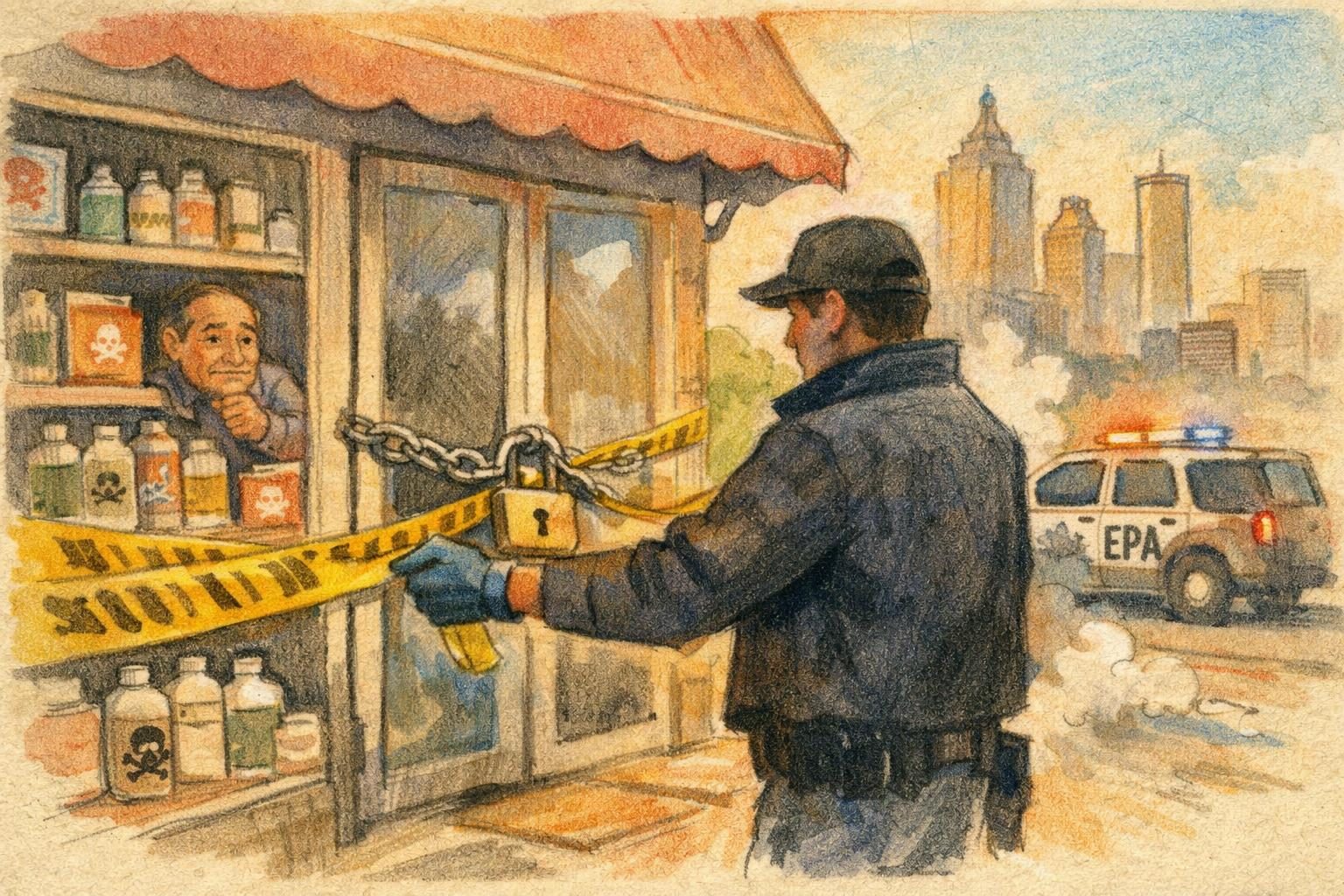
The Environmental Protection Agency’s Southeast regional office moved on August 8 to shut down the sale and distribution of unregistered pesticide products at eight Metro Atlanta facilities after inspectors said they found the products on shelves and being sold directly to consumers. The agency said the stop-sale orders apply to shops in the Atlanta area that were offering pesticides for end users rather than licensed applicators or other authorized channels. In plain terms, the EPA is saying these products were not supposed to be in the retail stream in the first place. The orders require the businesses to pull the products from circulation immediately while the agency’s enforcement process continues.
The products at issue included items marketed under names such as Sniper, according to the agency’s account. EPA said at least one of the products contained an ingredient that the government treats as restricted because of the health risks associated with it, which is part of why the case drew an enforcement response instead of a routine warning. The agency did not present the move as a paperwork dispute or a technical labeling correction. Instead, it framed the sales as unlawful distribution of pesticide products that were already outside the rules governing who can handle them and how they can be sold. That matters because pesticide regulation is not built on the idea that consumers will sort out the risks after the fact. It is built on the assumption that some products require gatekeeping before they reach a shelf in the first place.
EPA said inspectors found the chemicals during a week of inspections and then acted quickly, which gives this episode a fairly straightforward enforcement shape. The agency’s public version of events suggests the products were still available to buyers when the inspections took place, and that the agency decided the response needed to be immediate. Stop-sale orders are not the most dramatic tool in the federal playbook, but they are intended to be fast and practical: take the product off the market, stop further sales, and reduce the chance that more people are exposed while questions get sorted out. In that sense, this is a case about prevention as much as punishment. The federal government is effectively saying the risk was serious enough that it could not wait for a slower administrative cycle. That is the kind of intervention regulators reserve for situations where they believe a product should not remain within reach of the public.
The political significance is broader than a cluster of stores in one metro area. When federal enforcement is visible and direct, it undercuts the long-running assumption that dangerous products can be pushed into commerce and treated as the consumer’s problem later. It also pushes back against the idea that environmental and public-health rules are only theoretical constraints that can be ignored until someone files a complaint. In communities where pesticide misuse and exposure can hit hardest, the stakes are not abstract. Low-income workers, immigrants, and children are often closer to the products and less able to absorb the consequences when labels, sales practices, or marketing are misleading. EPA’s action does not solve those disparities, but it does show the agency using enforcement as a public-health tool rather than leaving the market to police itself. If the orders hold and the underlying violations are confirmed, the case could serve as a reminder that basic consumer protection is still supposed to mean something even in routine retail settings.
Comments
Threaded replies, voting, and reports are live. New users still go through screening on their first approved comments.
Log in to comment
No comments yet. Be the first reasonably on-topic person here.