
EPA’s wildfire-smoke response shows how climate fallout is now a daily governance problem
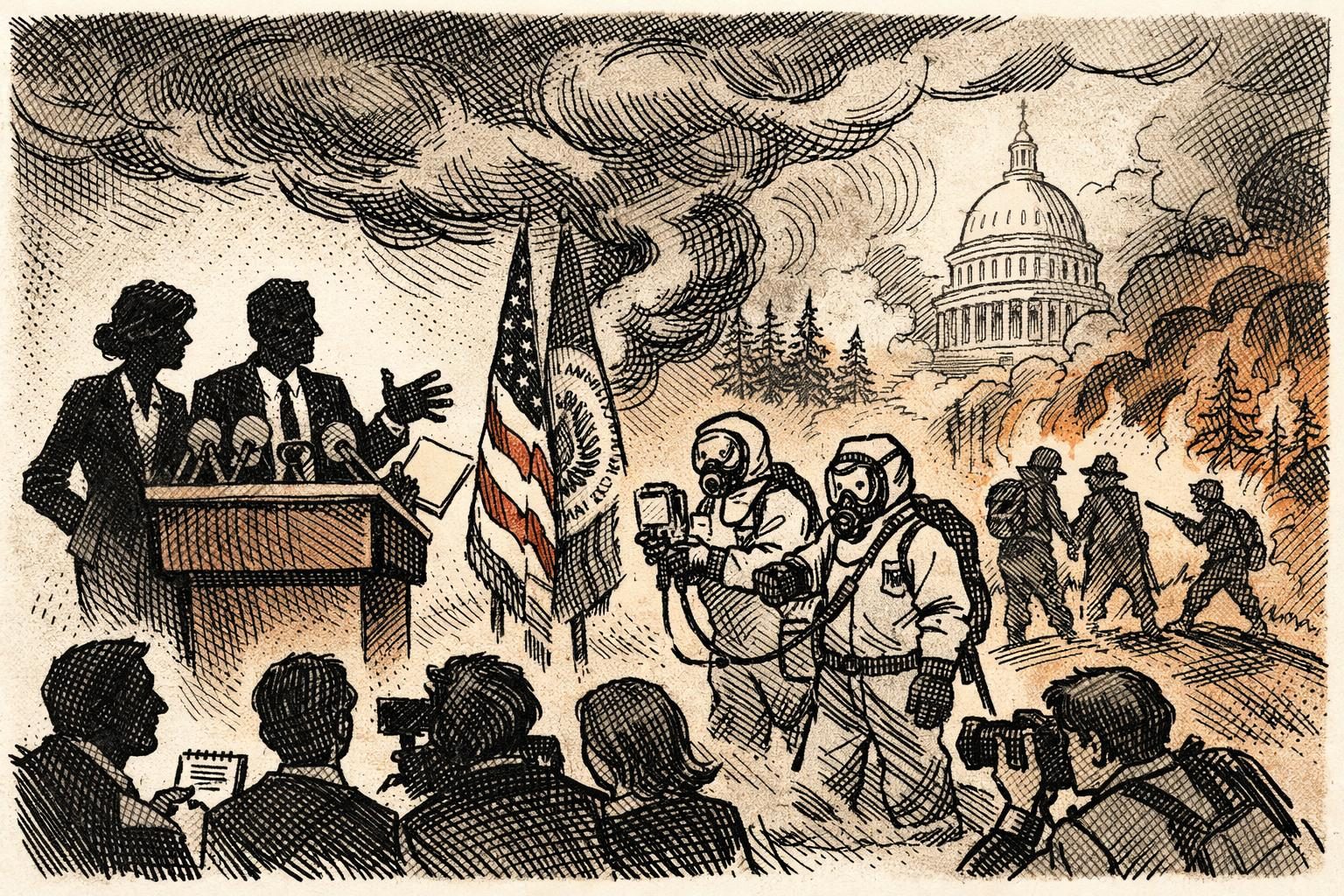
The latest EPA statement on cross-border wildfire smoke and air-quality impacts lands with the kind of bureaucratic calm that can make a crisis look routine if you read it too quickly. But that is exactly the point: the routine is the crisis. Another summer, another haze alert, another round of advice about limiting outdoor exposure and watching vulnerable populations, and another reminder that climate-linked smoke is no longer an occasional emergency reserved for especially bad fire seasons. It has become part of the basic operating environment for cities, schools, hospitals, transit systems, and households that have to decide, often with little warning, whether normal life can continue outside. When a federal environmental agency has to keep flagging smoke impacts from fires that do not respect state borders or national comfort zones, it is signaling that the country is now managing climate fallout as a day-to-day governance problem, not a distant policy debate.
That shift matters politically because it undercuts the fantasy that this kind of pollution can be managed by slogans alone. The administration can talk about energy abundance, regulatory restraint, and an overall hands-off posture toward industry, but smoke does not cooperate with messaging. It blankets neighborhoods, pushes particulate levels into dangerous ranges, and forces officials at every level to make public-health decisions in real time. When the air gets bad, people do not ask first about ideology; they ask whether children should stay home, whether outdoor workers should keep working, whether older relatives should avoid going outside, and whether asthma medications are enough for the day ahead. That is why even a seemingly routine EPA notice has political weight. It exposes the gap between the government’s preferred framing of climate risk and the lived reality of a population that can literally see the problem in the sky.
The practical burden lands hardest on people and institutions that already have the least flexibility. School districts have to decide whether to cancel recess, move sports indoors, or close entirely, often with imperfect information and pressure from parents on both sides of the decision. Hospitals and clinics have to prepare for spikes in respiratory complaints, while public-health departments issue guidance that may be obvious to experts but still has to be translated into plain language for the public. Outdoor laborers cannot simply opt out of exposure, which means the costs are not evenly distributed across the economy; they are concentrated on people whose jobs require them to be outside when the air is worst. Families with children, older adults, and people with asthma or other breathing problems face the same basic arithmetic every time the smoke rolls in: how much risk is acceptable, who gets to avoid it, and who absorbs the consequences of a system that never planned seriously for repeated smoke events. The statement from EPA may not read like an emergency declaration, but for many communities it functions like a standing reminder that emergency conditions are becoming seasonal.
There is also a deeper governance failure sitting underneath the air-quality advisories. Statements and warnings are not the same thing as solutions, and a federal notice about smoke impacts is only an acknowledgment that the damage is already happening. That may be necessary, but it is not sufficient. The real question is whether the government treats these recurring episodes as evidence that stronger climate policy, better preparedness, and more durable public-health planning are overdue, or whether it simply files each new smoke alert as another temporary inconvenience to be managed until the next one arrives. Critics of the administration will say the pattern looks less like management than avoidance: a refusal to build systems robust enough to handle a problem that is now visible, measurable, and recurring. Supporters may argue that agencies can only do so much when wildfire seasons intensify and smoke travels across borders, but that defense only goes so far if the same episodes keep triggering the same reactive posture. If the White House wants credit for handling smoke, it eventually has to answer the more uncomfortable question of why the country keeps needing emergency-level guidance for a problem that has plainly become part of ordinary summer life.
Comments
Threaded replies, voting, and reports are live. New users still go through screening on their first approved comments.
Log in to comment
No comments yet. Be the first reasonably on-topic person here.