
IRS workers ask a judge to block Trump’s tax-audit immunity deal
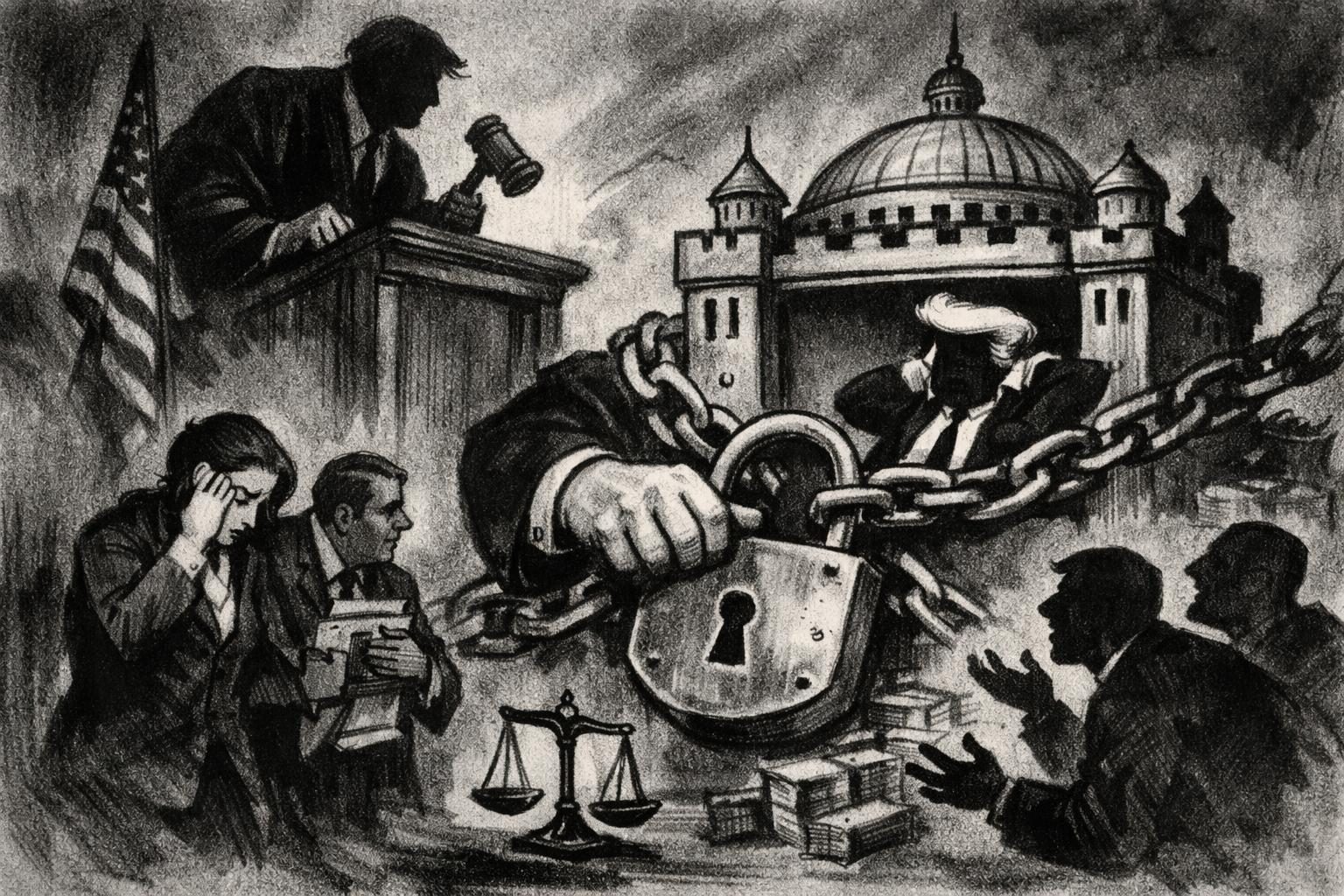
A union representing Treasury Department and Internal Revenue Service employees has asked a federal judge to block a sweeping arrangement that would shield President Donald Trump, members of his family, and the Trump Organization from certain tax scrutiny. The request, filed on Aug. 12, turns what might otherwise have been an internal administrative dispute into a direct courtroom challenge over whether a president can effectively negotiate the boundaries of his own tax exposure. The union says the deal would put career employees in an impossible position, forcing them to decide whether to follow a political directive or continue doing the job the law assigns them. That is the kind of argument that tends to surface when officials fear a government agency is being bent around a single person’s interests. It is also a reminder that tax enforcement, for all its paperwork and jargon, can become a test of whether ordinary rules still apply when the powerful are involved.
The legal fight lands in the middle of an already tense debate over how the administration has handled scrutiny inside the federal bureaucracy. The union’s lawsuit argues that the immunity arrangement would not just alter a few audit decisions, but could chill the independence of IRS staff who are expected to apply the tax code without regard to political pressure. In practical terms, the concern is that a career employee would be told, implicitly or explicitly, to stand down on matters that should be reviewed like any other taxpayer’s file. That is why the case has drawn attention beyond the narrow circle of tax lawyers and agency officials. At stake is the broader principle that enforcement should not be customized for the people with the most power. If that principle starts to wobble, the damage is not limited to one audit or one family; it spreads to the credibility of the entire system.
The controversy is especially charged because it follows earlier disputes over efforts to create special structures or funding streams that critics said could be used to punish political adversaries while insulating allies. Those earlier fights already generated suspicion that government power was being treated less as a neutral tool than as something to be routed around inconvenient constraints. The new tax deal sharpens that concern by raising the prospect that the president himself could receive a tailored form of protection from the very agency charged with enforcing the tax laws. Even if the administration argues that the arrangement is limited to existing claims or specific disputes, the symbolism is ugly enough to do real harm. Ordinary taxpayers do not get to bargain their way out of scrutiny, and the idea that a president can do so will inevitably invite accusations of favoritism. That is not just a public-relations problem. It is the sort of perception that can erode confidence in a system that depends on people believing the rules are enforced evenhandedly.
If the court sides with the union, the administration would lose a mechanism it may have hoped would quiet politically sensitive tax questions and protect the president from further scrutiny. If the court rejects the challenge, agency staff could be left with an even clearer message that top officials can shape the scope of tax enforcement through side arrangements that are not available to anyone else. Either outcome carries a cost, which is part of why the case matters beyond the particulars of the Trump family’s tax affairs. Federal tax workers are now being pulled into a fight over institutional independence, executive authority, and the boundaries of lawful instruction. The public consequence is not subtle: either the government must explain why this deal is legitimate, or it must explain why employees should obey it despite the obvious conflict it creates. In a system that already relies heavily on trust, this is the sort of dispute that can make the whole apparatus look less like impartial administration and more like a private arrangement dressed up as policy.
Comments
Threaded replies, voting, and reports are live. New users still go through screening on their first approved comments.
Log in to comment
No comments yet. Be the first reasonably on-topic person here.