
Supreme Court docket keeps Trump-related election fights alive
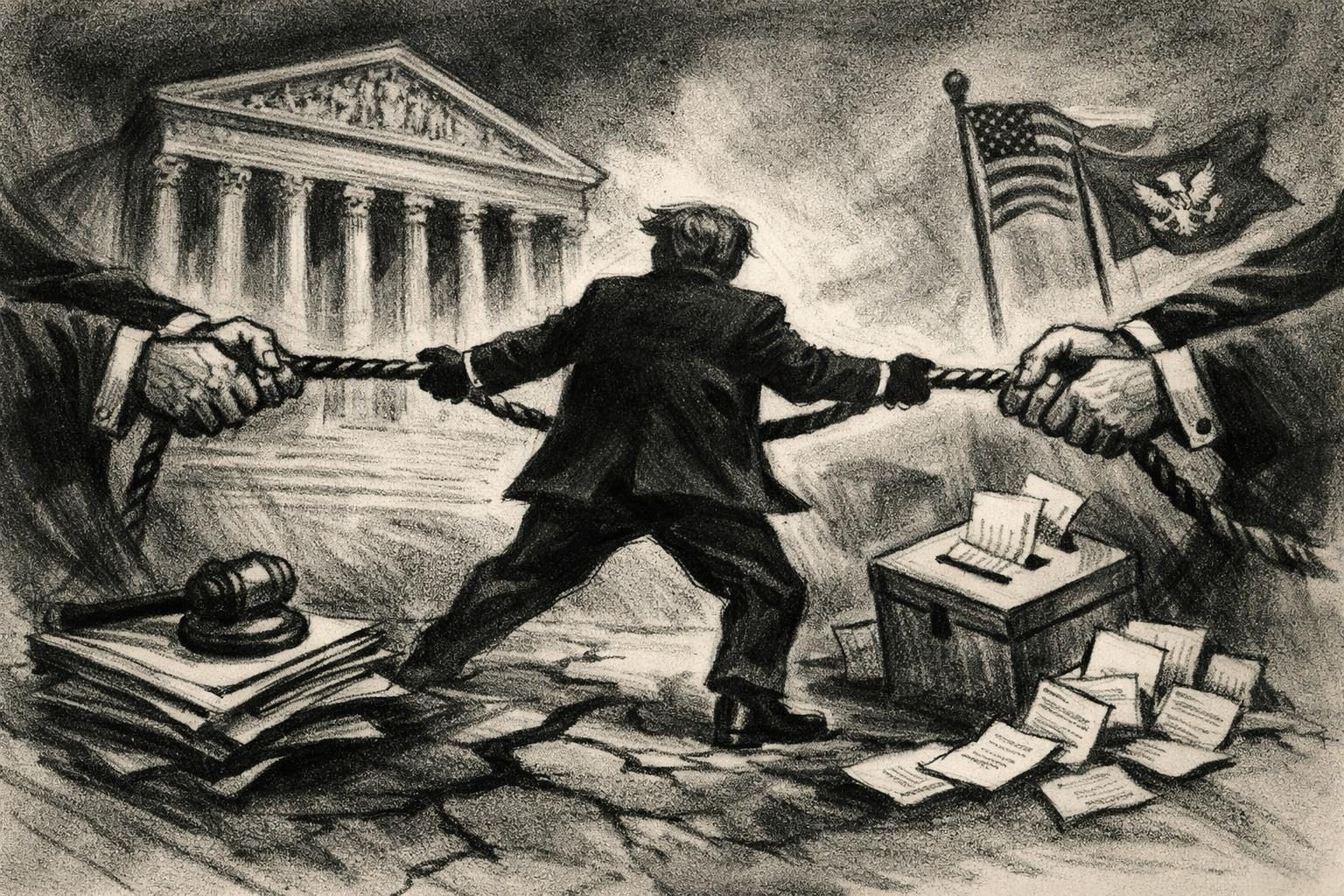
The Supreme Court’s docket on August 12 was not a dramatic reset in any single Trump-related dispute, but it was a reminder that the legal fight over executive power and election rules is still very much alive. The day’s order list and docket activity kept a series of unresolved disputes moving through the system, including matters that could shape how far a president can go in directing election administration and other sensitive government functions. Nothing in the court’s public paperwork that day resolved the larger constitutional questions, and that is part of the point: the fights are still pending, still active, and still capable of changing the balance between the White House, the states, and the courts. For now, the most important development is simply that the disputes remain in motion rather than drifting out of view. That continuing motion is political news because it keeps pressure on the administration’s broader claims of authority.
What makes the docket significant is not only the substance of the individual cases, but the pattern they reveal. The administration has repeatedly pressed arguments that would expand unilateral presidential control over areas that have traditionally involved agencies, courts, Congress, or the states. Election rules sit near the center of that debate because they are both highly technical and intensely political: procedures that may look bureaucratic on paper can determine how votes are cast, counted, regulated, and challenged. When those questions reach the Supreme Court’s calendar, they do more than produce legal filings and procedural deadlines. They create uncertainty for election officials, litigants, and voters who have to plan around a contested legal landscape. The court is not yet delivering a final answer on the merits in these matters, but even the act of keeping them alive tells us the disputes are serious enough to continue shaping political strategy and institutional behavior.
The White House’s critics argue that this is not a neutral test of constitutional boundaries so much as a familiar cycle of overreach and cleanup. In that view, the administration pushes aggressively, forces litigation, and then presents the resulting court fights as evidence that the system is biased or obstructive when judges do not simply accept the original executive position. Supporters of the administration, by contrast, would say that a president is supposed to test the limits of authority when the law is unclear, especially in areas where prior administrations have operated without a definitive ruling. Those two interpretations are not interchangeable, and the distinction matters because it goes to the heart of how a presidency is supposed to work in a constitutional system. A legal strategy built around repeated boundary-testing can be described as either principled forcefulness or self-generated chaos, depending on where one stands. The ongoing docket does not settle that argument, but it does keep it in public view.
The practical effect of all this is a steadily growing legal and political drag. Each unresolved application, order, or docket entry extends uncertainty for states trying to prepare election procedures, for agencies asked to implement contested directives, and for litigants attempting to decide whether to settle, press forward, or wait for a higher-court signal. The unresolved questions also feed a broader sense that federal governance is being pushed through courts as much as through normal policymaking channels. That has consequences beyond any one case, because it affects how much confidence the public has in the stability and legitimacy of election administration, and how much leverage presidents believe they have to act on their own. The court’s silence on the merits so far does not end the story; instead, it stretches it out and keeps the stakes high. For now, the docket itself is the message: the disputes are unresolved, the authority claims are still being tested, and the legal war over the boundaries of presidential power remains underway.
Comments
Threaded replies, voting, and reports are live. New users still go through screening on their first approved comments.
Log in to comment
No comments yet. Be the first reasonably on-topic person here.