
Media groups sue to stop Trump from cashing in on early access to his posts
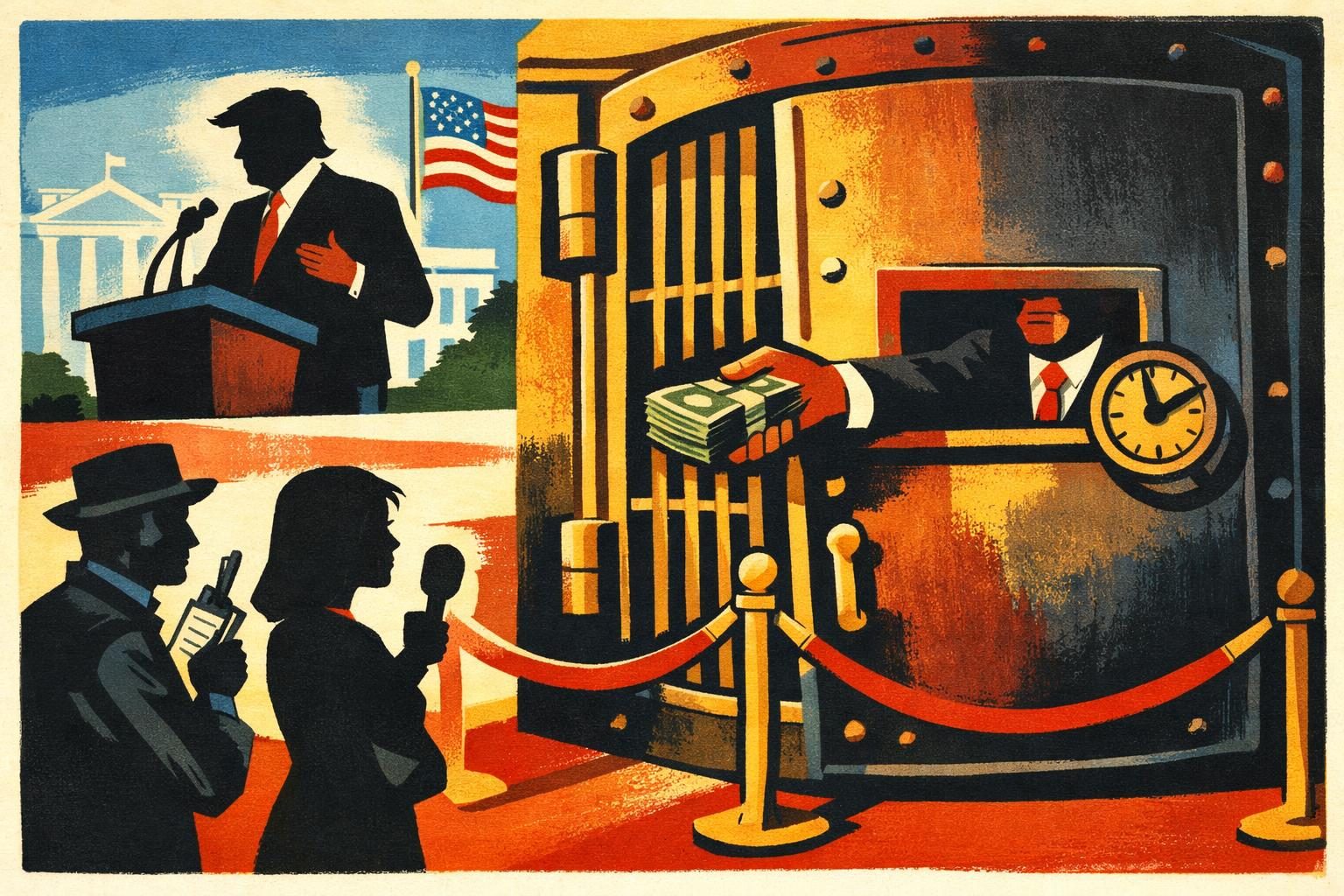
Two media organizations went to federal court on August 12 with a simple but explosive argument: a sitting president should not be able to make money by selling people earlier access to his own posts. The lawsuit targets a Truth Social arrangement that, according to the service description, gives paying customers a first look at Donald Trump’s messages before they are released to the general public. That setup is now being priced as a premium product for Wall Street firms, with access reportedly running as high as $100,000 a month. Even by the standards of modern political grift, the case lands in a strange and almost cartoonish place. But beneath the absurdity is a serious constitutional question about whether the presidency can be turned into a paid content pipeline.
The legal theory behind the suit is that Trump’s social media posts are not just casual commentary or campaign-style bluster, but time-sensitive statements that can carry real official weight. His messages can move markets, shape policy expectations, and set off immediate responses from allies, opponents, and federal agencies alike. If some customers can read those posts before everyone else, then the arrangement does more than sell convenience. It creates a private advantage tied directly to presidential speech, one that may raise questions about equal access, fairness, and improper profit from public office. The filing is aimed at stopping that structure before it becomes normalized, rather than waiting for a court to sort out the damage after the fact. That is part of what makes the case feel so odd and so consequential at the same time.
There is also a larger ethics problem hovering over the lawsuit, one that does not depend on whether the courts ultimately agree with the plaintiffs. Trump has long been accused of blurring the line between the office he holds and the business interests that orbit him, and this dispute pushes that tension into one of the most visible arenas possible. A president’s words are not ordinary product copy, and they are not supposed to be treated like a limited-edition subscription service for favored customers. If a corporation connected to the president is selling early access to those words, the public is left to wonder whether official communication is being packaged as a revenue stream. Even if the administration says the service is just another platform feature, the appearance of monetized insider access is enough to trigger alarm. The deal gives off the unmistakable odor of influence being sold in bulk, and that alone is politically toxic.
Defenders of the arrangement are likely to argue that there is nothing unlawful about charging for a service and that the case is motivated more by politics than by principle. They may say that Truth Social, like other platforms, can offer different tiers of access and that subscribers are simply paying for speed or convenience. Critics will answer that this is not the same as paying to get a sports score a few seconds early or to skip ads on a streaming site. What is being sold here is privileged access to the president’s own communications, some of which may contain policy signals with immediate public consequences. The constitutional question is still unresolved, and the court will have to decide whether the setup crosses the line from ordinary commercial activity into an improper profit stream attached to the presidency. For now, the lawsuit has already done its job: it has forced an uncomfortable public conversation about whether presidential speech can be paywalled for the well-connected while everyone else waits in line.
Comments
Threaded replies, voting, and reports are live. New users still go through screening on their first approved comments.
Log in to comment
No comments yet. Be the first reasonably on-topic person here.