
Justice’s immigration court system opens another pressure valve
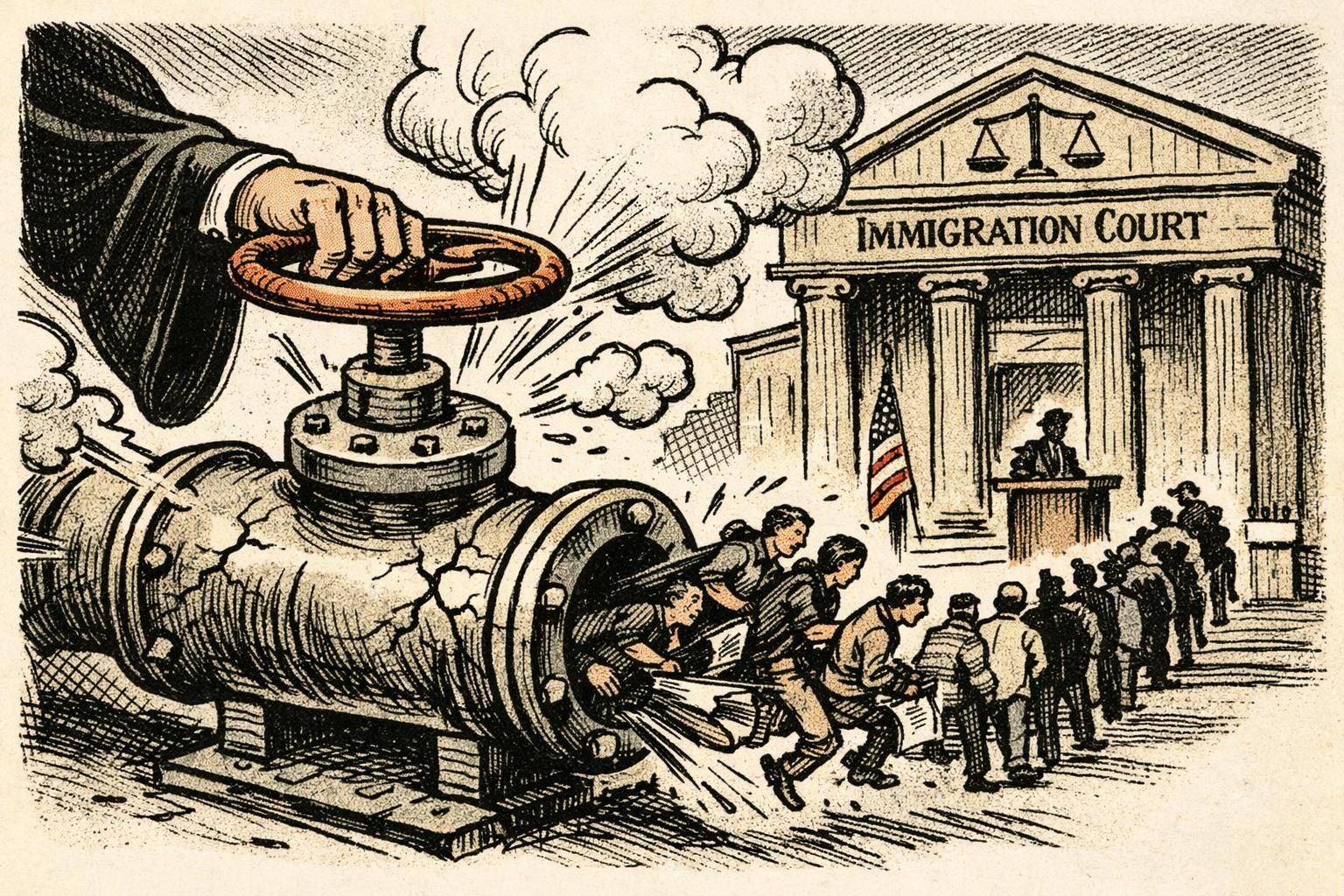
The Executive Office for Immigration Review has opened another procedural pressure valve, posting an invitation for amicus briefing due August 13, 2026 on a constitutional-law question moving through the immigration courts. On paper, that makes this a narrow administrative step, not a dramatic policy announcement or a courtroom spectacle. In practice, it is a useful reminder that the immigration adjudication system is still working through high-stakes legal questions at a pace that leaves little room for reflection. EOIR’s amicus process is designed to draw in outside perspectives when a dispute raises issues broad enough to affect more than the parties in front of the judge. When the agency takes that step, it usually means the underlying question is not just technical, but potentially consequential for how immigration cases are handled more generally.
That matters because the immigration court system has become one of the busiest and most strained parts of the federal government’s legal apparatus. Backlogs remain a defining feature of the docket, and the system continues to face pressure from policy shifts, enforcement initiatives, and constant litigation over how the rules are supposed to work. An amicus invitation does not reduce the backlog, but it does show the system is still producing disputes that require legal clarification even as it struggles to keep pace. The administration has emphasized speed and toughness in immigration enforcement, but speed can cut against careful resolution when the underlying legal framework is still being contested. In that sense, this move looks less like a solution than a sign that the machinery is still grinding through unresolved constitutional issues.
The significance of the filing invitation is easy to miss because it lacks the drama associated with a ruling, a hearing, or a high-profile enforcement action. Yet procedural developments like this often shape the next phase of immigration litigation in ways that are not immediately visible to the public. Outside briefing can influence how agency adjudicators, litigants, and eventually federal courts define the contours of a dispute. It can also expose where the law is unsettled, where the agency wants a more defensible record, and where future appeals are likely to land. For migrants and their lawyers, that uncertainty can translate into delay, uneven outcomes, and another layer of complexity in a system already known for both backlogs and inconsistency. For the agency, it is a chance to gather argument before a question hardens into a broader legal fight.
There is also a broader political reading here, and it is not especially flattering to anyone in charge of immigration policy. The White House has treated immigration enforcement as one of its favorite demonstrations of authority, often using it as a way to signal control and resolve. But the existence of a live constitutional question in the immigration courts suggests that the policy environment remains more fragile than the political rhetoric would imply. Supporters of the administration are likely to call this ordinary housekeeping, the sort of procedural move that any large agency makes when a legal issue needs more briefing. Critics will see something else: evidence that sweeping enforcement and adjudication changes are being pushed through a system that has not been stabilized enough to absorb them cleanly. Both interpretations have some merit, but the practical burden falls on the people who must wait for decisions while the legal architecture keeps shifting under them. In that sense, the amicus invitation is small only in appearance; it is another sign that the immigration system remains under real strain, and that even routine procedural steps can carry outsized importance when the stakes are this high.
Comments
Threaded replies, voting, and reports are live. New users still go through screening on their first approved comments.
Log in to comment
No comments yet. Be the first reasonably on-topic person here.