
Court clears Montana forest project after environmental challenge
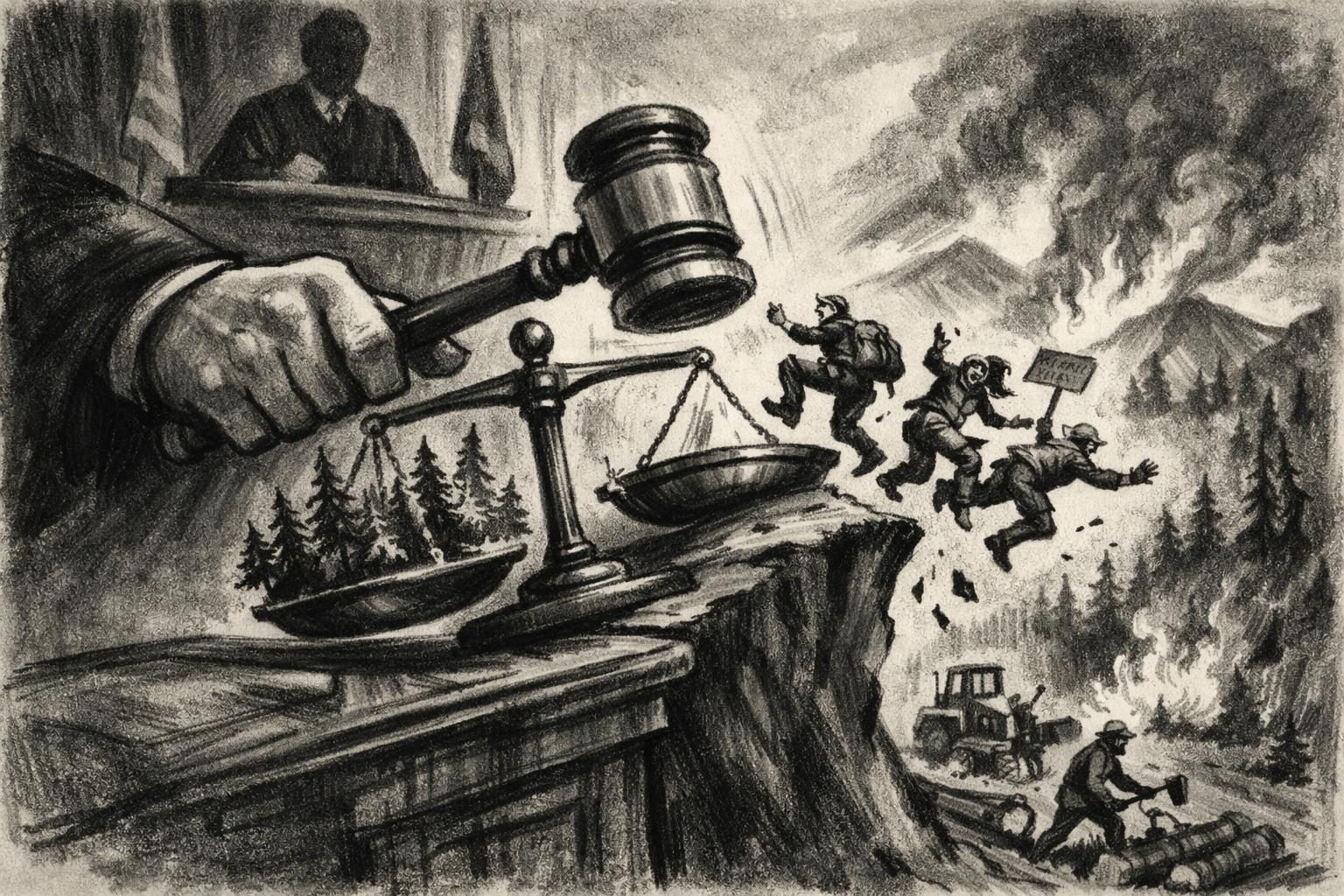
A federal court has cleared the way for a major forest management project on the Bitterroot National Forest in Montana, handing the government another procedural win in its long-running effort to defend logging and wildfire-reduction work on federal land. The Justice Department said Aug. 25 that the court allowed the Forest Service’s Gold Butterfly Project to proceed after a prior ruling had found the agency complied with key environmental laws but asked for a narrower explanation on the project’s effects on grizzly bears. That supplemental explanation was later accepted, leaving the project standing. The decision matters because it removes a legal obstacle that had threatened to slow or stop work across a broad stretch of forest in Ravalli County. It also shows how much of the fight over forest management now turns on administrative procedure, not just the merits of cutting trees or reducing fire risk.
The Gold Butterfly Project is not a small or symbolic proposal. According to the government’s description, it includes commercial timber harvest, non-commercial vegetation treatments, prescribed burning, and replanting over thousands of acres. In practical terms, that means a mix of activities aimed at changing forest density, removing fuels, and encouraging what the agency considers healthier forest conditions. Supporters say those kinds of measures can reduce wildfire intensity, improve habitat conditions over time, and provide timber supply in a region where forest policy and rural economies are closely linked. Critics, however, often see these projects as examples of a familiar pattern in which agencies invoke fire prevention while opening the door to larger-scale logging. That tension has made forest management one of the more durable battlegrounds in federal land politics, especially in western states where environmental review and land-use decisions can produce years of litigation.
The latest court action is important not just because the project survived, but because it illustrates how the government can sometimes prevail by filling in legal gaps rather than relitigating the entire case. The court’s earlier ruling had already indicated that the Forest Service had met its obligations under major environmental statutes, but it wanted more explanation on one specific issue: how the project would affect grizzly bears. Once the agency provided that additional detail, the court accepted it and allowed the project to move ahead. That kind of back-and-forth may sound technical, but it often determines whether a project stalls for months or goes forward on schedule. In the current political environment, where forest work is routinely framed as either overdue common sense or dangerous ecological overreach, such procedural rulings can carry as much practical significance as sweeping policy debates. They are also a reminder that environmental litigation is often less about one dramatic legal question than about whether an agency has built enough of a paper trail to survive review.
The administration is treating the ruling as a victory for wildfire risk reduction and timber production, and that response fits a broader message it has pushed in other land-management disputes. Officials have repeatedly argued that active forest management can serve public safety, support housing and wood supply, and reduce the danger posed by overgrown stands that burn more severely in hot, dry conditions. Environmental opponents do not necessarily reject the problem of wildfire, but they dispute whether logging-heavy solutions are always the best answer and whether the promised safeguards are strong enough. They also argue that the word “streamlining” can become a shorthand for narrowing meaningful review, limiting public participation, and moving too quickly past ecological tradeoffs that deserve more scrutiny. None of those arguments are resolved by a single ruling. Still, a court decision that leaves a project alive after an environmental challenge gives the government something it has often wanted in these cases: time, momentum, and the legal authority to proceed while higher-stakes debates continue elsewhere.
What happens next is straightforward, even if the politics are not. Unless a higher court changes the outcome, the Gold Butterfly Project can now continue through the planning and implementation steps that usually follow a legal clearance. That likely means more timber activity, more prescribed fire planning, and more arguments over whether the project is truly about resilience or whether it will do unnecessary damage in the name of management. It also means the broader fight over federal forest policy is likely to keep going, because this case sits inside a larger pattern in which every major project can become a test case for the balance between environmental review and operational authority. For the administration, the ruling is useful evidence that its legal strategy is working in at least some places. For opponents, it is another sign that the courts may be willing to let agencies push ahead once they have satisfied the minimum procedural requirements. And for communities near the forest, the practical question is less about the courtroom rhetoric than about what the work on the ground will actually look like once crews begin moving through the trees.
Comments
Threaded replies, voting, and reports are live. New users still go through screening on their first approved comments.
Log in to comment
No comments yet. Be the first reasonably on-topic person here.