
U.S. sues California utility district over wildfire ignition claims
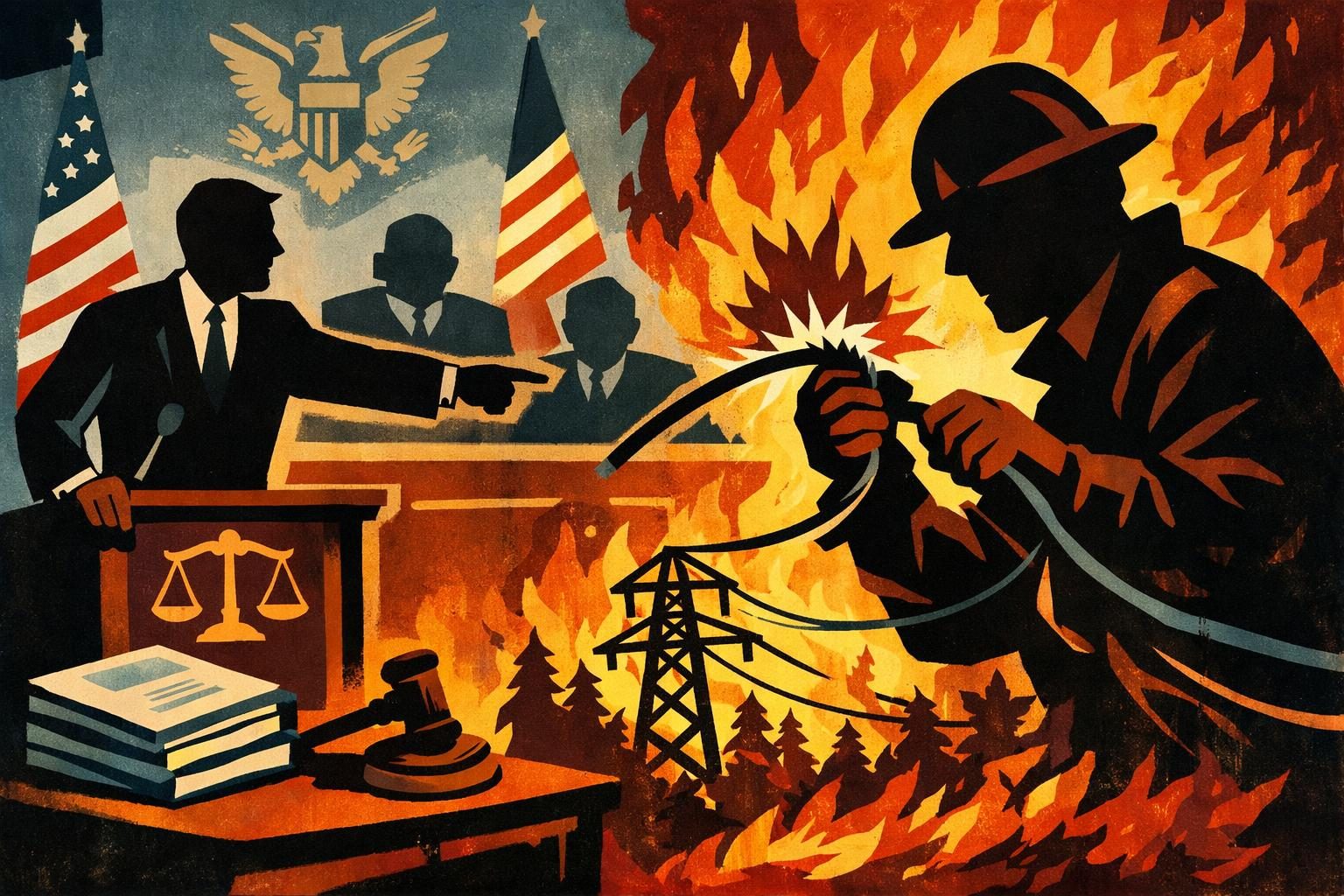
The federal government has opened a new front in California’s long-running wildfire liability fight, filing a lawsuit against the Trinity Public Utilities District over claims that its equipment ignited the Hobo Fire in 2020. According to the complaint filed August 26, prosecutors say the district’s electrical equipment sparked the blaze in the Shasta-Trinity National Forest and that the utility failed to take adequate steps to prevent it. The case is rooted in an incident that is now years old, but the legal and financial stakes are anything but stale. Federal officials are seeking to recover more than $2.3 million in suppression costs tied to a fire that burned roughly 450 acres, underscoring how the costs of wildfire response can linger long after the smoke clears. The lawsuit also signals that regulators and prosecutors are increasingly willing to treat wildfire ignition not as an unavoidable natural disaster, but as a matter of potentially preventable negligence.
That distinction matters because wildfire liability has become one of the most consequential fault lines in the West’s utility crisis. When a blaze is linked to electrical infrastructure, the public often ends up paying twice: once through emergency response and again through years of litigation, rate pressure, or broader taxpayer exposure when the responsible party is underinsured or lacks the resources to absorb the damage. In this case, the government is not presenting the fire as a mystery or a tragic accident with no accountable party. Instead, the complaint reportedly points to maintenance and vegetation-clearance failures, alleging that the district did not do enough to reduce the risk posed by its own equipment. That kind of allegation, if proven, is not exotic or novel; it is the ordinary language of negligence applied to a setting where the consequences can be catastrophic. And in wildfire country, where dry conditions and aging infrastructure can turn a small failure into a regional emergency in minutes, ordinary negligence can carry extraordinary costs.
The Hobo Fire itself was not among the largest wildfires California has faced in recent years, but size is not the only measure that matters in these cases. A 450-acre fire in forested federal land can still require a large suppression response, damage habitats, strain local firefighting resources, and force the government to devote significant manpower and equipment to containment. The complaint’s estimated $2.3 million in suppression costs highlights another feature of these disputes: the immediate firefighting bill is often only a fraction of the total harm that follows an ignition. Investigations, litigation, environmental repair, administrative time, and long-term grid or safety upgrades can add more expenses later. When officials pursue recovery years after a fire, they are not just chasing reimbursement. They are also trying to create a legal record that may deter similar failures by making clear that poor maintenance and weak risk controls can come with real consequences.
The case against the Trinity Public Utilities District also reflects a broader shift in how wildfire accountability is being framed. There is still room for factual disputes, including what specifically caused the Hobo Fire and whether the district’s conduct meets the legal standard required for liability. The complaint is an allegation, not a final finding, and the district will have the opportunity to respond and defend its practices in court. But the government’s decision to sue at all indicates that prosecutors believe the evidence is strong enough to make this worth litigating rather than settling quietly or writing it off as another unfortunate burn. That is notable in a state where utilities, municipalities, and land managers increasingly face scrutiny over whether they have done enough to inspect equipment, clear vegetation, and reduce ignition risk before peak fire season. The underlying message is not subtle: if a utility’s infrastructure can spark a fire, then the duty to maintain that infrastructure is not optional, and the public should not be left holding the bill for failures that were allegedly foreseeable and preventable.
Comments
Threaded replies, voting, and reports are live. New users still go through screening on their first approved comments.
Log in to comment
No comments yet. Be the first reasonably on-topic person here.