
Trump declares a bulk-power emergency and dares the courts to keep up
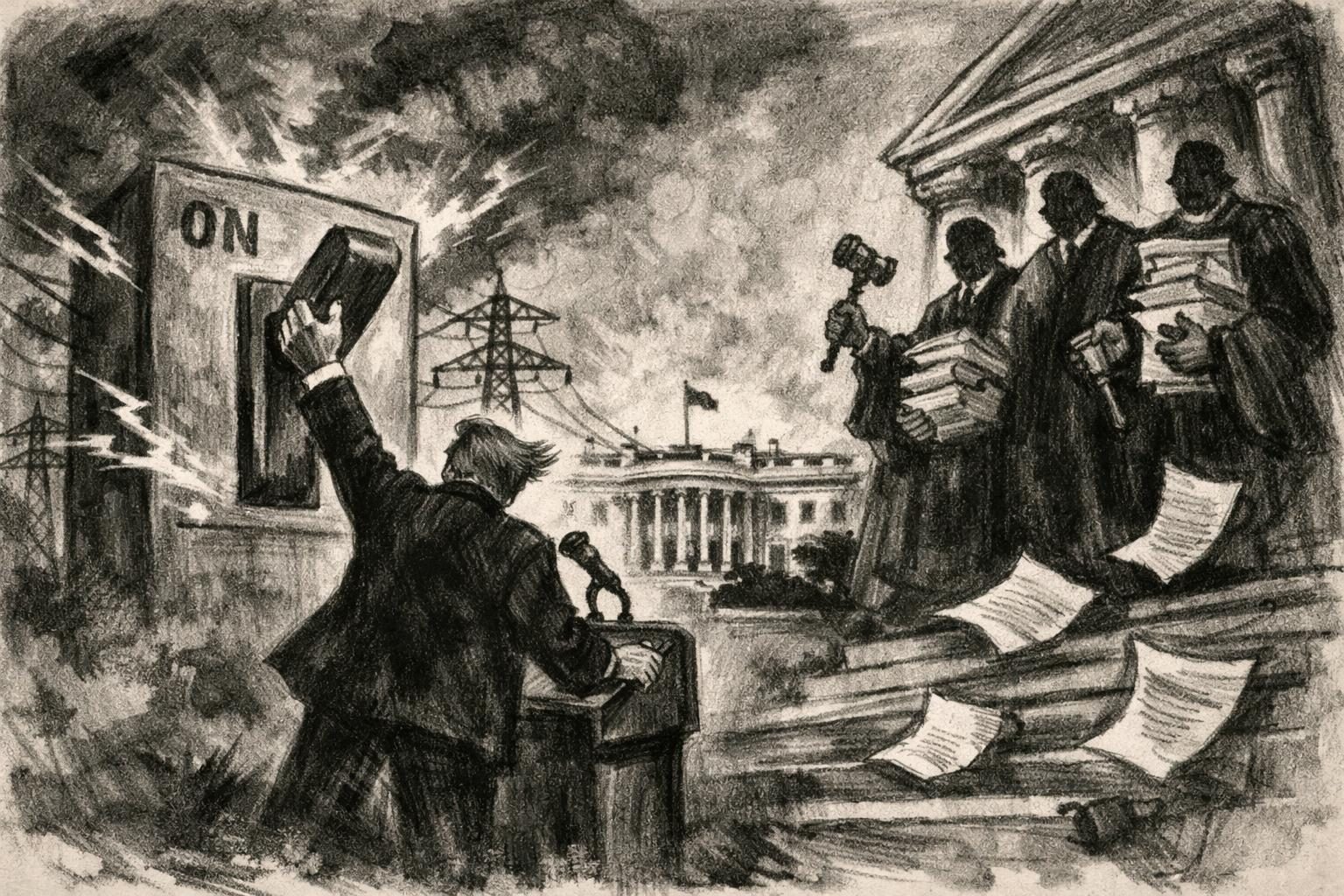
The White House on August 26 declared a national emergency aimed at securing the country’s bulk-power system, a move that casts the electric grid as a direct national-security vulnerability and gives the administration a broad new rationale for tightening control over foreign-made equipment, software, and related digital systems. The order is being sold as a cybersecurity and reliability measure, but its practical effect is much more expansive: it pushes federal authority deeper into how utilities buy, install, and manage critical infrastructure. According to the administration’s own fact sheet, the goal is to block, condition, or otherwise restrict purchases and deployments that could create operational or cyber risks. That means the government is not just setting standards or issuing guidance. It is reaching for emergency powers to influence procurement decisions across a sector that usually moves through a slower mix of regulation, engineering review, and state-level oversight.
The basic political logic is easy to see. Grid security is a powerful framing device, and national security language gives the White House a way to present a controversial intervention as an urgent defense of the public interest. The administration is also trying to normalize a larger argument: that foreign-produced electrical equipment and software are not merely commercial inputs, but potential conduits for sabotage, espionage, or systemic disruption. That may be a defensible concern in some cases, and there is no serious dispute that the grid is a high-value target for cyber threats. But the move also raises the familiar questions that follow any emergency declaration used as a policy shortcut. What evidence is being relied on, how far does the authority go, and how much of the market does this order intend to reach? Those questions matter because the bulk-power system is vast, complex, and already governed by a patchwork of federal, state, and private-sector rules. A sweeping federal emergency can sound decisive while leaving behind legal ambiguity and operational confusion.
That is where the real fight is likely to start. Utilities, equipment manufacturers, state regulators, and trade lawyers all have reasons to scrutinize the order and test its limits, especially if the administration uses it to push beyond narrow security screening and into more general control over what grid operators can buy. Companies will want to know whether contracts can be paused, whether existing installations are exposed, whether new compliance requirements are coming, and whether foreign content in hardware or software will be treated as presumptively suspect. States may also object if they believe Washington is trying to override their own procurement rules or regulatory frameworks without a clear statutory path. Even supporters of tougher grid-security policy may balk at the use of emergency authority if they think the administration is creating a precedent that will be hard to contain later. The danger for the White House is not just litigation, though that is likely. It is that the order may look like a broad federal improvisation dressed up as a narrowly tailored security fix.
The larger institutional problem is that emergency declarations have a way of becoming permanent habits if they are not checked quickly. When the executive branch uses national-security rhetoric to speed past a slower legislative process, it can win an immediate policy advantage while also inviting the courts to decide where the boundaries actually are. That may be the point. The administration appears ready to move first and defend later, betting that the urgency of grid protection will outweigh concerns about process, federalism, and administrative overreach. Yet the bulk-power system is not an abstract policy arena. It is the backbone of hospitals, factories, water systems, data centers, and households across the country, which means uncertainty around procurement and compliance can have real consequences fast. If the order survives, it may reshape how utilities think about foreign vendors, software dependencies, and cybersecurity risk. If it runs into serious legal resistance, it will add another entry to the growing list of executive actions that promised speed and certainty but ended up producing litigation, confusion, and a reminder that emergency power is often easiest to announce and hardest to justify."}]}
Comments
Threaded replies, voting, and reports are live. New users still go through screening on their first approved comments.
Log in to comment
No comments yet. Be the first reasonably on-topic person here.