
California sues over the administration’s $120 million offshore wind buyout
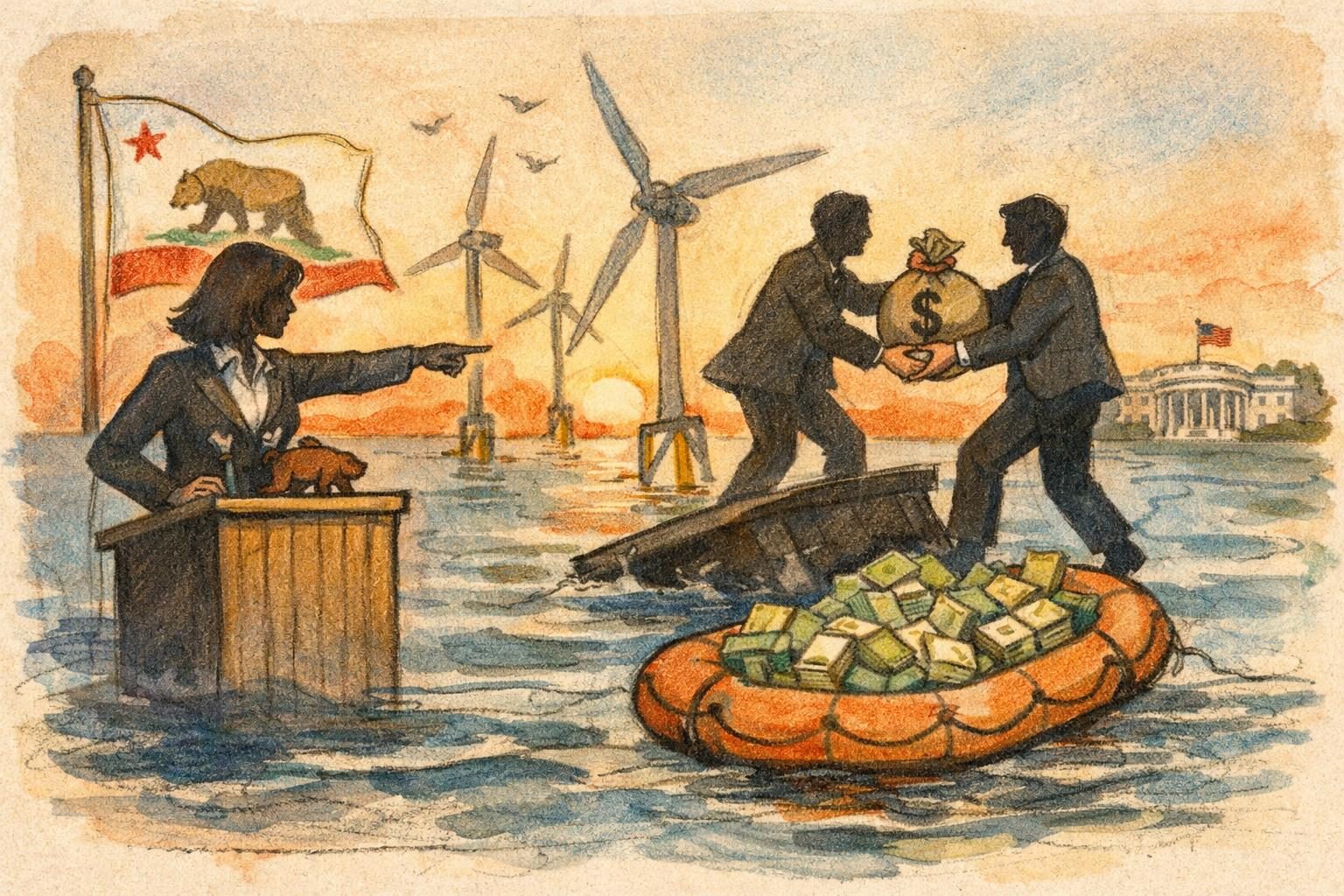
California on August 28 went to court to challenge what state officials are calling an unlawful federal buyout of an offshore wind lease, opening a fresh fight over whether the administration can use public money to end a clean-energy project it should be regulating. The lawsuit, filed by Attorney General Rob Bonta and the California Energy Commission, centers on a $120 million deal that would pay Golden State Wind to walk away from its lease off the state’s Central Coast. California says the arrangement is not a routine policy shift but a deliberate effort to shut down a major renewable-energy project before it can create jobs, build supply chains, and advance the state’s offshore wind plans. That framing gives the case immediate political weight because it sits at the intersection of climate policy, federal power, and the use of taxpayer dollars. It also sets up a sharp question for the courts: whether the executive branch can spend federal money to undo a lease and steer energy development by fiat.
According to the complaint, the Interior Department arranged the payment in a way that does more than simply compensate a developer for backing out of a project. California argues the deal was designed to push the company toward fossil-fuel investments outside the state, making the government’s role look less like neutral administration and more like active reshaping of the energy market. That is the kind of allegation that can sound political at first and then become much more serious if the factual record backs it up. The state’s position is that the federal government cannot lawfully use a public windfall to discourage a project it had already approved, especially when that project was supposed to support a broader clean-energy buildout. If the administration can buy out a lease and then direct the downstream consequences, California says, the limits on executive authority start to look awfully thin. The lawsuit therefore reaches beyond one developer and one lease, because it asks whether federal energy policy can be rewritten through a financial transaction instead of through lawmaking or ordinary regulation.
California says the offshore wind project had real local and regional stakes, including workforce training, port and supply-chain development, and the promise of long-term economic benefits tied to construction and operations. Those are not abstract talking points in a state that has spent years trying to build a coastal offshore wind industry from scratch. For officials in Sacramento, the issue is not only that a project was interrupted, but that the interruption may chill investment in an entire sector before it has had a fair chance to mature. That is why the complaint presents the case as more than a simple contract dispute. It argues that the deal harms the state’s broader offshore wind buildout by making it harder to plan, finance, and staff future projects. The state is also signaling that it views the federal action as a direct attack on clean energy, one that could ripple through local economies that had already begun to prepare for the project’s arrival. Whether those harms are enough to persuade a judge will depend on the administrative record, the terms of the lease, and how much discretion the government actually retained. But California is clearly betting that the practical damage will be easy to understand even if the legal theory is complex.
The broader political backdrop matters here because the administration has repeatedly treated climate policy as a target rather than a priority, and the optics of paying a developer to abandon offshore wind are difficult to separate from that pattern. Critics are likely to argue that the arrangement looks like an effort to kneecap renewable energy while rewarding industries tied to fossil fuels, even if supporters of the federal action insist it reflects a permissible policy choice. The case will almost certainly become a proxy fight over how far the White House can go in reshaping the country’s energy mix without congressional approval. It may also become a test of how much deference courts are willing to give when the executive branch uses public funds to reverse course on a project already moving through the permitting and leasing process. If California wins quickly, it could win an injunction that freezes the buyout before the deal takes hold. If the litigation drags on, the administration gets more time to normalize a strategy that critics say turns taxpayer money into a tool for dismantling clean-energy development. Either way, the lawsuit has turned a lease cancellation into a much larger argument about corruption, climate, and whether the federal government can subsidize the very thing it is trying to shut down.
Comments
Threaded replies, voting, and reports are live. New users still go through screening on their first approved comments.
Log in to comment
No comments yet. Be the first reasonably on-topic person here.