
Another court tosses New York’s climate superfund law
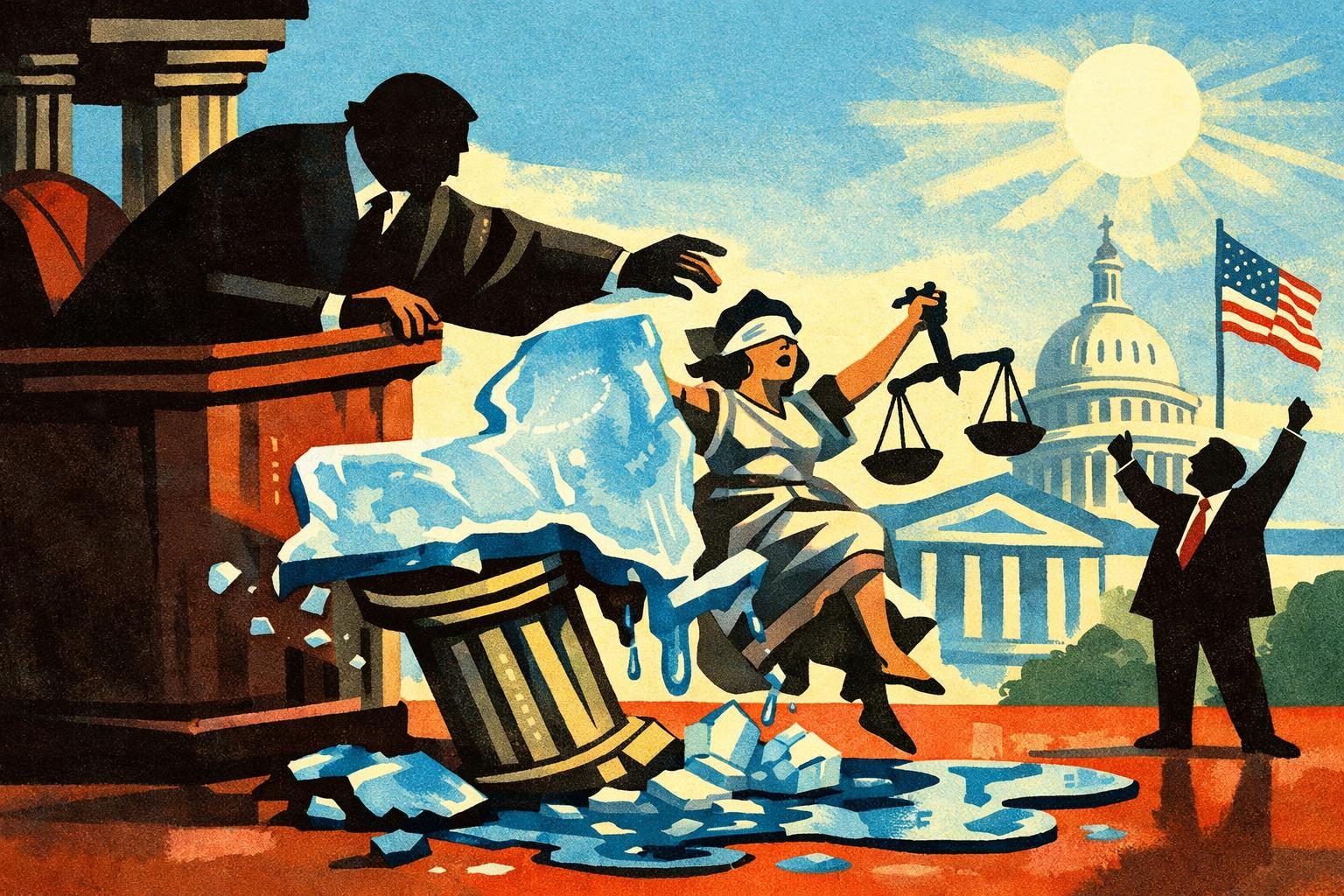
A second federal judge has moved to knock out New York’s climate superfund law, deepening a legal fight that has become one of the clearest tests of how far states can go in forcing fossil fuel companies to help pay for climate damage. In a ruling issued Sept. 26, the court said the state statute is preempted by federal law and runs into federal authority over both climate policy and foreign affairs. The decision lands as another major blow to advocates who cast the measure as a long-overdue attempt to shift some of the costs of warming onto the companies most associated with greenhouse gas emissions. It also gives opponents of the law fresh ammunition in the broader argument over whether states can impose their own climate accountability regimes when Congress has not acted. For now, the practical result is to put one of the boldest state-level climate finance experiments on shaky ground while appeals and related cases continue to unfold.
The ruling matters because New York’s law was not just another environmental statute. It was designed as a model for a new kind of climate liability system, one that would require large emitters to help cover the costs associated with flooding, wildfire smoke, extreme heat, and other climate-linked harms. Supporters viewed the measure as a way to make polluters pay for damage that communities and governments are already absorbing, often at enormous public expense. That is why the case has drawn attention well beyond Albany, reaching state officials, climate activists, industry lawyers, and lawmakers in other states who have considered similar approaches. If the decision stands, it could narrow the path for states hoping to build their own superfund-style programs. It could also discourage legislators elsewhere from taking up the idea at all, especially if they read the ruling as a warning that even aggressive local efforts may be vulnerable to federal constitutional challenges.
The legal reasoning is likely to be just as important as the result. A preemption ruling does not simply say the state picked the wrong policy; it says federal law occupies enough of the field that the state cannot impose its own substitute regime. In climate cases, that can be a powerful barrier, particularly when defendants argue that emissions and their consequences are intertwined with interstate and international commerce, energy markets, and foreign policy. The court’s reference to foreign affairs is especially notable because it hints at the possibility that state efforts to regulate climate harms through liability schemes may intrude on areas the Constitution leaves largely to the federal government. That argument could echo in other lawsuits, giving defendants a template to challenge similar state laws by framing them as an end run around national authority. The result is not necessarily the end of the road, but it is a substantial obstacle for a theory of climate accountability that depends on state-by-state experimentation.
The political fallout is almost as significant as the legal one. Climate superfund laws have been championed by progressives as a way to address a basic fairness problem: communities are already paying the price for emissions they did not cause, while companies that profited from fossil fuels continue to avoid those costs. Opponents, by contrast, have portrayed the law as a backdoor tax or a regulatory overreach that invites a patchwork of state liability rules. This latest ruling gives industry allies a clean argument that the issue belongs in Congress, not in state courthouses, and that the federal structure of the country still limits how far one state can go on its own. For climate advocates, that is precisely the problem, because congressional action on climate has repeatedly stalled while the damages keep rising. The immediate effect may be more litigation, but the larger effect could be a chilling signal to other states weighing similar legislation and to activists who hoped New York would become the legal blueprint for a broader campaign. Whether the decision survives on appeal will matter, but even now it is already reshaping the debate over who should pay for climate harm and whether states can force the answer on their own.
Comments
Threaded replies, voting, and reports are live. New users still go through screening on their first approved comments.
Log in to comment
No comments yet. Be the first reasonably on-topic person here.