
New York sues to block Trump’s offshore wind buyout scheme
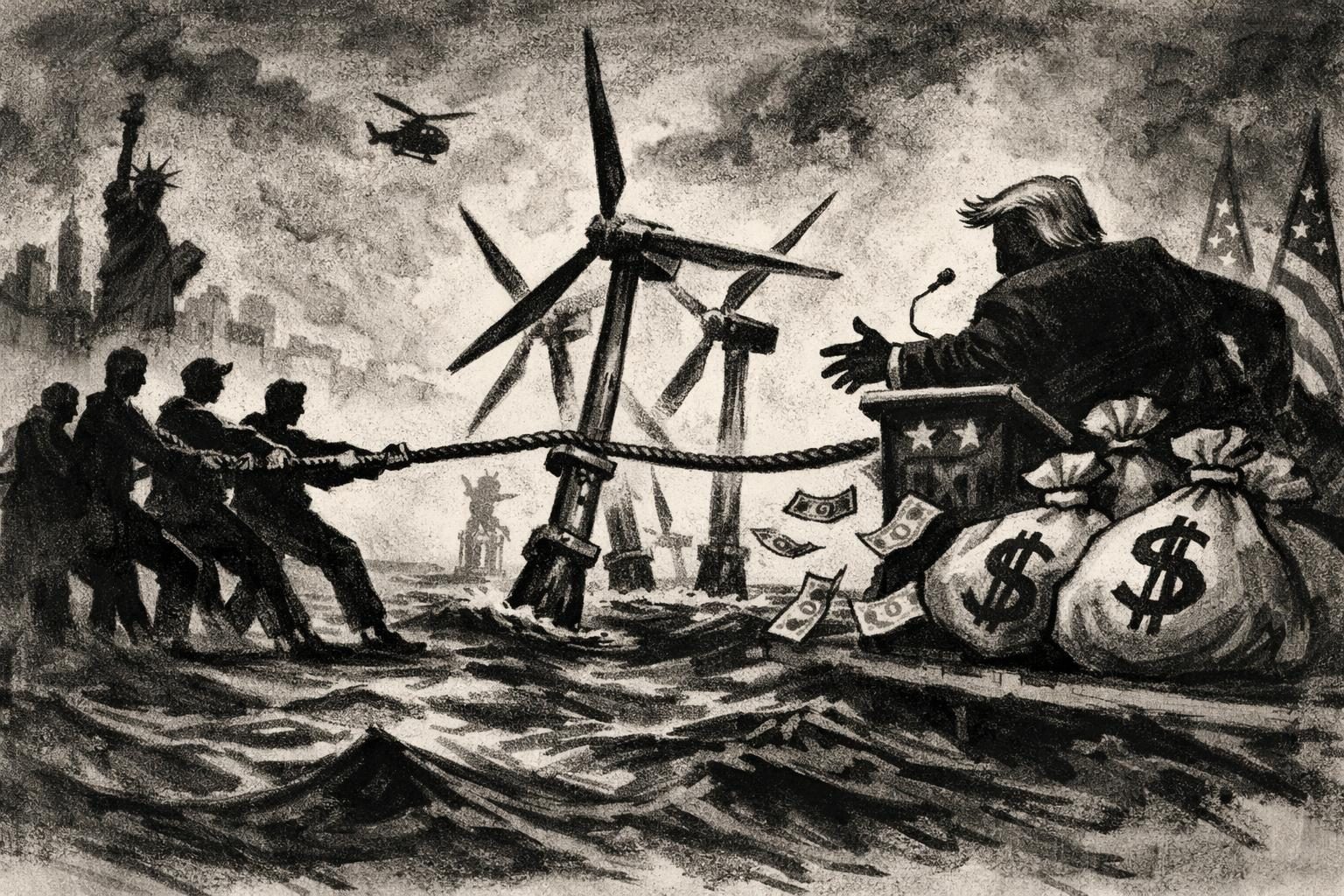
New York has taken the Trump administration’s offshore wind fight from rhetoric to litigation, and it has done so with a sharper argument than a generic climate complaint. Attorney General Letitia James and Governor Kathy Hochul announced on September 26 that the state, joined by allied states, is suing over what they describe as illegal federal buyout deals meant to pay energy companies to walk away from offshore wind projects. The lawsuit targets agreements that would use public money to halt projects that had already cleared earlier stages of federal approval and that states say were important to future power supply, job creation, and grid reliability. The core accusation is simple enough to fit on a bumper sticker: Washington is not just slowing wind development, it is allegedly spending taxpayer dollars to cancel it. That turns a long-running political fight over turbines and climate policy into a fight over whether the federal government can lawfully finance its own retreat from energy infrastructure.
The legal theory matters because it gives the states a more concrete target than an abstract disagreement about the direction of energy policy. Rather than asking a court to referee a broad philosophical dispute about renewables, the complaint appears aimed at specific federal deals the state argues were not authorized by Congress and exceeded the administration’s power. If that framing holds, the case is about ultra vires conduct, waste, and the misuse of public funds, not just policy preference. That is a more dangerous posture for the federal government, because it invites judges to ask whether the administration is spending money it does not have the right to spend for an objective it may not be allowed to pursue. It also lets the states argue that they were not relying on wishful thinking when they planned for these projects, since their grids, labor markets, and energy forecasts were built around the expectation that the wind buildout would continue. In other words, they are casting themselves as injured parties defending concrete investments, not as ideologues objecting to a shift in tone.
The politics behind the case are brutal for an administration that has tried to sell itself as pro-energy while also strangling the clean-energy buildout. Supporters of the lawsuits say the buyouts amount to taxpayer-funded sabotage: a government handout for companies to stop doing work the country allegedly needs. The White House, by contrast, is likely to argue that it is simply correcting bad prior decisions, policing the federal leasing process, or protecting the public from projects it considers flawed. But that defense becomes awkward when the remedy is to pay companies to leave the field entirely, especially at a time when electricity demand is rising and grid strain is harder to dismiss as a talking point. States like New York are betting that voters and judges alike will see a contradiction in promising abundant, affordable power while using federal authority to erase projects designed to produce exactly that. The administration can still claim discretion, but discretion has a harder sell when it is attached to a checkbook and a cancellation notice.
The lawsuit also fits into a broader pattern of hostility toward wind development that has moved from campaign language into contracts, cancellations, and court filings. The New York announcement makes clear that this is not being treated as a one-off dispute over a single project, but as part of a larger federal effort to slow or reverse offshore wind progress. California joined the same day with its own climate-related legal push, underscoring how Democratic-led states are using litigation as a counterweight to federal retrenchment. That does not guarantee victory, and the Trump administration may win some or all of the battle on procedural grounds or narrow statutory arguments. But even a partial federal win would leave the political damage in place, because the case has already framed the issue in a way that is difficult to unsee: if Washington is willing to pay private companies to abandon energy projects, then the fight is no longer just about ideology, it is about whether the government is using public money to kneecap the very power sources it says it wants. That is a rough way to run an energy policy, a rougher way to defend it in court, and a nearly ideal way for states to accuse the federal government of sabotaging the future while insisting it is merely managing the present.
Comments
Threaded replies, voting, and reports are live. New users still go through screening on their first approved comments.
Log in to comment
No comments yet. Be the first reasonably on-topic person here.