
Justice Department tries to spin a Michigan climate ruling as a win after courts shut it down
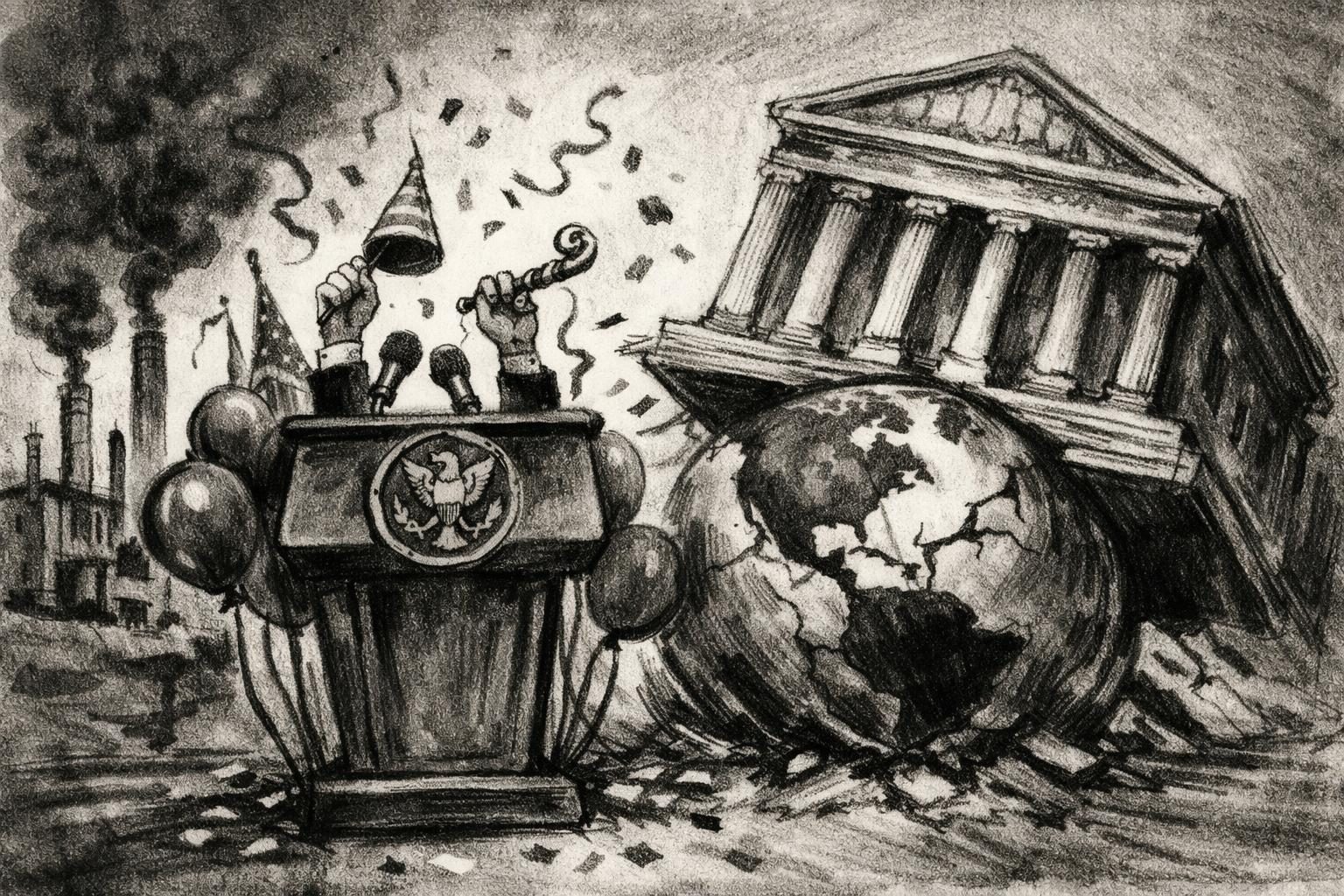
The Justice Department is trying to turn a Michigan court ruling into evidence that its broader legal strategy on climate policy is working, even as the underlying litigation keeps exposing how aggressively the federal government is willing to fight state-level climate initiatives. On September 26, the department issued a celebratory readout focused on a federal district court decision in the Michigan BP climate case and described the outcome as support for its view of the law. The framing was familiar: the government presented itself as the careful defender of federal authority, not as a political actor with a preference for shrinking state power. But the larger significance of the case is harder to avoid. The dispute is not simply about one complaint in one courtroom. It is about whether federal preemption can be used to push aside state climate and energy claims before they get very far, and whether the federal government should help make that argument on behalf of corporate defendants.
That matters because these cases are increasingly about who gets to decide who pays for pollution and climate damage. State lawmakers and attorneys general have been looking for ways to force fossil-fuel companies and related industries to absorb some of the costs associated with extreme weather, environmental cleanup, and long-term harms. Federal preemption arguments, by contrast, are designed to say that state remedies run into the wall of federal law, federal oversight, or federal uniformity. In practice, that can mean a court never reaches the merits of whether a state has a valid theory of accountability. The Justice Department’s decision to spotlight the Michigan ruling suggests it sees value not just in winning a single case, but in normalizing a legal posture that can be carried into other fights over climate regulation and climate liability. For environmental advocates, that is not a neutral act of law enforcement. It is a policy choice that affects who bears the costs of a warming planet and who gets to decide the rules.
The department’s public messaging also fits with a broader pattern in which federal litigation is being used to narrow the space available to state climate experimentation. States have increasingly been testing their own mechanisms for climate accountability, including proposals modeled on superfund concepts that would try to make major polluters help pay for damage. Those measures are exactly the sort of policies likely to draw fierce opposition from fossil-fuel interests, and now they have to be considered in a legal environment where the federal government may actively support challenges instead of staying on the sidelines. The result is not just uncertainty for states. It is a warning that even novel state efforts designed to address local harms can be met with coordinated pressure from Washington if they are viewed as inconvenient to federal priorities or industry allies. In that sense, the Michigan case is less an isolated dispute than a signal flare for other pending and future battles.
The Justice Department appears eager to present all of this as an ordinary defense of constitutional structure and statutory hierarchy, with the familiar language of “proper application” doing much of the work. But that description leaves out the political effects of the strategy. If federal law is used to invalidate or undermine state attempts to assign climate costs, then the practical winner is often the same: companies that would otherwise face more liability, less regulation, or both. That does not necessarily mean every federal preemption argument is illegitimate, and it does not prove that every move is coordinated as part of a single anti-climate campaign. Still, the pattern is hard to miss. The department is not merely interpreting law in the abstract; it is choosing sides in a fight over how far states can go in making polluters pay and in shaping climate policy on their own terms. For states, advocates, and anyone tracking the legal architecture of climate accountability, the message is clear enough: the federal government is willing to use its power to narrow the field, then call the result a victory for the rule of law.
Comments
Threaded replies, voting, and reports are live. New users still go through screening on their first approved comments.
Log in to comment
No comments yet. Be the first reasonably on-topic person here.