
Connecticut man charged in stolen Treasury check scheme
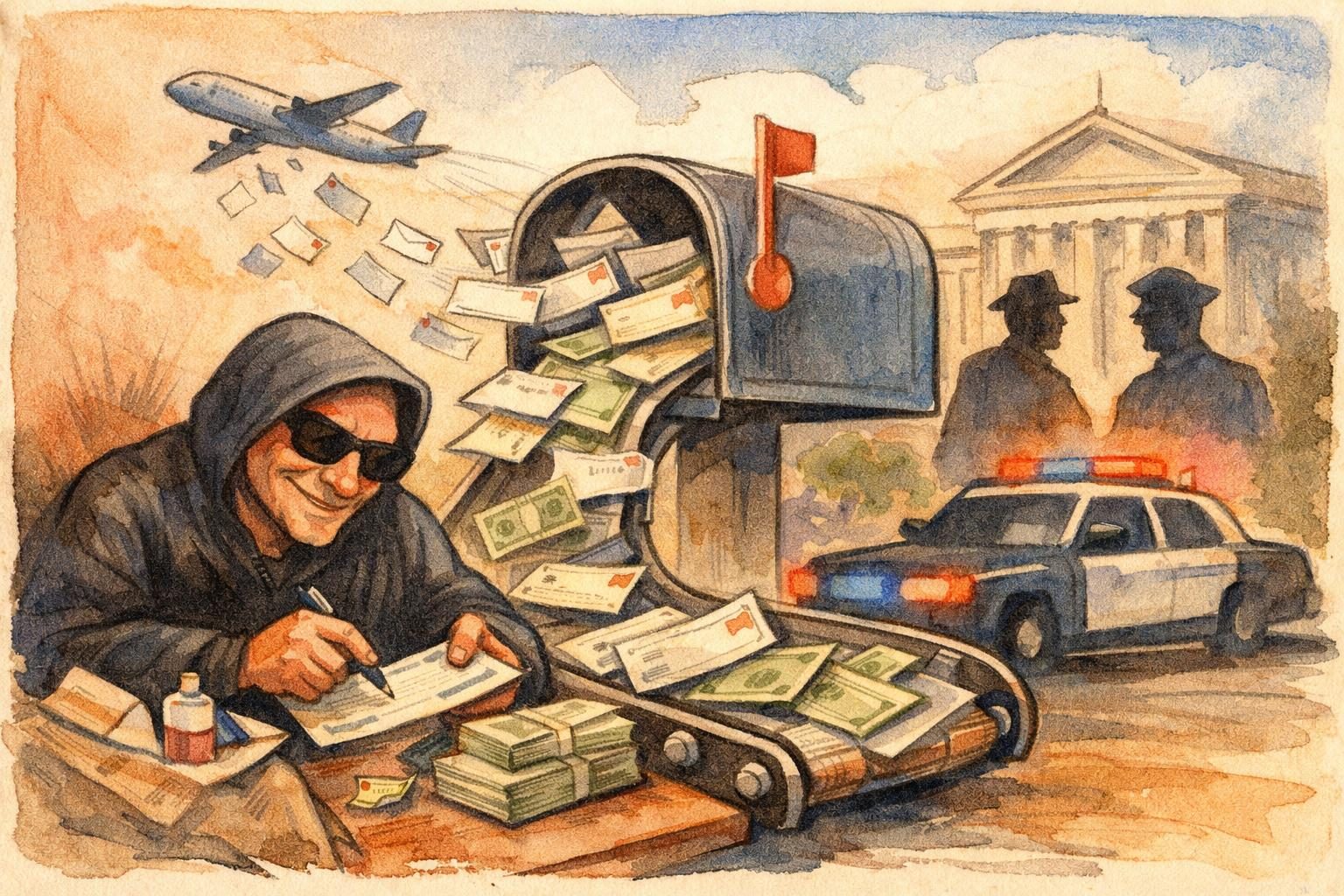
Federal prosecutors in Connecticut say a Stamford man has been charged in a scheme tied to stolen, altered and negotiated U.S. Treasury checks, a case that starts small on paper but points to a much larger problem in the mail and payments system. The complaint centers on a 23-year-old defendant and alleges that the activity was part of a broader financial-fraud investigation that uncovered more than 100 stolen Treasury checks worth several hundred thousand dollars. Investigators describe a pattern that relied on intercepted mail, changed payee names, recruited bank accounts and a mix of cash withdrawals and digital transfers to move the money around. It is the kind of case that rarely grabs national attention on its own, yet it sits squarely in the lane of federal law enforcement work that tries to keep ordinary payment systems from being quietly stripped for parts. In that sense, the charge is less about courtroom drama than about the fragile mechanics of getting checks where they are supposed to go.
According to the allegations, the scheme depended on a chain of simple steps that become harder to stop once they begin feeding one another. Checks had to be taken from the mail, altered to change who could cash them, then deposited or negotiated through accounts that could absorb the funds before banks or investigators noticed anything suspicious. The complaint also indicates that some of the money moved through mobile applications and retail cash-back transactions, which can make tracing the proceeds more cumbersome once the checks have been converted into usable funds. That is not a glamorous form of financial crime, but it is a durable one, because it exploits several weaknesses at once: mail security, account access, identity verification and the lag between deposit and detection. The wider probe, at least as described so far, suggests authorities believe this was not a one-off theft but part of a larger pipeline for stealing government payments and turning them into spendable cash.
The practical fallout from that kind of fraud can be severe even when the public numbers do not sound enormous compared with other federal cases. For the people who rely on Treasury checks, especially recipients who may already be dealing with fixed incomes or tight monthly budgets, a missing payment can mean late bills, unpaid rent and a frustrating scramble to prove that a check was never received or was fraudulently cashed. Once a stolen check is altered and deposited, recovering the money can become a tedious process involving banks, investigators and the agencies responsible for issuing the payment in the first place. That is part of what makes mail-based fraud so corrosive: the damage is often discovered only after the funds have already moved through several hands. By then, the paper trail that should have protected the recipient has become evidence in a cleanup operation. Even when investigators eventually unwind the scheme, the people who were supposed to get paid are the ones left waiting.
There is also a broader policy argument embedded in the case, even if it looks like a routine criminal filing on the surface. Mail security, benefits delivery and payment integrity are all part of the public’s test of whether basic government systems still work well enough to be trusted. A single prosecution will not answer that question, but it does illustrate the kind of low-level fraud that federal authorities are trying to interrupt before it spreads further. The case is a reminder that modern payment crime does not always begin with sophisticated hacking or international laundering; sometimes it begins with a stolen envelope and a willing middleman. For prosecutors, the point is to show that even these comparatively mundane schemes can be traced and punished. For everyone else, the charge is a small but familiar warning that the systems built to move public money are only as strong as the chain of custody that protects them. The complaint in Connecticut may be one case, but it reflects a much larger enforcement problem: once fraud gets a foothold in the mail, it can move faster than the institutions meant to stop it.
Comments
Threaded replies, voting, and reports are live. New users still go through screening on their first approved comments.
Log in to comment
No comments yet. Be the first reasonably on-topic person here.