
Trump’s tariff reset is on a short fuse
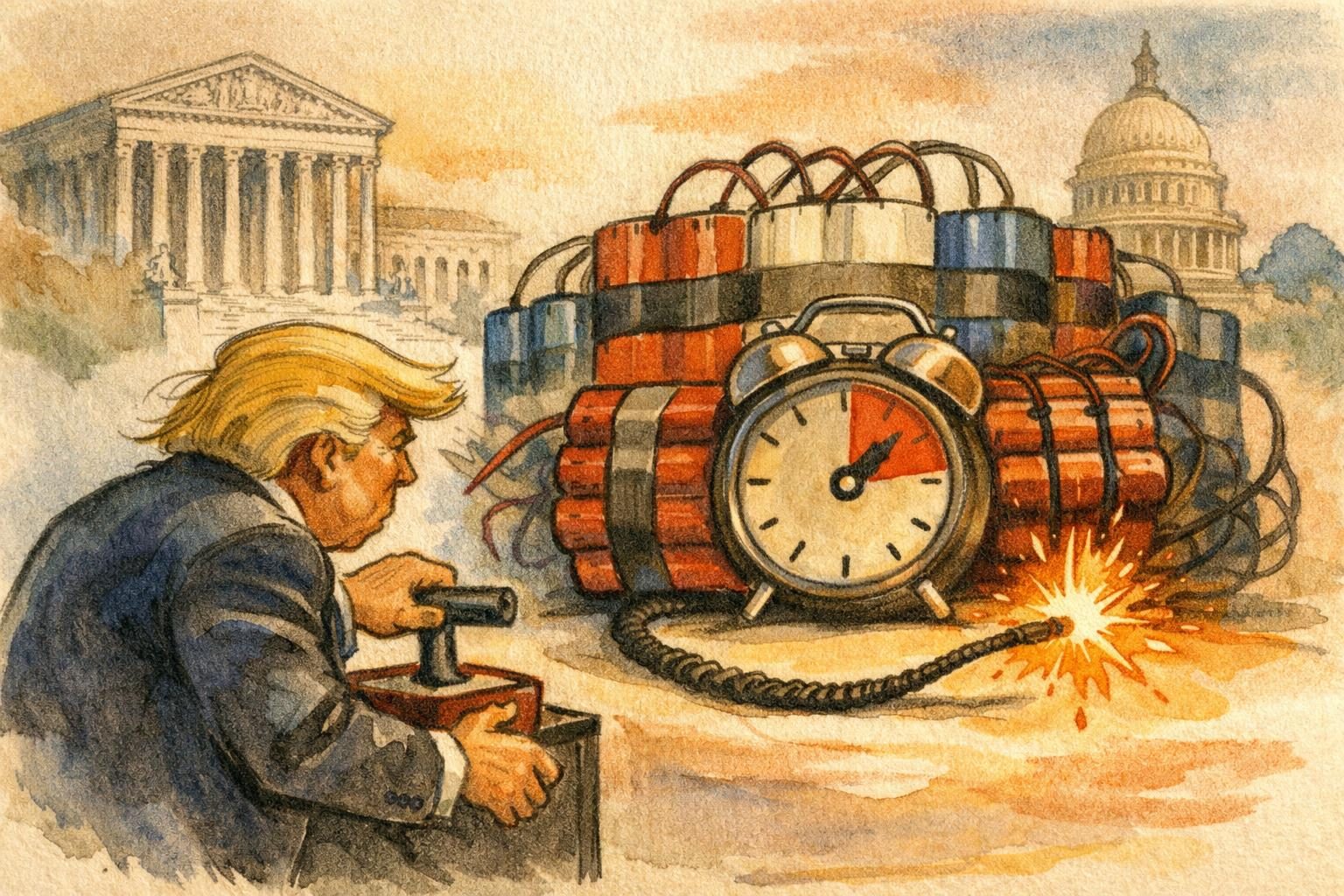
The Supreme Court shut down one tariff theory on Feb. 20, 2026. The White House answered four days later with another statute and a deadline of its own.
In Learning Resources, Inc. v. Trump and the related V.O.S. Selections case, the justices held that the International Emergency Economic Powers Act does not authorize the president to impose tariffs. The ruling vacated No. 24-1287 and affirmed No. 25-250, leaving the administration to look elsewhere for trade leverage. ([supremecourt.gov](https://www.supremecourt.gov/opinions/25pdf/24-1287_4gcj.pdf))
It found a short-term path in Section 122 of the Trade Act of 1974. The proclamation issued on Feb. 24 says the United States faces a large and serious balance-of-payments deficit and imposes a temporary 10 percent ad valorem surcharge on articles imported into the country. The charge took effect that day and, by the proclamation’s terms, runs through July 24, 2026 unless Congress extends it or the president suspends, modifies, or terminates it sooner. ([federalregister.gov](https://www.federalregister.gov/documents/full_text/html/2026/02/25/2026-03824.html))
The language matters. Section 122 is not a blank check for tariffs. It authorizes a temporary import surcharge, up to 15 percent ad valorem, for no more than 150 days unless Congress acts to extend it, and only in situations involving fundamental international payments problems. The administration’s own proclamation leans on that framing, saying the surcharge is meant to address the balance-of-payments deficit it identified. ([federalregister.gov](https://www.federalregister.gov/documents/full_text/html/2026/02/25/2026-03824.html))
The new duty also comes with carveouts. The proclamation exempts several categories of goods, including some critical minerals, metals used in currency and bullion, and energy products. It also says the surcharge does not stack on top of section 232 tariffs: where a section 232 duty already applies, the Section 122 surcharge applies only to the portion of an import not covered by section 232. ([federalregister.gov](https://www.federalregister.gov/documents/full_text/html/2026/02/25/2026-03824.html))
That leaves importers with a rule that is real but temporary, broad but full of exceptions, and scheduled to expire unless Congress intervenes or the president changes course first. For businesses that price months ahead, that is not certainty. It is a clock. ([federalregister.gov](https://www.federalregister.gov/documents/full_text/html/2026/02/25/2026-03824.html))
Comments
Threaded replies, voting, and reports are live. New users still go through screening on their first approved comments.
Log in to comment
No comments yet. Be the first reasonably on-topic person here.