
Comey indictment revives a Trump-era feud, but the charge is still only an allegation
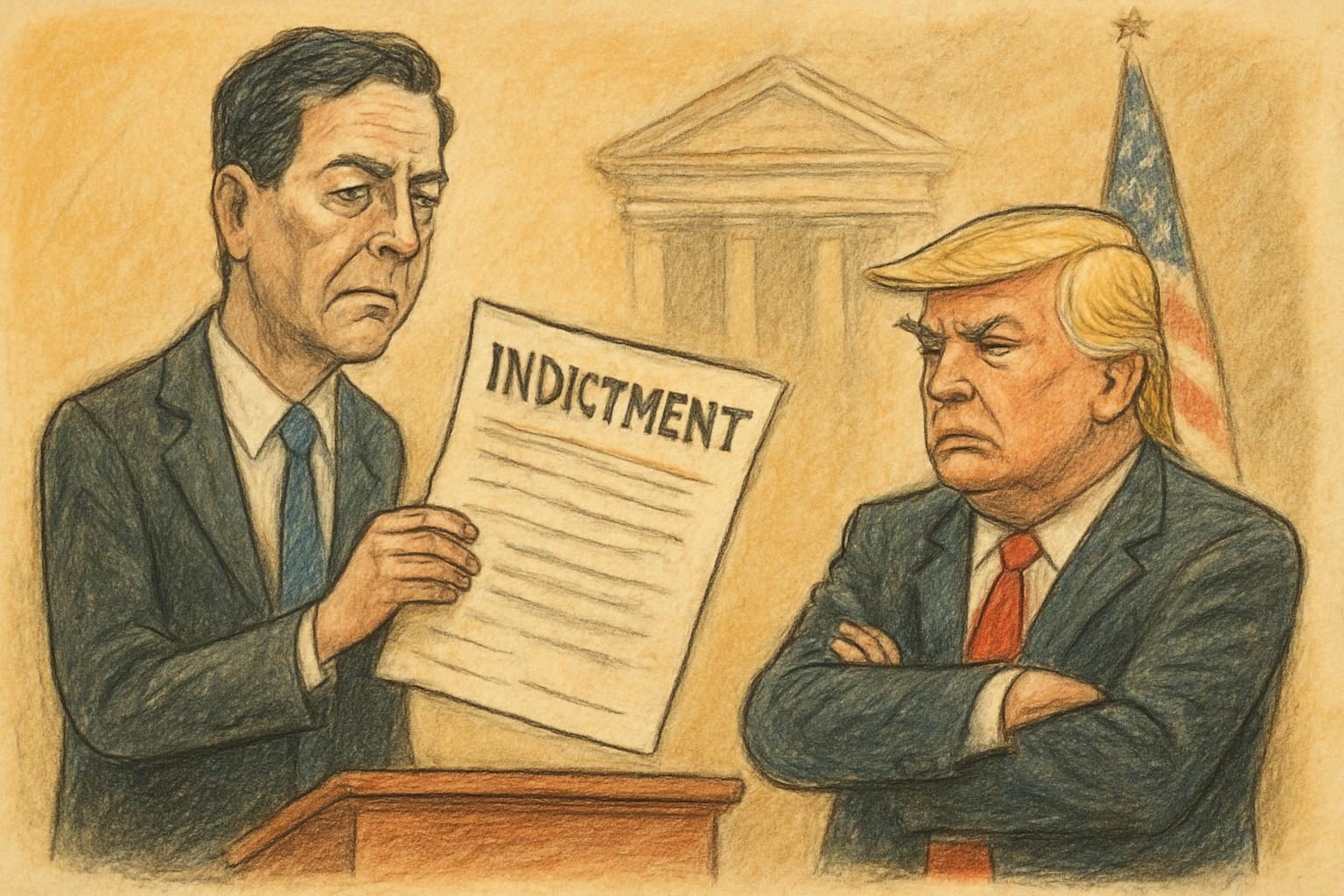
A federal grand jury in the Eastern District of North Carolina has put former FBI Director James Comey back at the center of a familiar Washington grudge match, this time through a criminal indictment tied to a short Instagram post. The Justice Department says Comey’s May 15, 2025 image — a photo of seashells arranged to spell out “86 47” — amounted to a threat against President Donald Trump. The filing, returned on April 28, 2026, contains two counts and accuses Comey of violating federal threat statutes. That does not make the accusation true, and it does not erase the presumption of innocence that still protects him. It does, however, show how a seemingly cryptic social media post can be recast as a federal case when the target is a former president and the poster is one of Trump’s oldest political adversaries.
According to the indictment, prosecutors are relying on 18 U.S.C. § 871(a), which covers threats against the president, and 18 U.S.C. § 875(c), which covers the interstate transmission of threatening communications. The government says Comey knowingly and willfully made a threat and sent a message that a reasonable recipient familiar with the surrounding circumstances would interpret as a serious expression of intent to do harm. That is the legal theory the prosecution will have to prove, and it is not a small burden. A grand jury indictment means only that prosecutors convinced a panel of jurors there was probable cause to charge; it is not evidence of guilt, and it is not a verdict on the meaning of the post. In cases like this, the dispute often turns less on the existence of the message than on the context, the intended audience, and whether the words or symbols were meant as a real threat, a political jab, or something that could be read in more than one way.
That ambiguity is likely to sit at the center of the case. The phrase “86 47” is the kind of shorthand that can carry different meanings depending on who is looking at it, where it appears, and what happened around it. The Justice Department’s filing says the post crossed the line into criminal conduct because it was understood as threatening. Comey’s legal team will almost certainly push back on that interpretation, and the government will have to persuade a jury that the image was not just crude, dismissive, or provocative but criminally threatening under federal law. In other words, the case is not simply about whether the post was in poor taste. It is about whether a social media image, read in context, can satisfy the elements of two federal offenses that were designed to address threats of harm. The outcome may depend on how judges and jurors interpret both the message itself and the broader circumstances surrounding it. For now, the indictment only establishes that the accusation will be tested in court, not that it will survive that test.
The political backdrop makes the proceeding especially combustible. Trump fired Comey in 2017, and the two men have been locked in a bitter public feud ever since, with each serving as a symbol for the other’s supporters and enemies. That history practically guarantees that the indictment will be read through a partisan lens, even though the legal question is narrower than the political theater around it. To Trump’s allies, the charge may look like a long-delayed accountability moment aimed at someone who spent years in conflict with the president. To Comey’s supporters, it may look like the kind of prosecution that invites questions about motive, selectivity, and whether a political past is shaping a criminal present. Neither reaction resolves the case. What matters in the end is whether prosecutors can prove beyond a reasonable doubt that Comey’s post was a true threat under the law, and whether the defense can convince a jury that it was something else entirely. Until that happens, the indictment remains what it has always been: an allegation with high political stakes, but still only an allegation.
Comments
Threaded replies, voting, and reports are live. New users still go through screening on their first approved comments.
Log in to comment
No comments yet. Be the first reasonably on-topic person here.