
Trump’s financial orders push fintech access and bank scrutiny at the same time
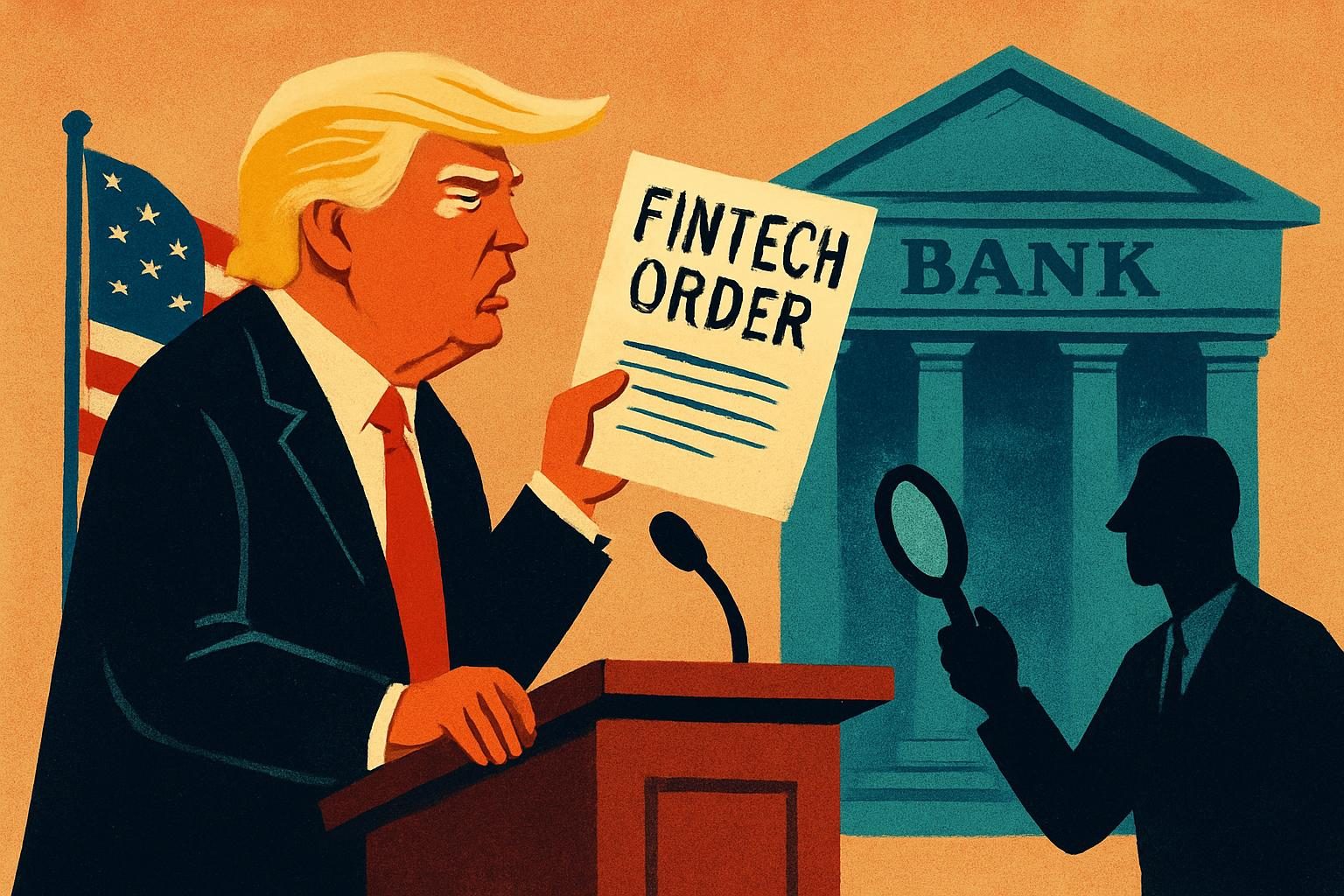
President Donald Trump signed two financial executive orders on May 19, 2026, that pull the banking system in opposite directions. One tells regulators to examine whether rules and supervisory practices are slowing down fintech firms and digital-asset businesses. The other tells Treasury and federal regulators to sharpen fraud detection, strengthen customer due diligence, and treat non-work-authorized borrowers and their employers as a source of financial-risk concern.
The fintech order does not rewrite banking law, but it does put agencies on a clock. It directs federal financial regulators to review existing regulations, guidance, supervisory practices, and application processes that may be blocking innovation, competition, or partnerships with regulated institutions. The order also asks the Federal Reserve to assess the legal, regulatory, and policy framework for Reserve Bank payment accounts and payment services for uninsured depository institutions and non-bank financial companies, including firms involved in digital assets and other novel financial activities. The Fed is asked to report back within 120 days. If the board concludes that current law allows direct access, the order says it should set up transparent application procedures and act on complete applications within 90 days.
The second order is more explicit about what it wants banks to watch. Treasury is directed to issue a formal advisory within 60 days that flags suspicious activity tied to non-work-authorized populations and their employers. The order cites payroll tax evasion, shell companies, nominee accounts, off-the-books wage payments, structuring, labor trafficking, and the use of individual taxpayer identification numbers where lawful immigration status is not verified. Treasury is also told to propose changes to Bank Secrecy Act rules within 90 days to strengthen risk-based customer due diligence and preserve banks’ ability to gather extra information when that information is relevant to fraud, identity misrepresentation, sanctions evasion, or other illicit activity.
The order also asks the Consumer Financial Protection Bureau to consider clarifying that potential deportation and loss of wages can affect a non-work-authorized borrower’s ability to repay under the ability-to-repay standards in Regulation Z. It further directs federal financial regulators to issue guidance on managing the credit risks they say are posed by extending loans and financial services to that population. That is not a blanket underwriting mandate, but it does move immigration status and work authorization closer to the center of federal credit-risk analysis.
Taken together, the two orders create a mixed signal for the financial sector. The first order presses agencies to trim barriers that fintech companies say favor incumbents and slow access to the payment system. The second tells the same regulatory apparatus to tighten scrutiny, collect more information in some cases, and pay closer attention to immigration-related risk markers. Banks and compliance teams generally respond to that kind of uncertainty by asking for more documentation, setting harder internal thresholds, and declining more edge cases.
So the practical effect may depend less on the White House messaging than on how the agencies write the follow-through. If regulators move aggressively, fintech firms could face faster reviews and more clarity on payment access, while banks could face a heavier compliance burden around customer identification and lending. If the process drags or the guidance stays vague, the orders could add friction rather than remove it. For now, the administration has made clear that it wants faster access for some financial innovators and tighter checks for the rest of the system, even if those goals sit uneasily together.
Comments
Threaded replies, voting, and reports are live. New users still go through screening on their first approved comments.
Log in to comment
No comments yet. Be the first reasonably on-topic person here.