
Trump signs twin financial orders: tougher scrutiny and fintech review
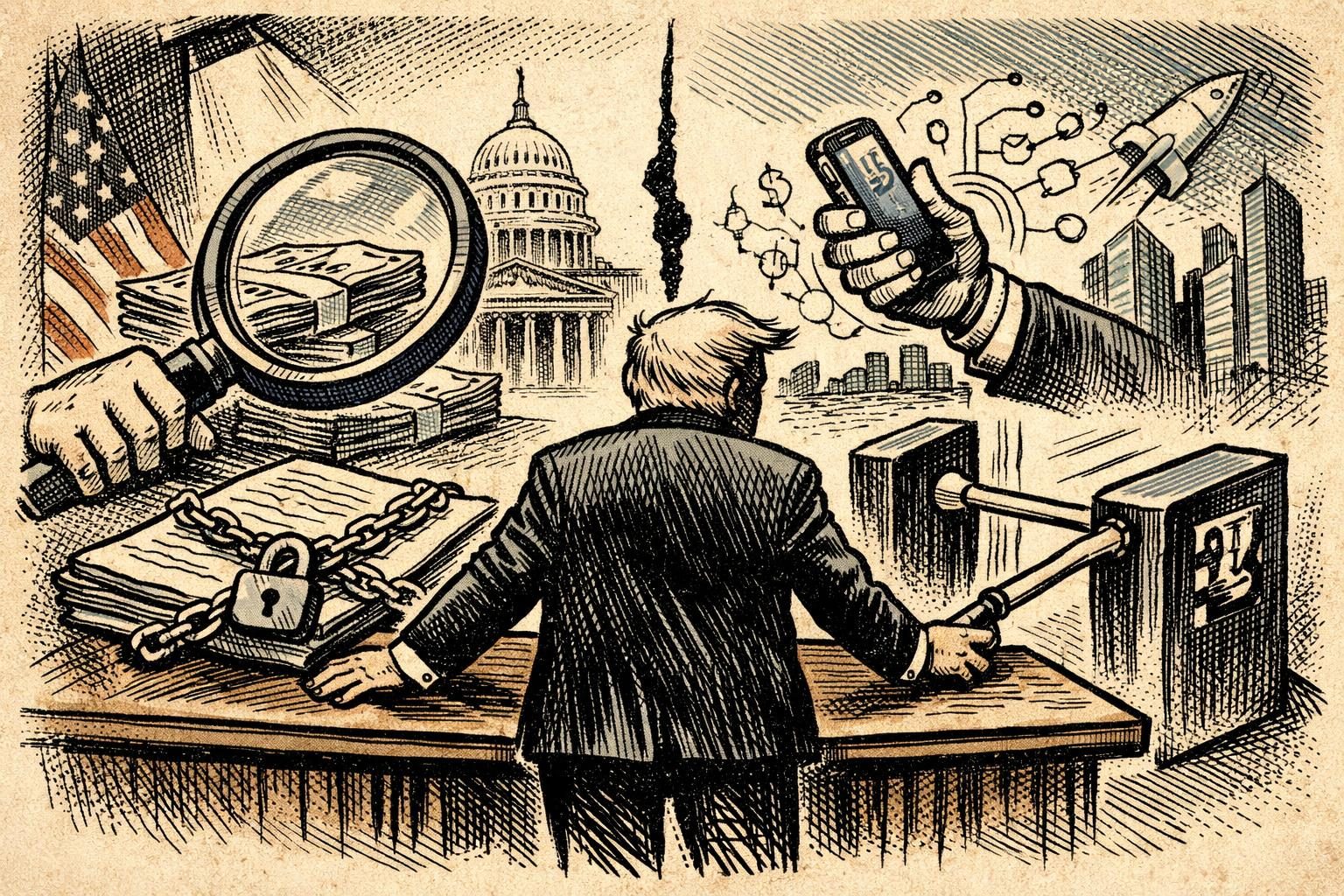
On May 19, 2026, President Donald Trump signed two executive orders that set out different priorities for the financial system. One order tells Treasury and federal regulators to sharpen their focus on illicit finance, customer due diligence, and lending risks tied to non-work-authorized borrowers. The other tells regulators to review rules, guidance, and supervisory practices that may be slowing fintech firms, digital-asset businesses, and other novel financial companies, including a requested review of access to Reserve Bank payment accounts and services. Neither order changes the rulebook on its own; both direct agencies to study, propose, and report back. ([whitehouse.gov](https://www.whitehouse.gov/presidential-actions/2026/05/restoring-integrity-to-americas-financial-system/))
The first order, titled “Restoring Integrity to America’s Financial System,” says the administration will not tolerate risks tied to illicit cross-border activity or to the extension of credit and financial services to the “inadmissible and removable alien population.” But the mechanism is narrower than the rhetoric. Treasury is told to issue a formal advisory within 60 days describing suspicious activity patterns, and within 90 days to propose Bank Secrecy Act changes that would strengthen risk-based customer due diligence. The order also tells Treasury and federal functional regulators to consider customer-identification changes within 180 days. It specifically says immigration-status information may matter when it is relevant to a risk-based assessment of fraud, identity misrepresentation, sanctions evasion, or other illicit activity. That is a far cry from an across-the-board mandate for banks to screen every customer for citizenship or work authorization. ([whitehouse.gov](https://www.whitehouse.gov/presidential-actions/2026/05/restoring-integrity-to-americas-financial-system/))
The same order also asks the Consumer Financial Protection Bureau to consider clarifying that potential deportation and loss of wages can factor into ability-to-repay standards for borrowers without work authorization. It further directs federal financial regulators to issue guidance on the credit risks of extending loans and financial services to that population. Again, the legal effect is prospective and procedural. The White House is pushing agencies toward tighter scrutiny and more formal guidance, not announcing an immediate change in every bank’s day-to-day obligations. ([whitehouse.gov](https://www.whitehouse.gov/presidential-actions/2026/05/restoring-integrity-to-americas-financial-system/))
The second order, “Integrating Financial Technology Innovation into Regulatory Frameworks,” takes the opposite tack on process, if not necessarily on law. It instructs federal financial regulators to review existing regulations, guidance, supervisory practices, and application processes for changes that could support innovation and competition while preserving safety and soundness. The order also requests that the Federal Reserve evaluate the legal and policy framework for access to Reserve Bank payment accounts and payment services by uninsured depository institutions and non-bank financial companies, including firms involved in digital assets and instant payments. The Fed is asked to report back within 120 days with findings, options, and recommendations. ([whitehouse.gov](https://www.whitehouse.gov/presidential-actions/2026/05/integrating-financial-technology-innovation-into-regulatory-frameworks/))
That makes the pair less a clash of active rules than a collision of agendas. One order tells regulators to tighten risk controls around illicit finance and borrower screening. The other tells them to clear away barriers that may protect incumbents at the expense of newer firms. Banks and compliance teams are left to read both signals at once: more scrutiny in one lane, more openness in another, with the actual details still to be worked out through advisories, proposed regulations, and agency review. The practical outcome will depend on how Treasury, the CFPB, the federal banking regulators, and the Fed turn those directives into policy. For now, the headline event is not a new regime. It is a pair of instructions that point regulators toward different ends of the same system. ([whitehouse.gov](https://www.whitehouse.gov/presidential-actions/2026/05/restoring-integrity-to-americas-financial-system/))
Comments
Threaded replies, voting, and reports are live. New users still go through screening on their first approved comments.
Log in to comment
No comments yet. Be the first reasonably on-topic person here.