
Trump’s customs crackdown keeps raising the cost of doing business
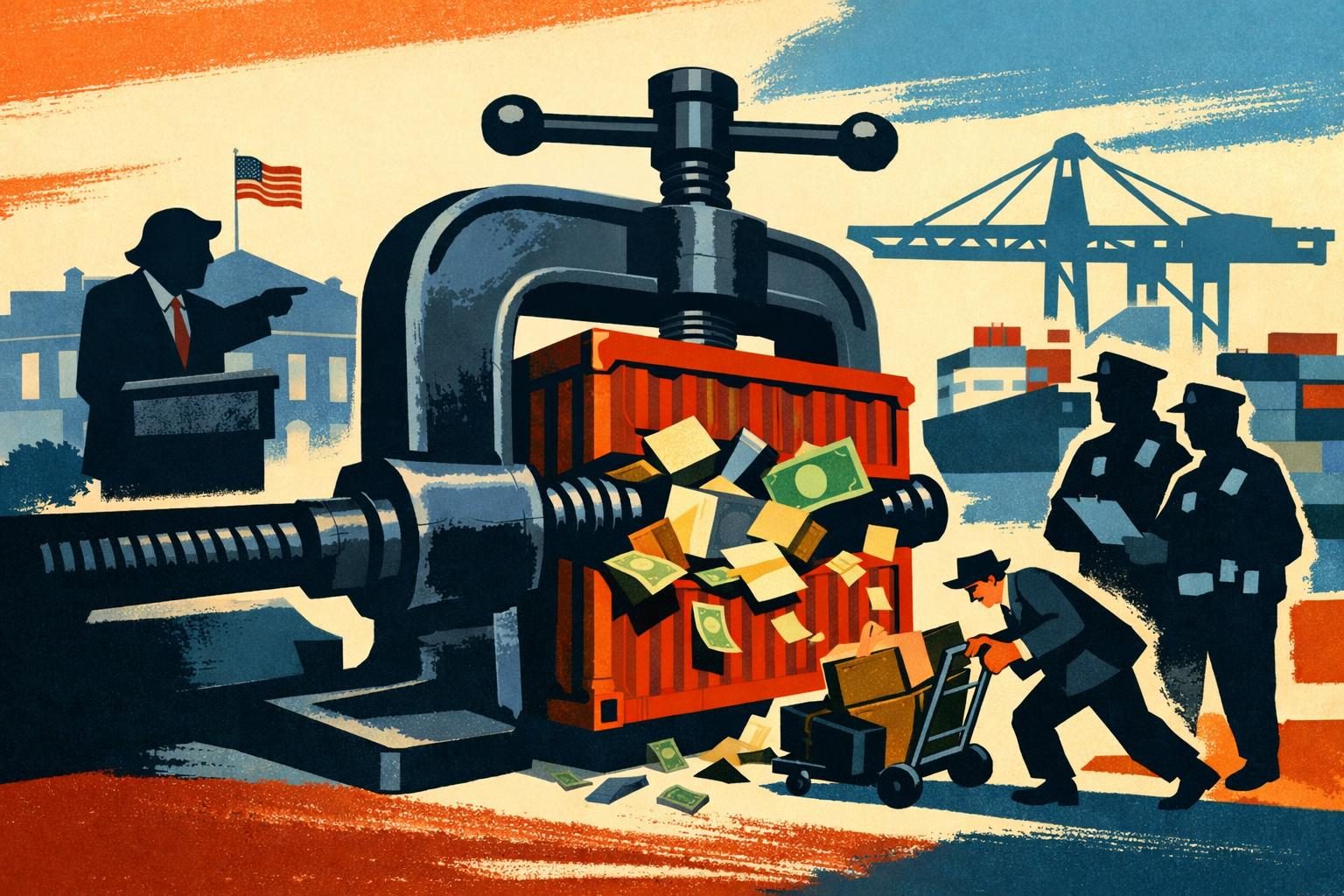
Trump’s June 3 customs enforcement order is another sign that the administration’s trade agenda is no longer limited to raising tariffs and hoping importers absorb the shock. It is also about tightening the machinery that sits behind those tariffs, building a customs regime that puts more pressure on companies to prove they are complying with the rules before goods move normally. The White House says the Department of Homeland Security and Customs and Border Protection will pursue tougher importer-of-record standards, higher bonding requirements, more disclosure, and added certification obligations aimed at duty evasion and other forms of noncompliance. In practical terms, that means importers are being told that the government wants more paperwork, more financial assurances, and more opportunities to challenge entries that look incomplete or suspicious. The order does not amount to an overnight shutdown of ports or a sudden freeze in trade, and it would be misleading to present it that way. But it does point clearly toward a customs system that is more aggressive, more cumbersome, and more willing to make lawful commerce wait while the government sorts through its suspicions.
The most important detail is that the administration is not trying to impose these changes with an immediate switch-flip. The agencies are expected to move through the normal rulemaking process, which means proposed standards, public comments, revisions, and eventual final rules before businesses see the full effect. That matters because it means there is no instant port crisis to point to today, no clean headline about containers piling up because the border has been shut down. Yet the absence of an immediate breakdown should not be mistaken for the absence of consequences. Rulemaking is where broad political intent becomes operational burden, and once DHS and CBP write these expectations into formal requirements, companies will have to adapt their compliance systems, legal review, financial planning, and shipment timing to match. Higher bonding requirements alone can raise costs for smaller importers and tie up more capital for larger ones. Added disclosure and certification obligations can slow entry processing and increase the odds that an otherwise routine shipment gets pulled aside for questions, corrections, or delay. In other words, this is not a theatrical crackdown that ends at the press release. It is a policy design that pushes friction down into the supply chain, where the real costs get paid.
That is what makes the order part of a broader pattern rather than an isolated enforcement flourish. Trump has made a habit of presenting trade policy as a test of toughness, and customs enforcement fits neatly into that political script because it sounds both technical and morally obvious. Who could object to stopping fraud, after all? The problem is that once the government starts treating every border process as a potential enforcement case, the line between targeted anti-evasion and broad administrative overreach can get blurry fast. Businesses that are already following the rules may find themselves spending more time documenting that fact, paying more to satisfy new standards, and waiting longer for goods to clear even when nothing is wrong. That kind of drag does not just inconvenience importers in the abstract. It affects inventory management, contract negotiations, shipping schedules, pricing decisions, and whether companies choose to source from one country or another in the first place. A customs system can be made tougher, but tougher does not automatically mean smarter, and it certainly does not mean more efficient. The government may catch genuine abuse with stricter scrutiny. It may also bog down ordinary commerce, multiply choke points, and create exactly the kind of confusion that lets political bravado stand in for administrative competence.
Seen alongside the June 8 metals tariff changes, the customs order shows an administration trying to raise both the price and the hassle of importing at the same time. That is a real policy choice, not a side effect. It may be popular inside a political environment that treats disruption as proof of seriousness and border friction as evidence that the government is finally doing something decisive. But the private sector will experience it differently. For importers, the likely result is more compliance cost, more uncertainty, and more adversarial contact with customs authorities, all layered onto a trade environment already shaped by shifting tariff regimes and unpredictable enforcement signals. There is no evidence in the order of an immediate systemic collapse at the ports, and pretending otherwise would weaken the credibility of the analysis. Still, there is ample evidence of a federal approach that keeps demanding the private sector absorb more complexity in the name of national security and fairness while offering limited clarity about how the rules will work in practice. That is how customs stops being a back-office administrative function and starts becoming a stress test for the entire supply chain. Trump can call that strength. For businesses trying to keep goods moving, it looks a lot more like another expensive headache with a government stamp on it.
Comments
Threaded replies, voting, and reports are live. New users still go through screening on their first approved comments.
Log in to comment
No comments yet. Be the first reasonably on-topic person here.