
Trump’s AI Drive Pushes Frontier Models Closer to National Security Work
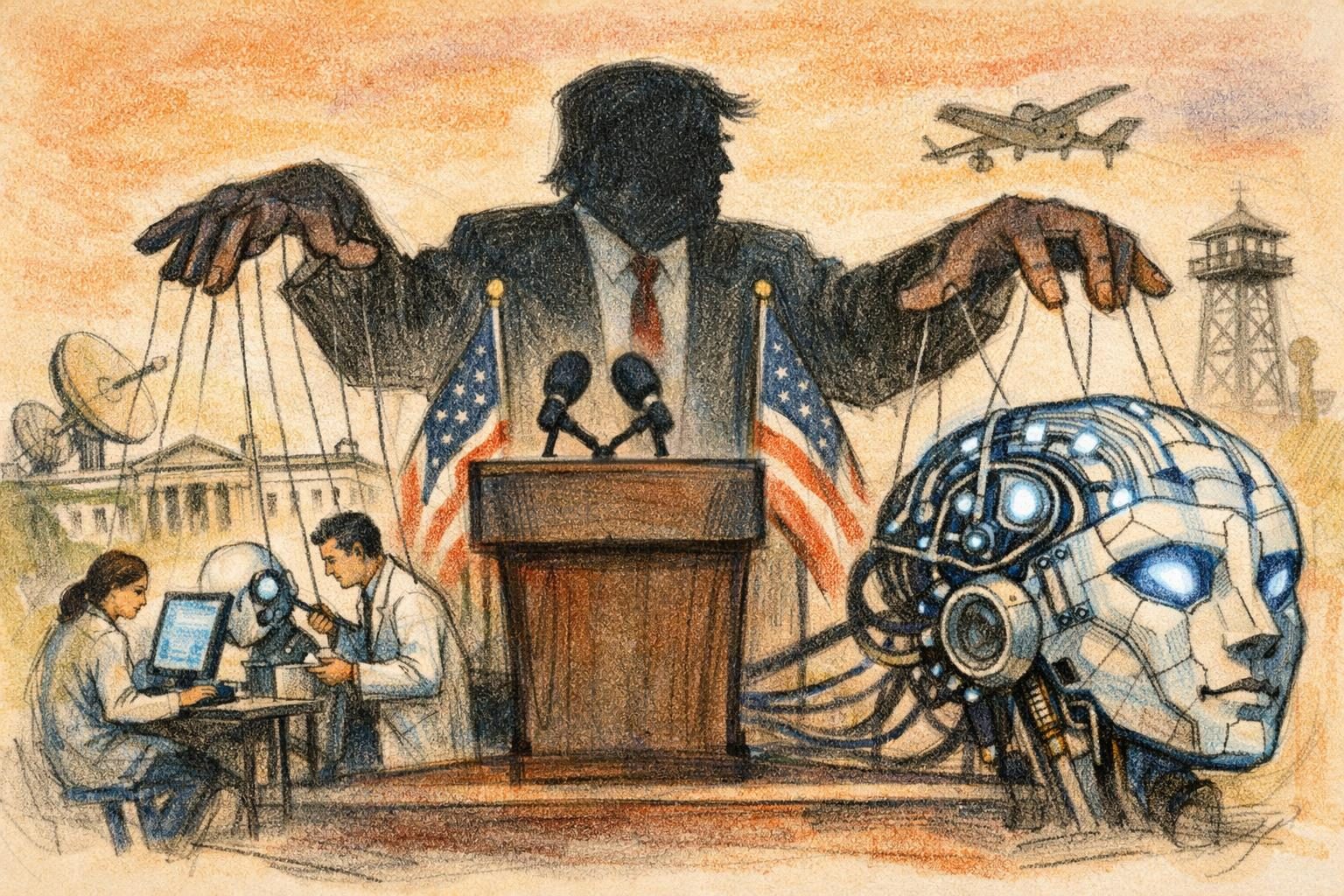
President Donald Trump’s latest AI push came in two separate moves, three days apart. On June 2, 2026, the White House signed an executive order on advanced AI innovation and security. On June 5, 2026, it followed with a national security memorandum on artificial intelligence in the national security enterprise. Together, the two actions push more advanced models into federal security work while promising tighter guardrails around how those systems are acquired, tested, and used. The White House says the point is to speed adoption, strengthen cyber defense, and keep the United States ahead of rivals. The practical effect is to pull frontier AI closer to the center of government operations, especially where national security is concerned.
The June 5 memorandum is the more explicit of the two. It says the national security enterprise should accelerate AI adoption, keep deep partnerships with industry, and make the most advanced frontier models broadly available to national security professionals without delay. It also calls for secure access arrangements, including early access for trusted partners, while requiring confidentiality, cybersecurity, insider-risk, and intellectual-property protections. The memo says AI systems used in this space must be reliable, robust, steerable, and controllable, and it requires testing, evaluation, validation, and verification before deployment. That is a careful-sounding framework. It is also a clear signal that the government wants these systems not on the sidelines, but embedded in everyday security work.
The June 2 executive order moves on the cyber side. It directs agencies to prioritize the defense of national security systems, Defense Department information systems, and civilian federal information systems. It also tells Homeland Security, working with other officials, to issue guidance that would facilitate access to AI-enabled cybersecurity tools and services for federal agencies, state and local authorities, and critical infrastructure operators such as rural hospitals, community banks, and local utilities. The order also creates an AI cybersecurity clearinghouse, calls for funding opportunities tied to advanced AI cybersecurity, and lays out a classified benchmarking process for identifying covered frontier models. It then sets up a voluntary framework with developers for early government access and trusted-partner access, while making clear that nothing in the order creates a mandatory licensing or preclearance regime for AI models.
That mix of speed and restraint is the White House’s selling point. The administration argues that AI can help protect warfighters, improve cyber defense, and strengthen U.S. technical advantage without forcing innovators into a new layer of regulation. But the policy also shows how quickly frontier AI is moving from a general-purpose tool to a managed national security asset. Once those systems are folded into cyber defense, intelligence support, or other sensitive missions, the real question is no longer whether the government will use them. It is how much oversight will exist once they are inside the workflow, who gets to touch them first, and how quickly officials can tell when a model does something wrong.
Comments
Threaded replies, voting, and reports are live. New users still go through screening on their first approved comments.
Log in to comment
No comments yet. Be the first reasonably on-topic person here.